Sunflower
Helianthus annuus
Common sunflower
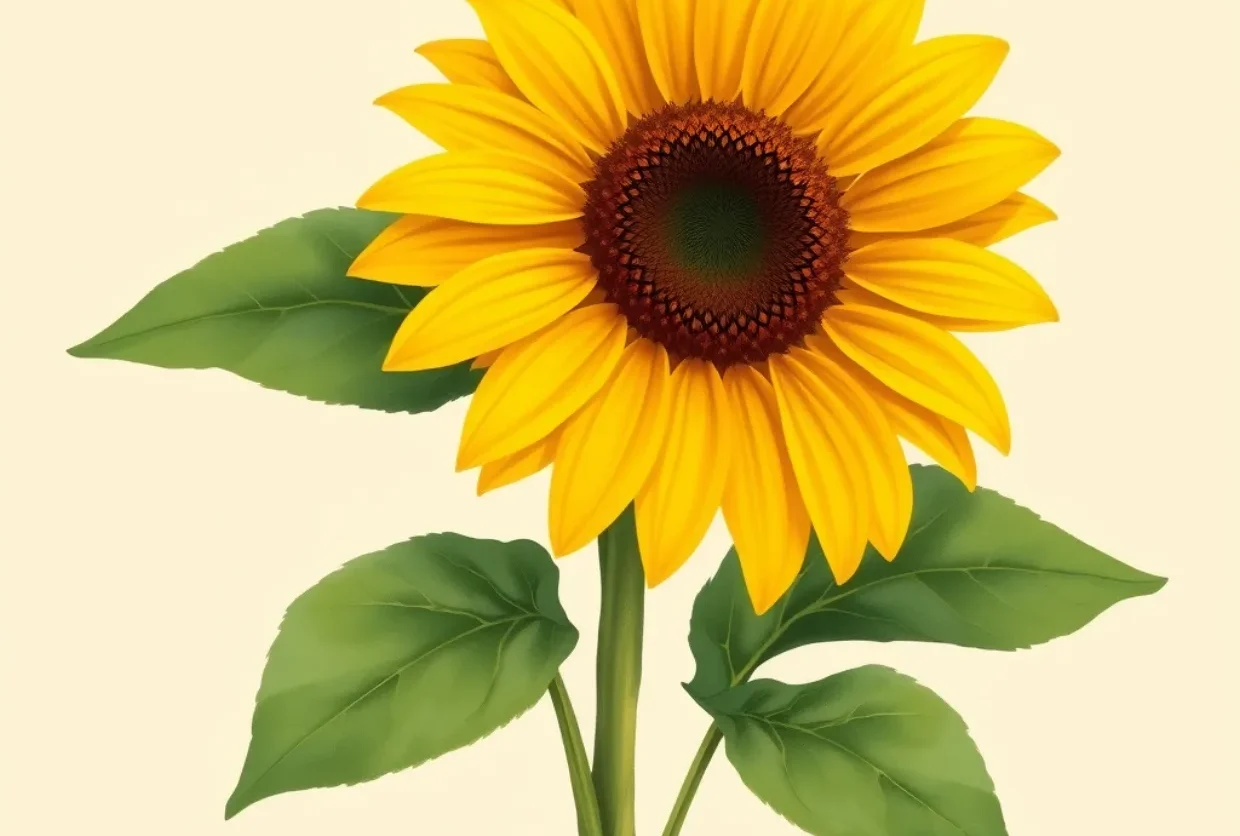
Everything about growing one is easy. The single decision that matters is which kind you bought, because the range runs from eighteen inches to ten feet.
The record
Every plant in the database answers the same questions in the same order, so two entries can be read line for line. 14 of 17 fields sourced.
- Light
- Full sun
- Light detail
- 6 hours or more; leans and thins in less
- Water
- Moderate
- Water detail
- Steady while growing; tolerates occasional dryness
- Soil
- Clay, loam or sand, all with good drainage
- Soil pH
- 6.0 to 8.0, neutral to alkaline
- Mature size
- 1.5 to 10 ft tall, 1.5 to 3 ft wide
- Toxicity
- not recorded
- Lifecycle
- Annual
- Difficulty
- Easy
- Hardiness zones
- not recorded
- Bloom time
- July to October
- Flower color
- Gold or yellow with a dark center; cultivars in orange, red, mahogany, bronze or white
- Pollinators
- Butterflies including monarchs, specialized bees, songbirds
- Deer resistant
- not recorded
- Spacing
- 6 in for 2 to 5 ft types, 1 ft for tall, 2 ft for giants
- Native range
- Southwestern United States to Mexico
Days from sowing to ripe seed. The head droops, the back turns yellow-brown and the inner flowers rub off. Cut then, because birds work to their own schedule.
The year
Plant or divide, and when it is actually in flower. Everything else is leaving it alone.
Decide which sunflower you want before you buy seed
Nothing about growing a sunflower is difficult. The one decision that changes everything is which kind you are planting, and it is made at the seed packet.
NC State gives the height range for Helianthus annuus as 1.5 to 10 feet. That is not a small variation. A three-foot branching type for cutting and a ten-foot single-stem giant want different spacing, different support and different positions in the garden, and the seed for both is sold on the same rack.
The branching kinds keep producing flowers over weeks and are what you want if the point is cut flowers. The single-stem giants make one enormous head and then stop. Neither is better; they answer different questions.
Sunflower varieties, sorted by what you actually want from them
Sunflower varieties differ more than almost any other annual, and picking by the picture on the packet is how people end up with a fourteen-foot plant against a fence or a dwarf where they wanted a screen. Decide the job first.
| Type | Height | Spacing | What it is for |
|---|---|---|---|
| Giants, such as Titan, Skyscraper, Sunzilla, Mammoth | 10 to 15 ft | 18 to 24 in | One enormous head on one stem. Needs staking, deep soil and shelter from wind |
| Standard single-stem | 5 to 8 ft | 12 in | The classic garden sunflower and the usual choice for seed |
| Branching cut-flower types | 4 to 7 ft | 12 to 18 in | Many smaller blooms over weeks rather than one. The type to grow for cutting |
| Pollen-free cultivars | 4 to 6 ft | 12 in | Bred for florists so they do not drop pollen on a table. They feed pollinators far less |
| Dwarf and container types | 1 to 3 ft | 6 in | Pots, edges and windy sites where a tall stem would snap |
Two rules follow from that table. Space by the mature height rather than by the seed size, because crowded sunflowers make thin stems that go over in the first summer storm. And if you want flowers over a long period rather than one spectacular fortnight, sow a short row every one to three weeks instead of the whole packet at once.
Three different plants are sold as sunflowers
This catches people out every season, because the name covers plants that are not interchangeable and in one case are not even the same genus.
- The annual sunflower, Helianthus annuus, is the one this entry is about. It grows, flowers, sets seed and dies in a single season, every time. It does not come back.
- Perennial sunflowers, including swamp sunflower, Helianthus angustifolius, and Maximilian sunflower, are true perennials that return from the roots and spread. They flower late, in the fall, and they want room, because a clump widens every year.
- Mexican sunflower, Tithonia rotundifolia, is not a Helianthus at all. It is a separate genus grown as an annual, with orange daisy-like flowers, and it is one of the best butterfly plants you can sow.
So the answer to whether sunflowers are annual or perennial depends entirely on which one you bought, and the botanical name on the back of the packet is the only reliable place to check.
Where it goes
Full sun, six hours or more. This is the one condition with no flexibility: a sunflower in part shade leans, stretches and produces a small head on a weak stem.
Soil is unusually forgiving. NC State lists clay, loam and sand as all acceptable, at a neutral to alkaline pH, wanting good drainage and tolerating occasional dryness. In practice this means most gardens can grow them without preparing anything.
Wind is the constraint people forget. NC State is specific that taller varieties should go in a sheltered position to protect them from wind damage, and that stakes may be needed. A ten-foot stem carrying a heavy head is a lever, and one storm in August will lay it flat if it is standing in the open.
Sowing
- Wait for the last frost
NC State’s timing is to sow after the final spring frost and harvest before the first one in autumn. Sunflowers are annuals racing a clock, so the season has to fit around them.
- Sow one inch deep
Direct into the ground is simplest. They can be started indoors and moved out once true leaves have formed, but they resent root disturbance, so there is little gained.
- Space by final size, not by seed size
Around six inches for varieties in the two to five foot range, at least a foot for taller ones, and two feet for the giants. Crowding produces thin stems and small heads.
- Expect them up in a week to ten days
Germination is fast and reliable. A gap in the row after two weeks is usually a bird or a slug rather than bad seed.
- Stake the tall ones early
Put the support in while the plant is short. A stake driven in beside a seven-foot sunflower goes through the roots that are holding it up.
Through the season
Flowering runs from mid to late summer into autumn, roughly July to October depending on when they were sown and how long the variety takes.
The flower is gold or yellow with a dark brown to purplish center in the species, and cultivars add orange, red, mahogany, bronze and white. Those are cultivar traits, so the packet is the authority, not the species.
What they bring to a garden is unusually broad. NC State records them attracting butterflies including monarchs, pollinators generally, specialized bees, and songbirds. The songbirds are the point in autumn: a seed head left standing feeds finches for weeks.
Harvesting the seed, if that is why you grew them
The plant tells you when it is ready, and the signals are unmistakable once you know them.
Seeds reach maturity 70 to 100 days after sowing. The head droops and faces downward, the back of it turns from green to lemon yellow and then yellow-brown, and the small inner flowers rub off the face easily with a thumb.
Cut the head once the back is yellow-brown and it is hanging down. Waiting for perfection usually means losing the crop, because birds and squirrels work to their own schedule and they are better at this than you are.
If the seed is genuinely wanted, stripping the leaves nearest the head makes it harder for birds to perch and feed. It is a small, effective trick and it costs the plant nothing at that stage.
What goes wrong
NC State lists caterpillars, slugs, snails and beetles chewing the foliage, along with powdery mildew, leaf spots and rust.
Almost all of it is cosmetic on an established plant. Sunflowers grow fast enough to outpace leaf damage, and a mildewed lower leaf in September is not worth a spray on a plant that will be finished in a month. Slugs on seedlings are the exception, because a slug can remove an entire plant overnight while it is still two inches tall.
The other warning worth taking seriously is that they self-seed and can become weedy. A patch left to shed its seed will come back thicker and in the wrong places next year. If that is not what you want, cut the heads before the seed drops.
Toxicity, in plain terms
NC State’s entry carries no toxicity listing for Helianthus annuus, and the ASPCA does not list it among toxic plants. The record on this page therefore reads not recorded rather than a confident no, because the absence of a listing is not the same as a positive statement of safety.
In practice sunflower seed is fed to birds and eaten by people, and this is not a plant anyone worries about in a garden with pets.
Frequently asked questions
- Which sunflower varieties should I grow?
- Pick by the job. Giants such as Titan or Mammoth for one huge head, standard single-stem types for seed, branching cultivars if you want to cut flowers over several weeks, pollen-free ones for a vase, and dwarfs for pots and windy sites. Space every one by its mature height rather than by seed size.
- How far apart do sunflowers need to be planted?
- Six inches for dwarfs, about twelve for standard types, and eighteen to twenty-four for the giants, which have root systems to match their height. Crowded sunflowers make thin stems and go over in the first summer storm, and no amount of staking afterwards fully fixes it.
- Are Mexican sunflowers the same plant?
- No. Mexican sunflower is Tithonia rotundifolia, a different genus altogether, grown as an annual for its orange daisy-like flowers. It is one of the best butterfly plants you can sow, but nothing in this entry about seed heads or giant stems applies to it.
- How do I get taller sunflowers?
- Start with a variety bred for height, because no amount of feeding turns a dwarf into a giant. After that: full sun, deep soil, one to two inches of water a week at the base, generous spacing, and no root disturbance from transplanting. Sunflowers resent being moved, which is why the tallest plants are almost always direct sown.
- Do sunflowers come back every year?
- The common sunflower is an annual: it grows, flowers, sets seed and dies in one season. What looks like it coming back is usually self-sown seedlings from last year’s dropped seed. There are perennial sunflower species, but they are different plants.
- How do I know when the seeds are ready?
- Three signs together: the head droops and faces down, the back of it has turned yellow-brown, and the tiny inner flowers rub off easily. That is 70 to 100 days after sowing. Cut then rather than waiting, because birds will not.
- Why is my sunflower falling over?
- Wind on a tall stem carrying a heavy head, usually in an exposed position. Tall varieties want shelter and a stake, and the stake goes in while the plant is still small so it does not cut the roots.
- Do the flowers really follow the sun?
- Young plants track the sun through the day while they are still growing. Once the head is mature and heavy it generally settles facing east and stays there, which is why a field of open sunflowers all faces the same way.
- Can I grow them in a pot?
- The dwarf and mid-size varieties, yes, in a large container with real drainage. The giants are not container plants: they need root room and the pot becomes a wind hazard long before the head opens.
Companion plants
How this entry is compiled
- Care values come from university extension publications and the USDA hardiness map, never from other gardening sites.
- Toxicity follows the ASPCA listing and is quoted rather than summarized.
- A value we cannot source is printed as not recorded, never estimated.
Compiled and checked by the Gardnicks editorial desk · last checked 2026-08-16
Sources for this entry
- NC State Extension Gardener Plant Toolbox, Helianthus annuus
- University of Illinois Extension, How to grow sunflowers at home
- University of Minnesota Extension, Sunflowers
Where two sources disagree, the entry follows the one closest to the plant’s own growing region and says so in the text.
What kills it
Three failures cover almost everything readers write in about.
More in Flowers
 Geranium
Full sun · zones not recorded
Geranium
Full sun · zones not recorded
 Hydrangea
Part shade · zones 6 to 11
Hydrangea
Part shade · zones 6 to 11
 Lupine
Full sun · zones 3 to 8
Lupine
Full sun · zones 3 to 8
 Dahlia
Full sun · zones 7 to 10
Dahlia
Full sun · zones 7 to 10
Plates are illustrations, not photographs of a specific plant, and are not evidence of a variety, place or season.