Yarrow
Achillea millefolium
Common yarrow / milfoil
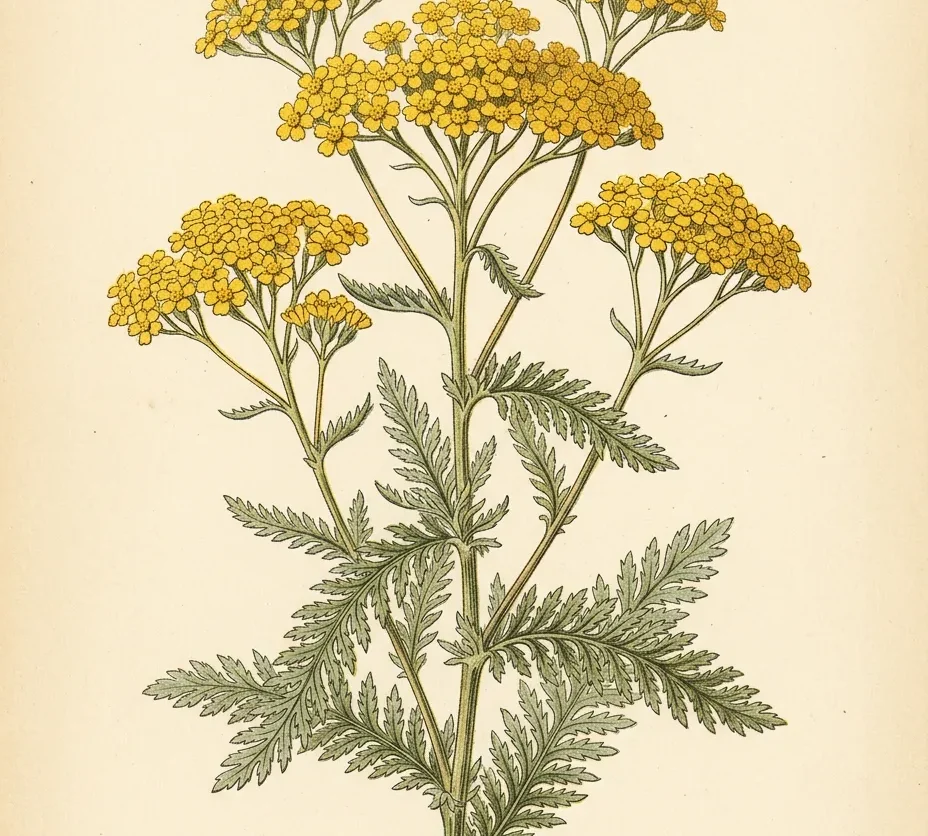
Full sun and drainage, and it asks for nothing else. The catch is at the other end: it spreads by rhizome and by seed, and it means it.
The record
Every plant in the database answers the same questions in the same order, so two entries can be read line for line. 17 of 17 fields sourced.
- Light
- Full sun
- Light detail
- 6 hours or more; flops in less
- Water
- Low
- Water detail
- Rarely once established; rots in ground that stays wet
- Soil
- Poor and free draining; tolerates occasionally dry to occasionally wet
- Soil pH
- 6.0 to 8.0, neutral
- Mature size
- 1 to 3 ft tall and wide
- Toxicity
- NC State records yarrow as a problem for cats, dogs and horses, and notes a contact dermatitis risk to people handling the foliage.
- Lifecycle
- Perennial
- Difficulty
- Easy
- Hardiness zones
- 3 to 9
- Bloom time
- June to September
- Flower color
- White, cream, yellow, orange, pink, lavender or red
- Pollinators
- Bees, butterflies and predatory insects
- Deer resistant
- Yes
- Spacing
- 18 to 24 in apart
- Native range
- Europe, western Asia and North America
Hardy in zones 3 to 9. Colder than zone 3, grow it in a container and overwinter it under cover.
USDA zones it grows in. Very nearly the whole country, which is why it appears on almost every drought-tolerant and low-maintenance list published.
The year
Plant or divide and prune, and when it is actually in flower. Everything else is leaving it alone.
Toxic to pets
NC State records yarrow as a problem for cats, dogs and horses, and notes a contact dermatitis risk to people handling the foliage.
The plant for ground nothing else likes
Yarrow is what you plant in the strip along a driveway that bakes, the bank nobody waters, the corner of a bed where the soil is thin and stony. NC State lists it across zones 3a to 9b, which is very nearly the entire country, and it flowers from June to September in ground most perennials would sulk in.
It asks for two things and neither is difficult: full sun and drainage. Give it those and it needs essentially nothing else, which is the reason it turns up on every low-maintenance and drought-tolerant list published.
The catch is at the other end. Yarrow spreads by rhizomes and by seed, and NC State describes it plainly as aggressive. In a wild planting that is the point. In a small tidy border it is a problem you will be managing every spring, so decide which of those you have before you plant it.
Light and soil
Full sun, six hours or more. In shade it stretches, flops, and flowers thinly, and no amount of staking makes it look like the plant in the photograph.
Soil should drain, and beyond that yarrow is unusually relaxed: NC State records it tolerating occasionally dry through to occasionally wet ground, at a neutral pH of 6.0 to 8.0. What it does not tolerate is ground that stays wet, where it rots at the root like every other drought-adapted plant in this database.
Poor soil is a feature rather than a compromise. Rich, well-fed ground produces soft tall growth that falls over in the first summer storm, and the plant is at its most upright and self-supporting when it is slightly hungry.
Types of yarrow, and the colors they actually hold
Wild yarrow is white. Everything else on a nursery bench is a cultivar or a hybrid, and the two questions worth asking about any of them are the same two: how far does it spread, and does the color last. Those are answered by the name, not by the label photograph, which is taken in the first week of flowering.
| Name | Height and zones | Color | Spread and fading |
|---|---|---|---|
| Moonshine, a hybrid | 18 to 24 in, zones 3 to 9 | Lemon-yellow over silver foliage, flowering early summer into fall | Sterile. It does not spread and does not self-sow, which makes it the one to plant where containment matters |
| Coronation Gold, a hybrid | 1 to 3 ft, zones 3 to 9 | Golden-yellow heads up to 5 inches across, over gray-green foliage that persists through winter in warm zones | Clump-forming rather than running |
| Red Velvet, A. millefolium | 2 to 3 ft, zones 4 to 8 | Dark rosy red with yellow centers | The most fade-resistant red, holding color from early through late summer |
| Cerise Queen, A. millefolium | Toward the top of 1 to 3 ft, zones 3 to 8 | Deep pink with white centers | Keeps its color when others pale in summer heat |
| Paprika, A. millefolium | 18 to 24 in, zones 3 to 8 | Brick red with bright yellow centers | Spreads fast into a dense weed-blocking mat, and fades to pink and cream as the season goes on |
| Firefly series, hybrids | 22 to 28 in, zones 3 to 8 | Diamond is ivory white, Red Pop cherry-red with yellow eyes, Fuchsia a deep pink | Bred as compact clumps. Diamond holds its color as it ages; Fuchsia ages to light pink |
| Fernleaf yarrow, A. filipendulina | 2 to 4 ft, the tallest group | Mustard to golden yellow, in wide flat plates. Gold Plate is the usual cultivar | Clump-forming, and tall enough to need a sheltered position or support |
| Sneezewort, A. ptarmica | 1 to 3 ft | Small white button flowers rather than flat plates | The most aggressive spreader in the genus. The Pearl is the common form |
The fading is the part that catches people out, and it is not a fault. Most yarrow cultivars are bred from a species whose flowers age from color toward cream, so a brick-red Paprika in June is a salmon-pink Paprika in August. If you want the color you bought to be the color in the bed in late summer, the choices are Red Velvet and Cerise Queen, and the entry above says so because almost no label does.
The spread question splits the same list a different way. Moonshine is sterile and stays where it is put. Sneezewort runs hard. Paprika runs hard and is sold as a virtue, since a weed-blocking mat is exactly what some sites want. The section on cutting back further down is the management side of the same decision.
The leaves, which are half the plant
Yarrow foliage is finely divided into narrow segments, so a single leaf reads as a soft feather rather than as a blade. That is where the species name comes from: millefolium means thousand-leaf. The foliage sits in a basal rosette with smaller leaves alternating up the flowering stem, is medium green to gray-green depending on the cultivar, and is strongly aromatic when crushed, with a spicy rather than sweet scent.
It matters for two reasons beyond identification. The texture is a genuine design asset, because very little else in a sunny border is that fine, and the silver-leaved cultivars carry the planting for the months when nothing is flowering. And the aroma is part of why deer and rabbits leave it alone.
Planting
- Give it sun and forget about the soil
Six hours minimum. Thin, stony, sandy ground is fine and often produces a better plant than a prepared bed does.
- Decide about the spread before you dig
It runs by rhizome and seeds itself. In a mixed border that means either a defined area you are happy to see it fill, or lifting and dividing it every couple of years.
- Do not feed it
Rich ground gives tall soft stems that flop. This is one of the few perennials that is genuinely better hungry.
- Wear gloves
NC State notes a contact dermatitis risk from handling the foliage. Most people are unaffected; some are not, and it is easier to wear gloves than to find out.
Seed, seedlings, and why a mixed planting turns white
Yarrow is a hardy perennial that comes back every year and gets a little wider each season, so most gardens never need to raise more of it. Where you do, there are two routes and they do not produce the same plant.
- From seed. Sow half an inch deep directly in the ground after the last frost date, or start earlier under cover. Seedlings appear readily and yarrow is not difficult from seed, which is part of the problem described below.
- By division. Lift and split an established clump in early spring or fall. This is the only method that reproduces a named cultivar exactly, and it is the same operation the clump needs anyway every two or three years.
The reason the distinction matters is that most colored yarrows are selections from a species whose wild flower is white. Their seedlings are not copies. A self-sown seedling from a red or pink cultivar tends to come up closer to that white ancestor, and where several cultivars are planted near each other they cross freely and the offspring are a lottery.
What that looks like over four or five years is a planting that started as three distinct colors and has become a drift of dull cream and washed pink, usually with one vigorous seedling type dominating the rest. Nothing has degenerated. The original plants are still there; they have simply been surrounded and outnumbered by their own seedlings.
There are two ways out, and both are decisions rather than treatments. Cut the flower heads off before the seed ripens, which costs you the winter structure and the seed the birds take. Or plant a sterile cultivar such as Moonshine, which does not self-sow at all and stays the color it was sold as indefinitely.
Cutting back and dividing
Deadheading the first flush extends the display, and the flat flower heads are among the best perennials for cutting and drying.
Divide clumps every two or three years, both to keep the plant vigorous and to keep it in bounds. A clump that has thinned out in the middle and is running outward at the edges is telling you it is overdue.
If self-seeding is not what you want, cut the heads off before the seed ripens. Left standing, they give winter structure and food for birds, which is a reasonable trade in an informal planting.
What it does for a garden
The flower is flat and held horizontally, which matters more than it sounds. Most perennials produce spikes or rounded heads, and a flat plate of tiny flowers is both a structural contrast in a bed and a landing platform for insects that cannot handle a deep flower.
NC State records it attracting bees, butterflies, pollinators and predatory insects, and that last group is the one gardeners overlook: hoverflies and parasitic wasps that arrive for the nectar stay for the aphids. Yarrow near a vegetable bed does real work.
It is also recorded as deer and rabbit resistant, which puts it in the small group of plants that survive in a garden where both are a daily fact.
Yarrow in the landscape, and what to plant with it
Every good use of this plant comes from the same starting point: sun, lean ground, no irrigation. That rules yarrow out of the places most perennials are planted and rules it into the places most perennials fail, which is why it turns up in gravel gardens, rock gardens, coastal plantings, prairie and meadow schemes, and the strip between sidewalk and street where nothing is watered.
- As edging, or as a lawn substitute. The low-growing forms spread by rhizome into dense mats of water-thrifty foliage, which is a liability in a border and the entire point on a dry slope or in a strip that would otherwise be watered turf.
- For contrast with grasses. Feathery flat-topped Achillea against the upright form of switchgrass or feather reed grass is one of the reliable pairings in a sunny planting, because the two disagree about everything except the conditions.
- Gold yarrow against blue and violet. Coronation Gold and the yellow Firefly selections sit well with speedwell, hardy geraniums such as Johnson’s Blue, and the ornamental salvias, all of which want the same dry sun.
- Silver foliage for an evening garden. Moonshine, with its pale flowers over silver leaves, holds light after dusk in a way that dark-flowered perennials do not.
- In a pollinator planting. Alongside butterfly weed and bee balm, yarrow adds the flat landing platform that short-tongued insects need, which those two do not provide.
- Against a fleshy leaf. Sedum such as Autumn Joy is the classic partner: flat head against flat head, but glossy succulent foliage against feathered gray, and both want the same neglect.
What not to plant with yarrow
The mistake is almost never aesthetic. It is putting yarrow in a bed run for the benefit of something else.
Anything that wants rich, moisture-retentive soil and regular feeding is the wrong neighbor, because the watering and the fertilizer that keep those plants going are the two things that make yarrow flop open in the middle. Hostas, astilbe, hydrangeas, most annual bedding and a vegetable bed on a drip line all fall into that group. This is a compatibility problem in the soil, not in the planting plan, and it cannot be solved by spacing.
The second case is scale. A running cultivar such as Paprika, or sneezewort in any form, will occupy a slow-growing neighbor’s space within two seasons. Next to those, plant something that competes: established grasses, other spreaders, or nothing. Where the neighbors are small and slow, use a sterile cultivar such as Moonshine instead and the problem does not arise.
What goes wrong
Little, and what there is follows from the same two conditions. NC State lists stem rot and powdery mildew as rare, and root rot in ground that is too wet.
Where something does appear, it is nearly always a consequence of crowding or of soil that is too good.
- Powdery mildew develops in humid or crowded plantings as a white coating on the leaves. On a plant grown for fine feathery foliage this is disfiguring rather than dangerous, and the fix is spacing and division rather than a spray.
- Rust shows as orange or brown spotting on the foliage, again in still humid air.
- Root and stem rot are rare and only occur in ground that stays wet. This is the one that kills, and the site advice at the top of this page is the whole prevention.
- Aphids cluster on stems and flower heads and distort new growth. Yarrow is unusual here in that the plant largely solves its own problem: the flat flower heads bring in the hoverflies, ladybugs and parasitic wasps that eat aphids, so an untreated planting usually corrects itself within a couple of weeks.
The common complaints are not diseases at all. Flopping is too much shade or too much feeding: yarrow will grow in fertile soil, but it grows fast, goes leggy, and then falls over under the weight of its own flower heads. Spreading further than intended is the plant doing exactly what it does, and the cultivar table above is where that decision was actually made. A clump that has died out in the middle while running outward at the edges is overdue for division, which is maintenance rather than a problem.
Notice that every item on this page’s failure list traces back to one of two things: too much water or too much kindness. A yarrow in poor, dry, sunny ground that nobody feeds is close to unkillable.
Toxicity, in plain terms
NC State records yarrow as a problem for cats, dogs and horses, with the advice to avoid planting it where pets are, and separately notes the contact dermatitis risk to people handling it.
That combination is worth taking seriously in a garden with a dog that grazes. If an animal has eaten a quantity and is unwell, ring a vet rather than reading further.
Frequently asked questions
- Will yarrow take over my border?
- It can. NC State describes it as aggressive, spreading by rhizomes and by seed. In a wild or informal planting that is the appeal; in a small border, plan on dividing it every two or three years and cutting the heads before seed ripens.
- What are the different types of yarrow?
- Common yarrow, Achillea millefolium, is the species behind most garden cultivars, at 1 to 3 feet with flat flower plates. Fernleaf yarrow, A. filipendulina, is the tall golden one at 2 to 4 feet. Sneezewort, A. ptarmica, carries white buttons rather than plates and spreads hardest. The rest are hybrids such as Moonshine and Coronation Gold.
- What colors does yarrow come in?
- White in the wild, and in cultivation yellow, gold, red, pink, salmon, terracotta and cream. The catch is that most cultivars fade as the flowers age, so a brick-red Paprika in June is salmon-pink by August. Red Velvet and Cerise Queen are the ones bred to hold their color.
- What should I not plant with yarrow?
- Anything needing rich moist soil and regular feeding, because the water and fertilizer those plants get are what make yarrow flop. Also avoid putting small slow perennials beside a running cultivar such as Paprika or sneezewort, which will take their space within two seasons.
- Why is my yarrow flopping over?
- Too much shade or too much feeding, and often both. It wants six hours of direct sun and poor ground. A fed yarrow in half shade is a plant lying on its neighbors by July.
- Is it good for pollinators?
- Unusually so. The flat heads suit insects that cannot use deep flowers, and NC State records it attracting bees, butterflies and predatory insects, the last of which are the ones that go on to eat aphids in the rest of the garden.
- Does it need watering?
- Once established, rarely. It tolerates dry ground well and its real weakness is the opposite: soil that stays wet, where it rots at the root.
- Can I cut it for the house?
- Yes, and it dries well, holding both shape and color better than most garden flowers. Cut when the heads are fully open and hang them somewhere dark and airy.
Companion plants
How this entry is compiled
- Care values come from university extension publications and the USDA hardiness map, never from other gardening sites.
- Toxicity follows the ASPCA listing and is quoted rather than summarized.
- A value we cannot source is printed as not recorded, never estimated.
Compiled and checked by the Gardnicks editorial desk · last checked 2026-08-16
Sources for this entry
Where two sources disagree, the entry follows the one closest to the plant’s own growing region and says so in the text.
What kills it
Three failures cover almost everything readers write in about.
More in Flowers
 Dahlia
Full sun · zones 7 to 10
Dahlia
Full sun · zones 7 to 10
 Lavender
Full sun · zones 5 to 9
Lavender
Full sun · zones 5 to 9
 Tulip
Full sun · zones 3 to 8
Tulip
Full sun · zones 3 to 8
 Rose
Full sun · zones not recorded
Rose
Full sun · zones not recorded
Plates are illustrations, not photographs of a specific plant, and are not evidence of a variety, place or season.