Salvia
Salvia nemorosa
Woodland sage / perennial salvia / Balkan clary
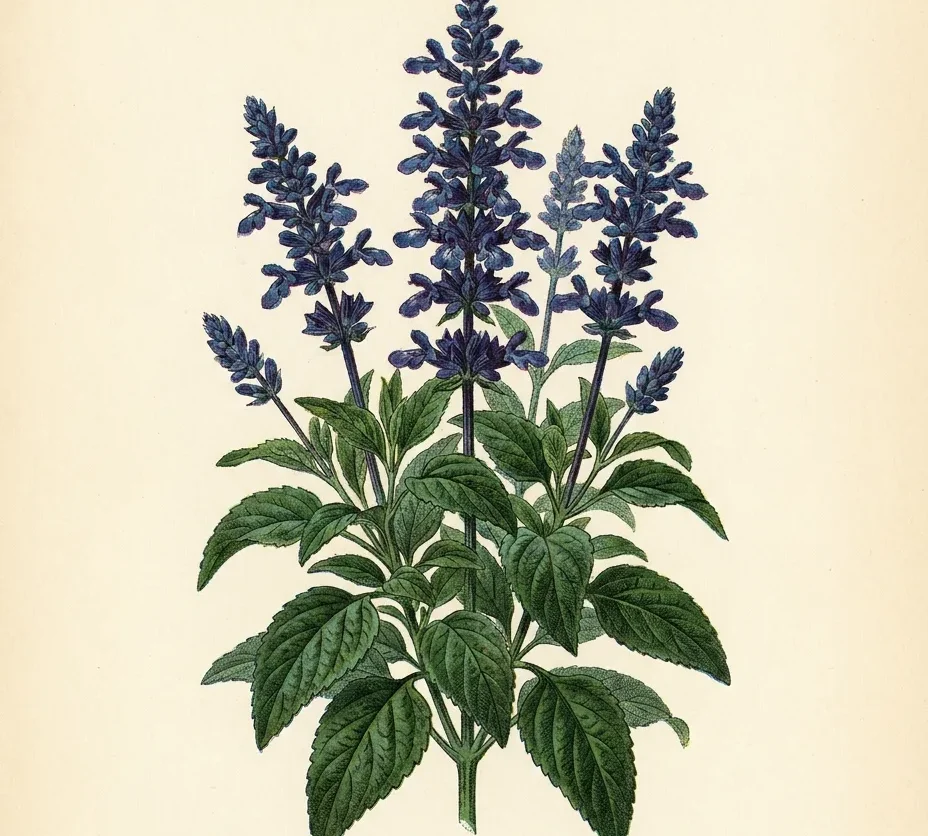
Cut it back when the first spikes fade and it flowers again, and again. Very few perennials carry color from June to September for so little in return.
The record
Every plant in the database answers the same questions in the same order, so two entries can be read line for line. 16 of 17 fields sourced.
- Light
- Full sun
- Light detail
- 6 hours minimum; tolerates 2 to 6 with looser growth
- Water
- Low
- Water detail
- Drought tolerant once established; water through the first season
- Soil
- Well drained above all; tolerates sandy and gravelly
- Soil pH
- Slightly acidic to neutral
- Mature size
- 18 to 36 in tall, 6 to 24 in wide
- Toxicity
- not recorded
- Lifecycle
- Perennial
- Difficulty
- Easy
- Hardiness zones
- 3 to 8
- Bloom time
- June to September, reblooming after shearing
- Flower color
- Violet-blue, lavender, pink or white
- Pollinators
- Bees, butterflies and hummingbirds
- Deer resistant
- Yes
- Spacing
- 1 to 3 ft apart, by cultivar
- Native range
- Europe and west-central Asia
Hardy in zones 3 to 8. Colder than zone 3, grow it in a container and overwinter it under cover.
Flushes of flower in one season. Cut back promptly after each one and a June start still carries color in September, which is unusual for a perennial that asks so little.
The year
Plant or divide and prune, and when it is actually in flower. Everything else is leaving it alone.
The perennial worth knowing before the annual
Salvia is one of those words that covers several different plants, and the split matters before you buy anything. The scarlet bedding salvia sold in trays every May is an annual that dies at the first frost. Perennial salvia, Salvia nemorosa, is a hardy plant that returns for years, and Illinois Extension lists it across zones 3 to 8.
What makes the perennial worth the shelf space is not the first flush of flower. It is that a plant cut back after flowering will bloom again, and again, so a clump that starts in June can still be carrying color in September. Very few perennials do that without asking for anything in return.
Is salvia the same thing as sage
Yes, and that is the source of most of the confusion around this plant. Salvia is the botanical name of the genus, and sage is the English name for the same group. The kitchen herb is one species in it, Salvia officinalis, so every sage is a salvia while very few salvias are the kitchen sage.
In practice the trade has split the word: nurseries label the culinary species sage and shelve it with the herbs, and label everything ornamental salvia and shelve it with the perennials. Same genus, two aisles.
Types of salvia worth knowing by name
The genus runs to more than nine hundred species, which is why care advice written for salvia in general is often wrong for the salvia in front of you. These are the ones actually sold in American garden centers, and they differ in hardiness far more than in what they want.
| Species | Common name | What it looks like | Hardiness and habit |
|---|---|---|---|
| Salvia nemorosa | Woodland sage | Dense upright spikes of blue and purple over low foliage. Cultivars such as Caradonna and May Night | The hardy perennial backbone, and the one that reliably reflowers after a cut back |
| Salvia greggii | Autumn sage | Small aromatic leaves and loose flowers at the red end, into pink and coral | Tough, drought-hardy and shrubby. A staple in the southwest, borderline in cold zones |
| Salvia guaranitica | Anise-scented sage | Deep violet-blue flowers on a big plant, five to six feet, with a licorice scent to the leaves | Hardy to about zone 7. Black and Blue is the cultivar everyone means |
| Salvia elegans | Pineapple sage | Scarlet late flowers and leaves that genuinely smell of pineapple | Tender, grown as an annual in most of the country. Flowers very late, which is its point |
| Salvia farinacea | Mealycup sage | Slim blue-violet spikes with a powdery stem, Victoria Blue being the common one | Perennial in the south, sold and used as a bedding annual almost everywhere else |
| Salvia splendens | Scarlet sage | The blocky red bedding plant sold in flats every spring | A tender annual, and the salvia most people have met without knowing the name |
| Salvia officinalis | Garden sage | Gray-green culinary leaves, short spikes of light purple | Hardy perennial, grown for the kitchen rather than for the flower |
The practical point buried in that table is hardiness. Several of the most-planted salvias are perennial in the south and annual in the north, so a plant that a neighbor two states away describes as coming back every year may be a one-season purchase where you are. The botanical name on the label, not the word salvia, is what tells you which case you have.
Site and soil
Full sun, and well-drained soil above all else. Illinois Extension is blunt about the priority: well-drained soil gives the best performance. NC State lists it as tolerating moist, occasionally dry, sandy and gravelly ground, which is a wide range, and the common thread across all of it is that water leaves.
It will take partial shade, two to six hours of direct sun, and it pays for it in the usual way: looser growth, fewer flower spikes, and a plant that opens at the middle rather than standing as a neat mound.
Rich feeding is not required and generally not helpful. Salvia grown in reasonable soil with compost worked in needs no supplementary fertilizer, and a heavily fed plant makes soft stems that flop the first time it rains hard.
Planting
- Give it the sunniest position you have spare
Six hours as a minimum. This is a plant that pays back light directly in the number of flower spikes it produces.
- Space one to three feet apart, by cultivar
The compact forms sit at the bottom of that range and the taller ones at the top. Crowded salvia is the version that gets mildew in a still, humid summer.
- Check the drainage before you dig
If water stands in the hole after rain, raise the planting or choose somewhere else. Winter wet kills more perennial salvia than winter cold.
- Water through the first season, then stop fussing
It is drought tolerant once established, and the first summer is what decides whether the roots ever get deep enough for that to be true.
Cutting back, which is the whole trick
This is the one job that separates a salvia that flowers for three weeks from one that flowers for three months.
Cut the old bloom stalks back promptly as they fade, and the plant reblooms through autumn. Iowa State’s guidance for plants of this shape, leafy stems with flowers at the top, is to be braver than feels comfortable: shear the whole plant back by about half rather than picking off spent spikes one at a time.
Done in early or mid summer, that hard cut produces a fresh mound of foliage within a fortnight and a second flush of flower behind it. Left undone, the plant sets seed, stops producing spikes, and spends the rest of the season as a tired green cushion.
Through the year
Growth starts from the base in spring, and the first flush of spikes runs from June, with NC State giving a June to September window across the season as a whole.
In autumn, foliage can be left standing over winter or cut back once it has gone; leaving it gives some cover for overwintering insects and a little protection to the crown. Divide clumps when the center starts to thin and the plant opens out, which is the usual sign that a perennial has outgrown its own middle.
What it brings to a bed
Three things, and they are the reason it appears in so many planting plans.
First, pollinators. NC State records the flowers as attracting bees, butterflies and hummingbirds, which is an unusually broad list for one plant, and the reason it earns its place in a pollinator planting rather than just tolerating the label.
Second, animals leave it alone. NC State describes it as seldom damaged by deer or rabbit browsing, and Illinois Extension reports it as deer and rabbit resistant. Resistant is not proof, and in heavy pressure animals eat things they normally pass, but this is a plant that survives where hostas do not.
Third, shape. It makes a neat mound with vertical spikes above it, which is a form most beds are short of. Next to rounded or flat-topped flowers it does structural work that a photograph of the plant alone does not convey.
What goes wrong
Less than with most perennials. NC State records no serious problems, with Southern bacterial wilt and Southern blight as occasional issues rather than routine ones.
The usual complaints are cultural. A plant that flops has either too little sun or too much feeding. A plant that stopped flowering in July was not cut back. A plant that died over winter was almost certainly standing in ground that stayed wet, which is the same sentence that appears on most drought-tolerant perennials in this database.
Toxicity, in plain terms
NC State’s entry for Salvia nemorosa carries no toxicity listing, and the ASPCA does not list this species among its toxic plants. That is not the same as a positive statement of safety, which is why the record on this page reads not recorded rather than a confident no.
In practice it is an aromatic-leaved plant that animals avoid rather than graze, and it is a common choice in gardens where a dog is loose. If a pet eats a quantity of any plant and is unwell, ring a vet rather than reading a page about it.
Frequently asked questions
- Is salvia the same as sage?
- Yes. Salvia is the genus and sage is its English name, so every sage is a salvia. The kitchen herb is one species in it, Salvia officinalis. Nurseries split the word by aisle rather than by botany: culinary species get labeled sage, ornamental ones get labeled salvia.
- What are the main types of salvia?
- Salvia nemorosa is the hardy perennial backbone with upright blue spikes, greggii the tough shrubby one in reds and pinks, guaranitica the tall violet-blue Black and Blue, elegans the late scarlet pineapple sage, and splendens and farinacea the bedding annuals sold in flats.
- What is Black and Blue salvia?
- A cultivar of Salvia guaranitica, with very dark violet-blue flowers held in near-black calyces on a plant that reaches five to six feet. It is hardy to about zone 7 and grown as an annual north of that, and it is one of the strongest hummingbird plants you can put in a border.
- Which salvias are hardy in a cold garden?
- Salvia nemorosa and its cultivars, and officinalis for the kitchen. Most of the others sold as perennials in the south, including greggii, guaranitica, elegans and farinacea, behave as annuals once winters get hard. Check the botanical name rather than the word salvia.
- Is salvia a perennial or an annual?
- Both words are sold under the same name. Salvia nemorosa is a hardy perennial through zones 3 to 8. The scarlet bedding salvias sold in spring trays are annuals and die at the first frost, whatever the label on the tray says about salvia in general.
- How do I get it to flower a second time?
- Cut it back promptly when the first spikes fade, and be decisive about it: shearing the whole plant by about half works better than removing spent spikes individually. A fresh mound of leaves follows within a couple of weeks and the second flush comes behind it.
- Do deer eat salvia?
- Seldom. NC State records it as seldom damaged by deer or rabbit browsing, and Illinois Extension reports the same. In areas of heavy deer pressure animals will eat plants they normally avoid, so treat this as strongly resistant rather than deer proof.
- Why is my salvia flopping open in the middle?
- Too little sun or too much feeding, usually both. It wants six hours of direct light and needs no supplementary fertilizer in reasonable soil. A clump that opens out with age is also telling you it is ready to be divided.
- Does it need a lot of water?
- Not once established. It is drought tolerant, and its real weakness is the opposite: ground that stays wet, particularly over winter. Water it through its first season and then leave it to get on with it.
Companion plants
How this entry is compiled
- Care values come from university extension publications and the USDA hardiness map, never from other gardening sites.
- Toxicity follows the ASPCA listing and is quoted rather than summarized.
- A value we cannot source is printed as not recorded, never estimated.
Compiled and checked by the Gardnicks editorial desk · last checked 2026-08-16
Sources for this entry
- NC State Extension Gardener Plant Toolbox, Salvia nemorosa
- University of Illinois Extension, Perennial Salvia
- Iowa State University Extension, Perennial Deadheading
Where two sources disagree, the entry follows the one closest to the plant’s own growing region and says so in the text.
What kills it
Three failures cover almost everything readers write in about.
More in Flowers
 Rose
Full sun · zones not recorded
Rose
Full sun · zones not recorded
 Peony
Full sun · zones 3 to 8
Alstroemeria
Full sun · zones 7 to 10
Peony
Full sun · zones 3 to 8
Alstroemeria
Full sun · zones 7 to 10
 Dahlia
Full sun · zones 7 to 10
Dahlia
Full sun · zones 7 to 10
Plates are illustrations, not photographs of a specific plant, and are not evidence of a variety, place or season.