Trees & Shrubs
The permanent layer
Search every entry
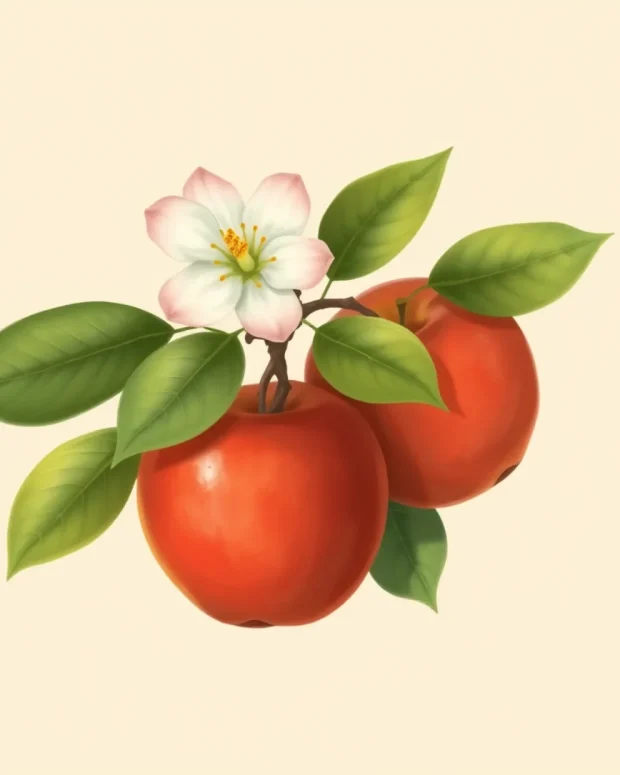
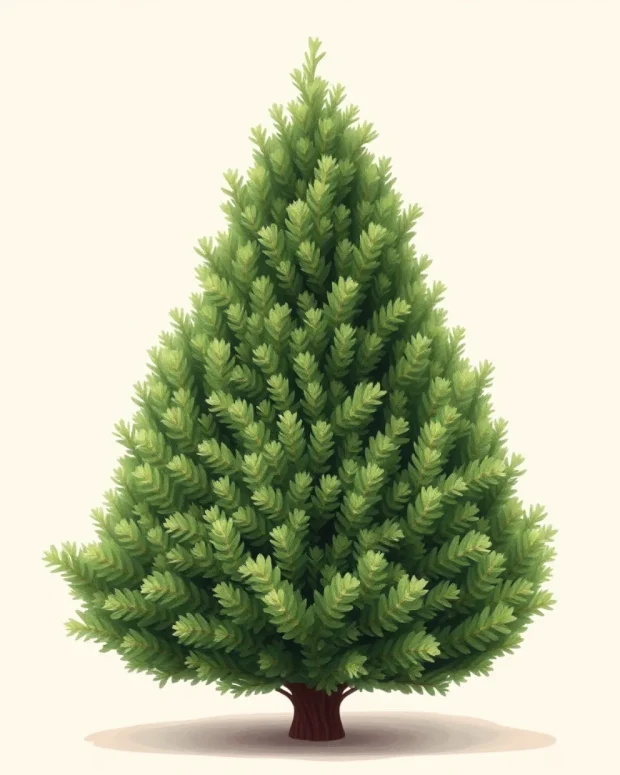
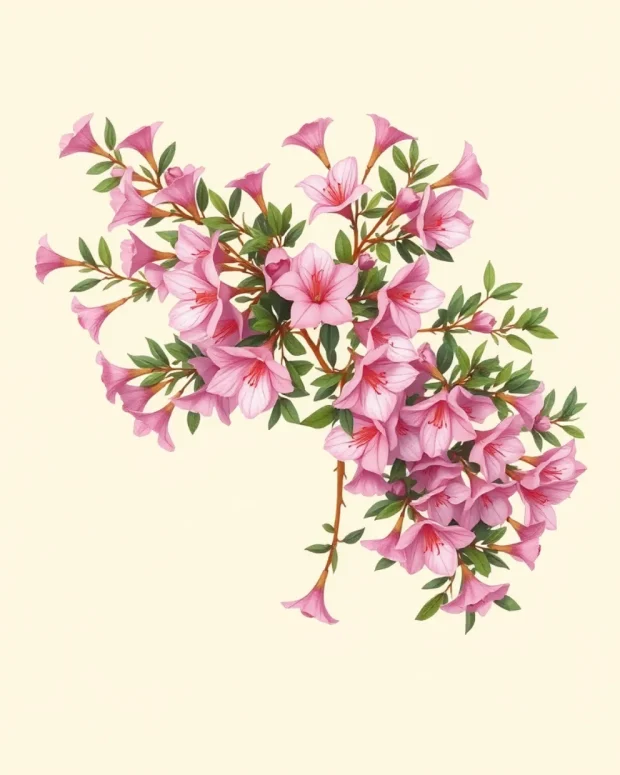
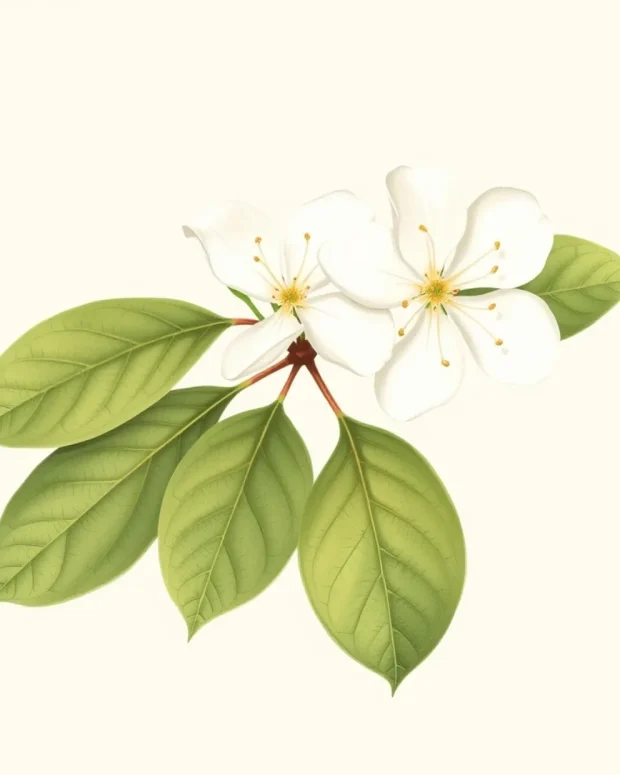
Start with these four
The permanent layer, chosen so that between them they answer the questions this section exists for: how big it really gets, how fast, and whether it holds its leaves in winter.
Apple tree
Full sun · zones 4 to 9
Arborvitae
Full sun · zones 3 to 7
Azalea
Part shade · zones 4 to 8
Dogwood tree
Part shade · zones 5 to 9
Plates are illustrations, not photographs of a specific plant, and are not evidence of a variety, place or season.
All trees & shrubs
The full section as a record. Every entry answers the same questions in the same order, so two can be read line for line. Sort by name, hardiness or bloom time.
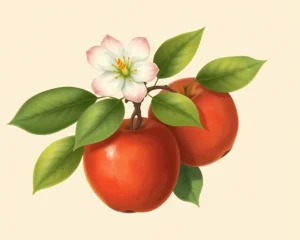 Apple treeMalus domesticaFull sun4 to 9ModerateSpring, white with a…
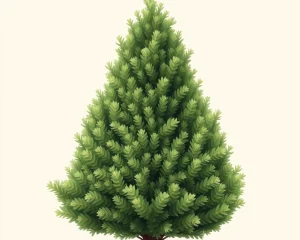 ArborvitaeThuja occidentalisFull sun3 to 7Moderatenot recorded
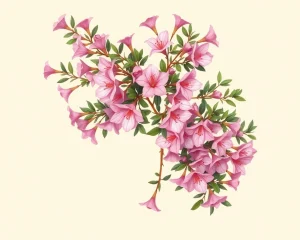 AzaleaRhododendron spp.Part shade4 to 8ModerateApril; rhododendrons later in…
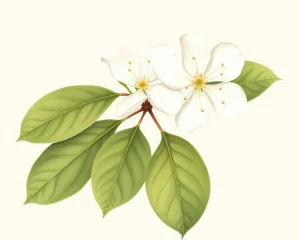 Dogwood treeCornus floridaPart shade5 to 9ModerateMar to MayEvergreennrFull sunnot recordedModeratenot recordedHoneysuckleLonicera sempervirensFull sun4 to 9ModerateMar to Jul
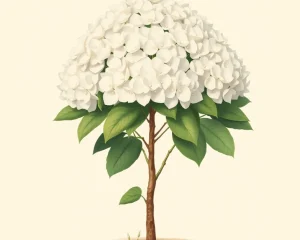 Hydrangea treeHydrangea paniculataFull sun3 to 8ModerateSummer into autumn
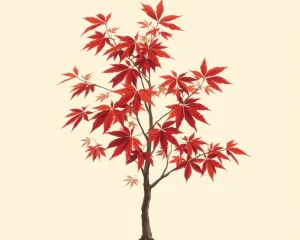 Japanese mapleAcer palmatumPart shade5 to 8ModerateSpring, small red to…
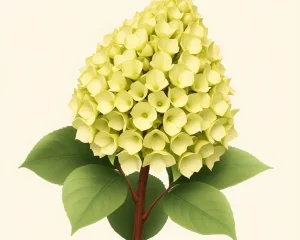 Limelight hydrangeaHydrangea paniculataFull sun3 to 8ModerateSummer into autumn
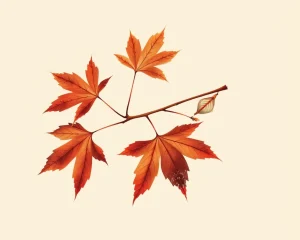 Maple treeAcer rubrumFull sun2 to 9ModerateLate winter, small red…
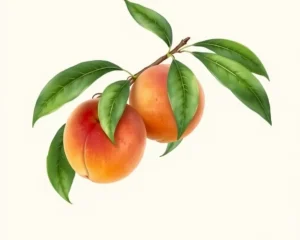 Peach treePrunus persicaFull sun5 to 9ModerateSpring, pink and fragrant
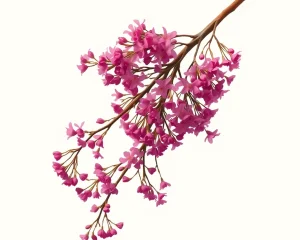 RedbudCercis canadensisFull sun4 to 9ModerateMar to May
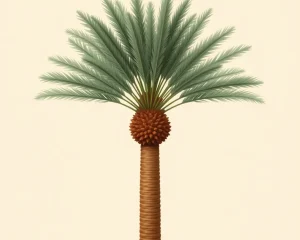 Sago palmCycas revolutaPart shade9 to 12Lownot recorded
 When this section is actually in flower
The point of a bed is that something is always doing something. Bloom time for 10 of the 13, laid over the same twelve months, so the gaps are as visible as the peaks.
Ranges are for the species in average conditions. They run earlier in the south and later in the north, so read the shape rather than the dates.
Two entries, read side by side
This is the reason every page asks the same questions in the same order. Two plants that look interchangeable in a catalog photograph are not interchangeable in a bed, and the differences show up in a handful of rows.
Highlighted rows are where the two actually differ. 6 of the rows above are not the same on both sides, and any one of them can be the reason a plant fails in a spot the other would have taken.
Find the trees & shrub for your conditions
Three answers narrow 13 entries down to a handful. Each choice is a link, so you can back out at any point without losing your place.
Counts are entries in this section that match. Nothing is filtered out for being unpopular, only for failing the condition you picked.
Types of shrubs and trees, and what each one is for in a landscape
Trees and shrubs are the only plants in a garden that get harder to change every year. A perennial in the wrong place is a spade and an afternoon; a shrub planted too close to a wall is a decision you live with, and a shade tree under a power line is somebody's invoice. The types below are sorted by the job they do in a landscape rather than by botanical family, and every size given is the mature size from the entry, not the size on the label at the nursery.
Evergreen and deciduous at a glance
| Type | What it does | Foliage in winter | Examples in this section |
|---|---|---|---|
| Evergreen shrubs and trees | Hold the shape of a garden when everything else has gone | Green all year, needled or broadleaf | Arborvitae, sago palm in warm zones |
| Deciduous shrubs | Flower harder, then disappear for the winter | Dropped in autumn, often with color first | Azalea, limelight hydrangea, honeysuckle |
| Deciduous trees | Shade in summer, light in winter, which is the point | Dropped, with fall color on the good ones | Maple, Japanese maple, dogwood, redbud |
| Fruit trees | Blossom, then a crop, then bare branches | Dropped | Apple, peach |
A landscape built only from evergreens reads as a parking lot in June, and one built only from deciduous plants reads as a construction site in January. The usual working ratio is roughly a third evergreen for structure, the rest deciduous for interest and color.
Types of shrubs by the job they do
Shrubs are the layer people get wrong most often, because a shrub bought for its flower is planted where its mature width was never considered.
| Job in the landscape | What it has to do | Shrubs in this section | Typical mature spread |
|---|---|---|---|
| Foundation planting | Sit under windows for decades without being cut back twice a year | Compact azalea, dwarf arborvitae cultivars | 3 to 8 ft |
| Hedge and screen | Grow together into one green wall and take shearing | Arborvitae, upright honeysuckle | 3 to 15 ft |
| Specimen shrub | Stand alone and carry a view on its own | Limelight hydrangea, hydrangea tree | 6 to 25 ft |
| Informal border | Flower and then get out of the way | Azalea, honeysuckle | 5 to 8 ft |
Read the mature spread before the flower color. An azalea listed at 5 to 8 feet wide is planted at least four feet from the wall, or in six years it is pressed against the siding and the only fix is a saw.
Types of trees by mature size
| Size class | Mature height | Trees in this section | Where they belong |
|---|---|---|---|
| Small ornamental trees | 15 to 25 ft | Japanese maple, dogwood, peach, apple on dwarfing stock | Front gardens, courtyards, under utility lines |
| Medium trees | 20 to 30 ft | Redbud, apple on standard roots | Street side, corner of a lot, edge of a bed |
| Large shade trees | 40 ft and over | Maple, arborvitae in the species | Open ground, well away from foundations and drains |
A maple listed at 40 to 120 feet tall is not a front-garden tree in any reading of that range, and the species arborvitae at 40 to 60 feet is not the neat green column people picture when they buy one. Cultivars of both are far smaller, which is why the entry names the species figure and says so.
Year round interest: what a shrub gives you when it is not flowering
Flower is three weeks. Year round interest is the rest of it, and it comes from four things nurseries rarely put on the label. This is also where low maintenance is really decided: a shrub with good foliage and a natural shape needs far less work than one kept flowering by constant pruning.
- Foliage: leaf color and texture carry a landscape longer than any bloom. Japanese maple is grown for foliage first, in green varieties and in deep red ones, and its flowers are not the point at all.
- Fall color: the same deciduous trees that give summer shade turn in autumn, and maple and dogwood are the reliable ones.
- Bark and structure: winter is when bark shows. A multi-stemmed shrub and a single-trunk standard read completely differently in January.
- Fruit and seed: dogwood and apple carry fruit that feeds birds long after the flowers have gone.
- Flower color across the season: azalea flowers white, pink or red depending on the variety, and limelight hydrangea opens lime green, fades to white and ages to pink on the same plant.
Native shrubs and trees are the shortcut past most of this. Redbud and flowering dogwood are eastern North American natives, and native plants are adapted to the rainfall and soil they evolved in, which is what low maintenance actually means. Watering is the mistake people stop too early: a newly planted tree or shrub wants a deep soak once or twice a week through its first two growing seasons, on the root ball rather than on the lawn around it.
How to choose a tree or shrub you will not regret
This is the section where a mistake is expensive rather than annoying. A perennial in the wrong place is moved in an afternoon. A tree in the wrong place is a decision you live with for twenty years and then pay someone to undo, and the reason it happens is almost always the same: the plant was bought at the size it was in the pot.
Mature size is the whole decision
Every entry in this section records the size the plant actually reaches in a garden, not the size on a nursery label, because the two are often different. Next to it sits the growth rate, because a plant that takes fifteen years to reach its listed height is a completely different proposition from one that gets there in four.
The number people misjudge is not the height, it is the spread. Dogwood, redbud and many Japanese maples end up wider than they are tall, so the dimension that runs into the path, the boundary or the wall is the one nobody measured.
- Measure the distance to the nearest wall, path, drive and boundary before you shop
- Read the mature spread, then plant to half of it as the minimum clearance
- Check the cultivar name, because a species and its dwarf form are stocked side by side under similar labels
- Assume no pruning will keep a large plant small; pruning controls shape, not eventual size
Arborvitae is the clearest example. The plain species reaches forty to sixty feet, while the narrow cultivar people actually want stays around twelve. Unnamed stock is a lottery.
Roots decide where it cannot go
Root spread is recorded separately from canopy width because they are not the same measurement, and most people asking what to plant near a driveway or a septic field are asking a root question without the vocabulary for it.
Two habits matter in a garden. Surface rooting, as in red maple, produces a dense mat in the top few inches that lifts paving and makes grass beneath the canopy impossible. Sensitivity to disturbance, as in redbud and witch hazel, means the plant should go into its final position immediately and never be moved.
Planting depth kills more woody plants than cold does
A tree set too deep does not die outright. It sits, fails to grow, and declines slowly over years, which is why the cause is so rarely identified and so often blamed on a pest.
The rule is one line: the root flare, where the trunk widens into the roots, stays visible at the surface. Dig the hole wide rather than deep, tease out any roots circling the root ball, and do not improve the backfill heavily, because a pocket of rich compost in surrounding clay becomes a sump that holds water around the roots.
Pruning: the timing is the technique
Nearly every complaint about a shrub that flowered once and never again is a timing error, and it turns on a single question: does the plant form its flower buds on last year's wood or on this year's growth?
Lilac, forsythia, azalea and bigleaf hydrangea flower on old wood and are pruned straight after flowering. Panicle hydrangea, butterfly bush and most roses flower on new growth and are pruned in late winter, where cutting hard increases the display. Every entry in this section says which case the species falls into.
Two hard limits cut across that. Maples and birches bleed heavily from spring cuts and are pruned while dormant. Conifers do not regrow from bare interior wood, so a cut past the green is permanent, which is why deer damage on an arborvitae hedge never grows back.
Evergreen or deciduous is a functional choice
If the purpose is screening, this is the only question that matters, because a deciduous screen works for the half of the year when nobody is looking out of the window. If the purpose is a tree to sit under, deciduous is usually better: shade in summer, light in winter.
The structural test for any garden is to picture it with every herbaceous plant cut to the ground. What remains is this section, and if nothing remains, no amount of summer planting will fix how the garden looks in February.
- Broadleaf evergreens keep flat leaves and keep losing water through them all winter, so they scorch after a dry fall or an exposed winter, and they belong in shelter.
- Needled evergreens are built for exposure, and are what a windbreak or a boundary screen should be made of.
- Semi-evergreen shrubs hold their leaves in a mild winter and lose them in a hard one, so the same plant behaves differently two zones apart.
- Conifers are not automatically evergreen. Larch and bald cypress are conifers that drop every needle each fall, which surprises people who planted one for screening.
Where a plant belongs is a judgement call
Some plants sit on the boundary of this section and flowers, and we follow how people search rather than how a botanist would file it. Hydrangea sits in flowers, because that is overwhelmingly what people mean when they type the name. Its panicle and tree forms sit here, where mature size is the whole decision. Lilac and viburnum are filed here for the same reason in reverse: they are bought as structure first.
Privacy shrubs and screening, where most of the money gets wasted
Screening is the most common reason people buy shrubs, and it is where the largest mistakes get made, because the plant that solves the problem fastest is usually the one that creates a bigger problem in ten years. A privacy screen is a permanent structure. It has to be chosen on mature size first and growth rate second, in that order, and never the other way round.
- Evergreen, if you want privacy in winter. A deciduous hedge is a bare screen for five months, and those are the months when the leaves are off the trees next door as well.
- Dense to the ground. Many trees sold for screening lose their lower branches as they mature, which moves the screen up above eye level, exactly where you did not want it.
- Mature width, because that is what closes the gaps. A row of shrubs that reach eight feet wide will meet; a row that reaches three feet wide will not, however long you wait.
- Growth rate last. A fast grower does not stop when it reaches the height you wanted. Leyland cypress puts on three feet a year and keeps going past sixty, and it is the single most regretted screening plant in American gardens.
| Purpose | What to look for | Spacing | Worth knowing |
|---|---|---|---|
| Formal clipped hedge | Small leaves, dense branching, tolerates shearing | Half to two thirds of mature width apart | Needs cutting once or twice a year forever, which is the real cost |
| Informal evergreen screen | Dense to the ground, and a mature width you can accept | At mature width, so each plant keeps its natural shape | The cheapest screen to own, because it needs almost no pruning |
| Fast temporary screen | Anything quick, planted in front of the permanent choice | Wide, so removal is easy | Plan to remove it. A temporary screen left in place becomes the problem |
| Layered screen | Two or three species at different heights | Staggered, in two offset rows | Survives a disease that would take out a single-species hedge in one season |
| Noise and wind buffer | Depth rather than height, evergreen with dense twigs | Two or more offset rows | Sound needs mass. A single row of anything does very little |
The layered approach is worth the extra thought wherever the screen matters. A row of one species is a single point of failure, and hedges of one plant have been lost wholesale to a single pest more than once.
Small and dwarf evergreen shrubs, and foundation planting
The other half of the shrub question is the opposite problem: plants too big for the place they were put. Almost every overgrown foundation planting was correctly sized on the day it went in, in a one-gallon pot.
| Size class | Mature height | Where it works | Habit to look for |
|---|---|---|---|
| Dwarf evergreen shrubs | Under 3 feet | Under windows, along a path, at a bed edge | Compact and mounding, so it never needs shearing to stay in bounds |
| Small evergreen shrubs | 3 to 6 feet | Foundation planting away from windows, and low screening | Naturally rounded or upright, and dense to the base |
| Medium shrubs | 6 to 10 feet | Corners of a house, and screening a view from a seated position | Upright habit, so the footprint stays reasonable |
| Large shrubs and small trees | 10 to 20 feet | Property lines and true screening | Enough clearance underneath to plant beneath it as it matures |
Two rules make foundation planting work. Set each shrub at least half its mature width away from the wall, plus a foot, so it never has to be cut off flat on one side. And avoid the strip directly under an overhanging eave, which stays dry in every rainstorm and is the hardest spot in a garden to keep a plant alive in.
Deer resistance is a probability, not a promise
Every list of deer-resistant shrubs is a list of what deer eat last. A hungry deer in February eats plants that no list includes, and browsing pressure varies street by street.
- Aromatic foliage, fuzzy leaves and thorns are the traits that put a plant lower on the menu. Boxwood, juniper, spirea and viburnum are usually left alone.
- Arborvitae is the classic exception on the other side. It is sold constantly for screening and is among the first things browsed, so a hedge of it in deer country needs protection for its first several winters or it comes out bare to browse height.
- Protect new plantings rather than the whole garden. Deer damage on an established shrub is cosmetic. On a first-year plant it is fatal.
What to do in the garden, for your zone
One email at the start of each month: what to plant, prune and order in the next four weeks, written for the zone you pick rather than for a national average.
Twelve emails a year, no more. An unsubscribe link in every one, and the zone is used for nothing except deciding which version you get.
When trees & shrubs go wrong
Three failures account for most of what readers ask about in this section.
Questions about trees & shrubs
For a solid clipped hedge, at half to two thirds of the mature width of the plant. For an informal screen that keeps its natural shape, at the full mature width. Planting closer than that does not close the gap faster; it produces crowded plants that thin out at the base.
One that matures under about three feet, through breeding rather than through pruning. That distinction matters: a dwarf cultivar stays small on its own, while a full-size shrub kept small by shearing needs cutting twice a year forever and thins out in the middle.
Because they were sized by how they looked in the pot. Every shrub in a nursery is small. Set each one at least half its mature width from the wall plus a foot, and the planting still works in fifteen years without an annual fight.
No. The lists rank what deer eat last, not what they will not eat, and a hard winter changes the ranking. Aromatic, fuzzy and thorny plants rank low; arborvitae ranks high despite being sold for screening. New plantings need physical protection regardless of the list.
Shrubs carry several woody stems from the base and usually stay under fifteen feet. Trees build one main trunk and go higher. Nurseries blur the line by training shrubs into single-trunk standards, which is why hydrangea appears in this section both as a shrub and as a tree form.
Among the entries here, arborvitae is the standard screening plant in most of the country, and the cultivar decides everything: the species reaches 40 to 60 feet, while the named columnar cultivars stay a fraction of that. Check the cultivar tag rather than the species name.
Autumn in most of the country, because the soil is still warm and the plant spends the winter growing roots rather than leaves. Early spring is the second window. Summer planting works only if you can water it through the first season without fail.
At least half the mature width, and preferably more. A shrub listed at 8 feet wide sits four feet or more from the wall, which feels absurdly far when the plant is a foot across in its pot. For a tree, add the root spread from the entry as well, because roots reach past the branches.
The ones that do more than bloom. Dogwood flowers in spring, carries fruit in late summer and turns red in fall; maple gives shade and fall color; limelight hydrangea holds its flower heads from summer into winter as they dry on the plant.
Rarely, and not at planting. A tree in decent soil needs no fertilizer in its first year and often never. Poor growth is far more often a watering, depth or drainage problem, and a soil test is the only way to know what is actually missing.
Three seasons for a shrub, five or more for a tree. The first year is roots, the second is modest growth, and by the third the plant starts doing what you bought it for. Planting a larger specimen buys less time than people expect, because the bigger root ball takes longer to establish.
Only within what the plant does naturally. Shearing an informal flowering shrub into a box removes the wood that carries next year's flowers, which is why a hedge of flowering shrubs so often stops flowering. Prune after flowering for spring bloomers, and in late winter for those that flower on new growth.
Where a species is commonly sold both as a straight species and as a dwarf or columnar form, the range covers both, because the two are stocked side by side under similar names. The label on the pot is the authority on which one you are holding.