Arborvitae
Thuja occidentalis
American arborvitae / eastern white cedar
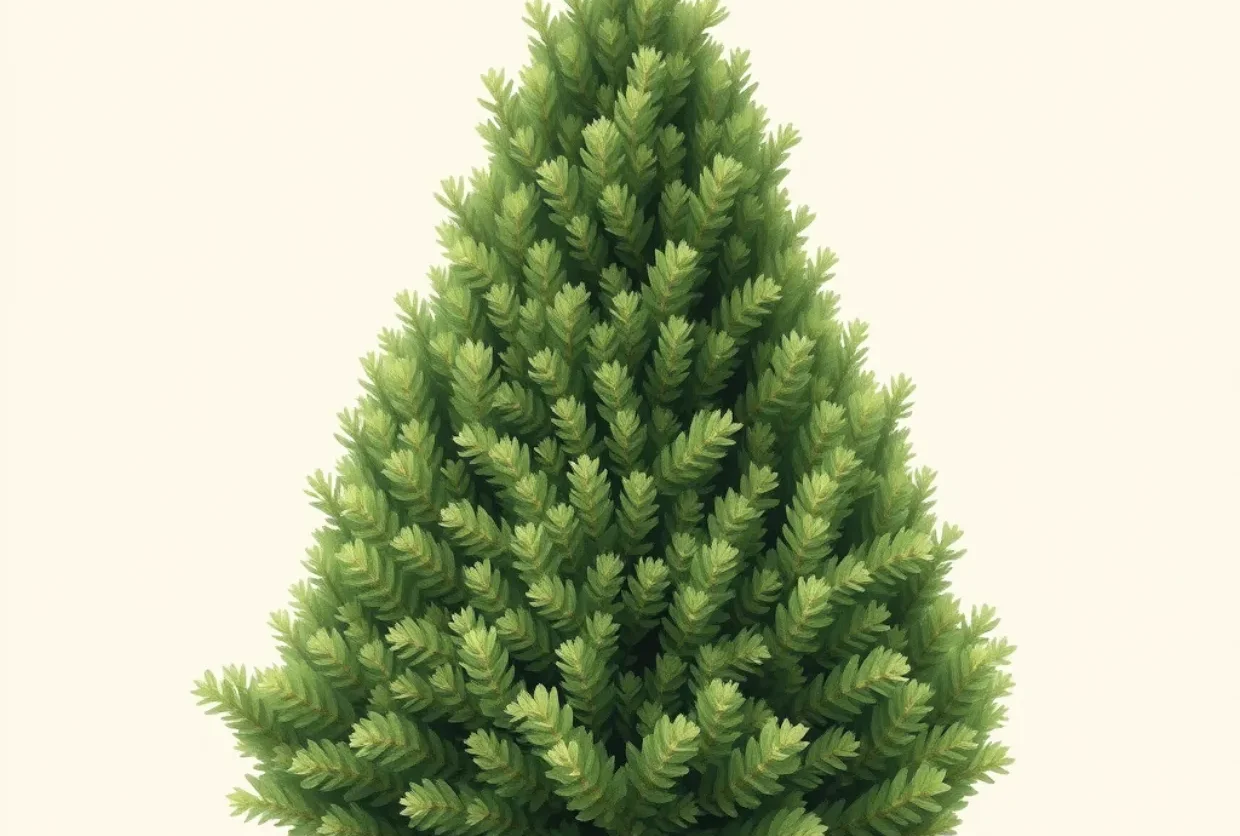
The plain species reaches sixty feet. Almost nobody plants one wanting that, which makes the cultivar name the most important thing on the label.
The record
Every plant in the database answers the same questions in the same order, so two entries can be read line for line. 13 of 16 fields sourced.
- Light
- Full sun
- Light detail
- 6 hours or more; full shade thins the foliage, which is what a screen cannot afford
- Water
- Moderate
- Water detail
- Moist and well drained; a deep soak in late autumn reduces winter burn
- Soil
- Clay or loam, moist and well drained
- Soil pH
- Neutral to alkaline
- Mature size
- 40 to 60 ft tall, 10 to 15 ft wide in the species; cultivars far smaller
- Toxicity
- not recorded
- Lifecycle
- Tree
- Difficulty
- Easy
- Hardiness zones
- 3 to 7
- Growth rate
- Slow
- Root spread
- not recorded
- Pruning window
- Light trimming into green growth only; bare wood does not regrow
- Bloom time
- not recorded
- Deer resistant
- No
Hardy in zones 3 to 7. Colder than zone 3, grow it in a container and overwinter it under cover.
Regrowth from bare wood. Cut back past the green and it stays bare, which is why deer damage at browsing height is permanent and why a hedge cannot be reduced once it outgrows the space.
The year
Plant or divide and prune. Everything else is leaving it alone.
Buy the cultivar, not the species
The species, Thuja occidentalis, reaches 40 to 60 feet tall and 10 to 15 feet wide. Almost nobody plants an arborvitae wanting a sixty-foot tree, and almost nobody is told that is what the plain species does.
What people actually want is one of the named cultivars, and they behave completely differently. Morton Arboretum gives Emerald Green at 10 to 15 feet tall and 3 to 4 feet wide, which is the classic narrow hedge, and Techny at 10 to 15 feet tall but 6 to 10 feet wide, a much broader plant for the same height. Green Giant is not this species at all: it is a hybrid of the giant western and Japanese arborvitaes, fast growing and reaching 50 to 60 feet.
Those are entirely different plants sold under one common name, and the label is the only thing that distinguishes them. A screen planted from unnamed stock is a lottery.
What it wants
Hardy in zones 3a to 7b, which is a genuinely cold-tolerant range, growing slowly.
Full sun to partial shade, six hours or more ideally, and NC State notes that full shade causes the foliage to thin. That thinning is what turns a privacy screen back into a view.
Soil is clay or loam, at neutral to alkaline pH, preferring moist and well drained. NC State describes it as a low-maintenance plant tolerating clay soil, wet sites, black walnut and air pollution, which is an unusually forgiving list. Tolerating black walnut in particular rules out very few other conifers.
Water is the one input it genuinely wants and the one most often withheld, because a conifer looks self-sufficient. Arborvitae prefers moist, fertile ground, and where the site is not naturally moist that means irrigating deeply whenever the soil starts to dry out, not lightly and often. A hedge under drought stress does not wilt visibly the way a shrub does; it thins, browns from the inside, and becomes far more vulnerable to both spider mites and winter burn. By the time it looks wrong, several months of damage have already accumulated.
Feeding is simple and the timing carries a warning. A balanced slow-release fertilizer once a year in spring is the whole program, and it is worth doing on a screen that is being asked to fill space quickly. What matters more is when not to feed: avoid fertilizing from midsummer into fall. A late feed pushes soft new growth that has no time to harden before winter, and that soft growth is exactly what burns in the first hard freeze. The section below on winter burn is the consequence of getting this wrong.
Types of arborvitae, and how big each one gets
The species is a 40 to 60 foot tree, 10 to 15 feet wide, which is not what most people are buying. What is sold for hedges and foundations are cultivars, and the range between them is enormous. The name on the label is the only thing that tells you which you are getting.
| Cultivar | Form | Mature size | What it suits |
|---|---|---|---|
| Green Giant | Broad pyramidal. A hybrid of western red cedar and Japanese arborvitae rather than a form of the common species | 40 to 60 ft tall, 12 to 18 ft wide, growing 3 ft or more a year | Large properties, windbreaks and fast screening. Deer resistant, which the others are not |
| Emerald Green, also sold as Smaragd | Narrow and columnar | 12 to 15 ft tall, only 3 to 4 ft wide, growing 1 to 2 ft a year | The standard narrow hedge. Fits a fence line without swallowing the space. Deer eat it |
| Techny | Pyramidal, dark green | Mid-sized | Holds color better than most through winter |
| Nigra | Narrow, columnar | Mid-sized | Dark green foliage through the winter months |
| Holmstrup | Narrow pyramidal, dense horizontal sprays | Compact | Holds its color well through winter, and slow enough to need little trimming |
| DeGroot’s Spire | Very narrow and columnar, twisted sprays | Slim | Tight spaces and formal accents |
| Little Gem | Dwarf, dense, flattened and broadly globular | About 3 ft tall | Foundation planting and low edging |
| Hetz’s Midget and Golden Globe | Dwarf globes | Small rounded mounds | Foundations, rock gardens and containers. This is what globe arborvitae means |
Two rows decide most purchases. If the job is screening a large property fast, Green Giant does it and nothing else comes close. If the job is a hedge along a fence or a drive where width is the constraint, Emerald Green at three to four feet wide is the answer, and the price of that narrowness is that deer will browse it while they leave Green Giant alone.
Planting a screen
- Work out the mature width before spacing
Narrow cultivars go at roughly two thirds of their mature width for a solid screen. Spacing to the size of the plant in the pot gives a wall that strangles itself in ten years.
- Stagger two rows if you need real screening
A single row has gaps whenever one plant fails. Two offset rows keep working after a loss.
- Water deeply through the first two summers
The slow growth rate means a slow establishment, and arborvitae browns permanently where it has dried out.
- Mulch, and keep it off the trunks
Shallow feeding roots benefit, and it stops mower damage along a hedge line.
- Prune only into green growth
Cut back into bare interior wood and it does not regrow. This is the same rule as lavender and it catches people the same way.
Deer, which decide whether this plant works at all
NC State names deer damage as a serious concern and notes browsing can be significant, alongside the observation that white-tailed deer use the plant for winter shelter.
The pattern is distinctive and depressing: a hedge eaten to a clean horizontal line at exactly the height a deer can reach, green above and bare sticks below. Because the plant does not regrow from bare wood, that damage is permanent.
In deer country this is the single most important thing to know before planting a hundred feet of it. The realistic answers are fencing, or a different plant. Repellents work while they are reapplied, which through a snowy winter is more often than most people manage.
Winter burn
The other characteristic problem is winter burn, which NC State describes as yellowing in exposed windy sites.
It happens when frozen ground stops the roots replacing water that winter wind and sun keep pulling out of the foliage. The plant browns on the exposed side, typically west and south-west, and the damage shows in late winter rather than during the cold itself.
Watering thoroughly in late autumn, before the ground freezes, is the practical defense, along with siting away from the most exposed corner and avoiding late-summer feeding that pushes soft growth into winter.
What actually reduces winter burn
- Water until the ground freezes. An evergreen keeps losing moisture through its foliage all winter, and it cannot replace it once the soil is frozen. A plant that goes into winter dry has no reserve at all, and this single measure does more than everything else combined.
- Mulch 2 to 4 inches deep over the root area. It delays the soil freezing and keeps the roots working for longer into the season.
- Screen it from wind with burlap where the exposure is the problem. This is a physical fix for a physical cause, and it is worth doing on a young hedge on an open boundary for the first few winters.
- Do not feed after midsummer, for the reason given above.
- Watch the de-icing salt. Salt accumulating around a screen planted along a drive or a sidewalk causes salt burn and adds to the desiccation, and it is often mistaken for winter burn alone.
Arborvitae turning brown: working out which cause
Browning is by far the most common complaint about this plant, and it has at least five separate causes with different answers. The pattern and the timing narrow it down quickly.
- Brown deep inside the plant, green on the outside, in autumn. Normal. Conifers shed their oldest interior needles and this is seasonal. Nothing to do.
- Brown on the outside, worst on the windward or sunny side, appearing late winter into spring. Winter burn, covered above. The foliage lost water it could not replace from frozen ground.
- Brown on the side facing a road or drive, at the bottom. Salt from de-icing. The pattern gives it away: it follows the splash zone rather than the wind.
- Whole individual branches browning while the rest stays green. That is flagging, and it points at Seiridium canker. Look for a resinous, oozing lesion on the trunk where the dead branch joins it.
- Dull bronze or grayish cast over the whole plant, with fine webbing. Spider mites, following drought stress.
- Uniform browning from the base upward, with the whole plant declining. Root problems: poor drainage, planting too deep, or roots that never established. This is the one that kills.
The test that separates dead from dormant is simple: scratch a small twig with a thumbnail. Green under the bark means the wood is alive and will refoliate; brown and dry means that section is gone. Arborvitae does not regrow from bare brown wood, so a section that has died back stays a hole, which is why the pruning rule above is to cut only into green growth.
What else goes wrong
NC State lists bagworms, leaf miners, mealybugs, scales and spider mites among insects, and canker plus winter burn among diseases and disorders.
Bagworms are the ones worth watching for, because they are easy to miss and can defoliate a plant. The bags look like small cones made of the plant’s own foliage hanging from the branches, and hand-picking them off in winter removes the eggs before they hatch.
The reason winter hand-picking is worth the trouble is the arithmetic. The bagworm caterpillars build and carry their bags from early June, feeding and enlarging them through summer. In early fall the mature ones fix their bags in place and the adults emerge; the female is wingless, never leaves, and lays over a thousand eggs inside her own bag, which overwinter there until the following June. Every bag removed in winter is a thousand caterpillars that will not hatch onto the hedge, and it costs nothing but the time to walk the row.
Spider mites are the other insect worth knowing, because they follow drought stress and their damage is easily read as something else. The foliage takes on a dull bronzed or grayish cast rather than developing spots, and fine webbing is visible on close inspection. A hedge that has been under-watered through a hot summer is the one that gets them.
Two fungal problems are worth telling apart, because one is cosmetic and one is not.
- Leaf blight (Phyllosticta) is confined to the foliage. Infected leaves turn pale green to yellow and look desiccated. Prune out the affected growth as soon as you see it, but not in wet weather, because pruning cuts in the wet are how the spores travel.
- Seiridium canker attacks the bark and is more serious. It shows as individual branches browning off while the rest stays green, a symptom called flagging, and resinous, oozing cankers can often be found on the trunk near where an infected branch joins it. Prune out and dispose of infected branches; a badly affected tree in a hedge is better removed than nursed, to stop it spreading down the row.
Interior browning in autumn, by contrast, is normal. Conifers shed their oldest inner needles, and a flush of brown deep inside a healthy green plant is seasonal rather than a problem. The way to tell it from anything on the list above is where it sits: seasonal shed is interior and uniform along the row, while blight, canker and mite damage all start on the outside of the plant.
Roots, foundations and drives
Arborvitae roots are fibrous, shallow and comparatively modest, and they do not have the reputation that maple, willow or poplar roots have earned. The plant is not a realistic threat to a house foundation or a paved drive.
What it does do is spread wide and shallow, which has two practical consequences. It competes hard with anything planted underneath or beside it, so a bed at the foot of an established hedge is a losing proposition. And it can lift or crack a thin path or a shallow-laid edging over many years, in the way any shrub of that size will. Plant a screen a reasonable distance from hard surfaces for the sake of the top growth, which needs the room far more than the roots do.
Alternatives, when it is the wrong plant
Three situations make arborvitae a poor choice, and each has a better answer.
- Heavy deer pressure and Green Giant will not fit. Look at holly, boxwood, juniper or a mixed hedge instead. A browsed arborvitae never recovers its lower half.
- Wet or badly drained ground. Arborvitae tolerates wet sites better than most conifers, but a spot that stays saturated wants a willow, a red twig dogwood or a buttonbush rather than a screen that will decline slowly.
- Deep shade. The foliage thins and the screen stops screening. Yew is the traditional answer for a formal evergreen hedge in shade.
Toxicity, in plain terms
NC State’s entry carries no toxicity listing for Thuja occidentalis, and this page records that as not recorded rather than a confident no, because an absent listing is not a positive statement of safety.
Thuja foliage does contain thujone, and concentrated thuja oil is a substance to keep away from animals and children. Deer browse the foliage without harm, so the risk is about concentrated preparations rather than the growing plant.
Frequently asked questions
- How far apart should I plant arborvitae for a hedge?
- At roughly two thirds of the cultivar mature width, so the mature width has to be known first. That is why the cultivar name matters: Emerald Green is 3 to 4 feet wide, Techny is 6 to 10 at the same height, and the plain species reaches 10 to 15.
- Why is my hedge bare at the bottom on one side?
- If it is cut to a clean horizontal line, that is deer browsing, which NC State flags as a serious concern. Arborvitae does not regrow from bare wood, so the damage is permanent and the answer is fencing or a different plant.
- What are the different types of arborvitae?
- Green Giant for fast screening on a large property, at 40 to 60 feet and deer resistant. Emerald Green for a narrow hedge, at 12 to 15 feet tall by only 3 to 4 feet wide. Techny, Nigra and Holmstrup for mid-sized plants that hold winter color. Little Gem, Hetz’s Midget and Golden Globe are the dwarf globe forms for foundations and containers.
- Can arborvitae roots damage a foundation?
- Realistically no. The roots are fibrous and shallow rather than invasive, and this is not a maple or a willow. They do compete hard with anything planted beneath them, and over many years they can lift a thin path. Site a screen for the width of the top growth rather than out of fear of the roots.
- Why did it go brown over winter?
- Winter burn, from wind and sun pulling water out of the foliage while frozen ground stops the roots replacing it. Water deeply in late autumn before the ground freezes, and avoid the most exposed corners.
- Can I cut it back hard?
- No. Prune only into green growth; cut back into bare interior wood and it will not regrow. Regular light trimming keeps a hedge within bounds, and letting it outgrow the space is not recoverable.
- Is the brown inside the plant a disease?
- Usually not. Conifers shed their oldest interior needles, so brown deep inside an otherwise green plant in autumn is normal. Browning at the tips and on the outside is the kind that indicates a problem.
Companion plants
How this entry is compiled
- Care values come from university extension publications and the USDA hardiness map, never from other gardening sites.
- Toxicity follows the ASPCA listing and is quoted rather than summarized.
- A value we cannot source is printed as not recorded, never estimated.
Compiled and checked by the Gardnicks editorial desk · last checked 2026-08-16
Sources for this entry
- NC State Extension Gardener Plant Toolbox, Thuja occidentalis
- The Morton Arboretum, Eastern arborvitae
- The Morton Arboretum, Giant arborvitae
- Iowa State Extension, Arborvitae: Versatile Evergreens for the Home Landscape
- Penn State Extension, The Mighty Arborvitae
Where two sources disagree, the entry follows the one closest to the plant’s own growing region and says so in the text.
What kills it
Three failures cover almost everything readers write in about.
More in Trees & Shrubs
 Peach tree
Full sun · zones 5 to 9
Peach tree
Full sun · zones 5 to 9
 Dogwood tree
Part shade · zones 5 to 9
Honeysuckle
Full sun · zones 4 to 9
Dogwood tree
Part shade · zones 5 to 9
Honeysuckle
Full sun · zones 4 to 9
 Azalea
Part shade · zones 4 to 8
Azalea
Part shade · zones 4 to 8
Plates are illustrations, not photographs of a specific plant, and are not evidence of a variety, place or season.