Fruit
Trees, canes and vines grown to eat
Search every entry
All fruit
The full section as a record. Every entry answers the same questions in the same order, so two can be read line for line.
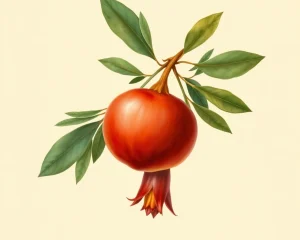 PomegranatePunica granatumFull sun8 to 10Lownot researched
 Three decisions before you look at the fruit
Fruit is the one section where the plant can be perfectly healthy for years and still be a failure, because health and cropping are separate questions. Three things decide whether you get fruit, and none of them is the variety name people shop by.
Pollination: can it set fruit at all?
Some fruit is self-fertile and crops alone. Peaches are, which is the main way they are easier than apples. Most apples are not: they need another cultivar flowering at the same time to act as a pollen donor, and a single apple tree in a garden with no other apple or crabapple within bee range will flower beautifully every spring and set almost nothing.
Co-blossoming is the part that gets missed. Two apple trees that flower three weeks apart do not pollinate each other. A crabapple often works better than a second apple because it flowers over a longer period and overlaps with almost anything.
Before buying a second tree, look over the fence. Bees range several hundred feet, so a neighbor's tree counts.
Chill hours: will it break dormancy properly here?
Most temperate fruit needs a set number of hours below about 45 degrees before it will flower normally, and cultivars differ widely. This is the constraint that fails invisibly in both directions.
A high-chill variety in a warm region never accumulates enough cold, so it leafs out raggedly and flowers poorly year after year. A low-chill variety in a cold region satisfies its requirement during a mild spell in February, blooms early, and loses the entire crop to the next frost. Neither is a care problem and neither can be fixed after planting.
The chill requirement is on the tag or in the catalog description. Matching it to your region comes before flavor, size or color.
Rootstock: how big will it be and when will it fruit?
Two trees with the same variety name can be eight feet apart or thirty, and the difference is the rootstock they were grafted onto. It also decides how soon the tree crops: dwarfing rootstocks often fruit in the second or third season, standard ones can take six years or more.
That makes rootstock the single most consequential line on a nursery label and the one most often ignored. Entries here record the common options rather than pretending the variety alone decides size.
Grafted plants carry a second consequence: suckers from below the graft union are the rootstock rather than the variety, and left alone they gradually take over. Removing them is routine maintenance, not an optional tidy-up.
Then the work, which is real
Fruit is the highest-maintenance section on this site and it is worth saying so plainly rather than discovering it in July. Annual pruning, fruit thinning and some pest management are not optional extras.
- Prune every year, to keep the center open so sun reaches the fruit and air dries the foliage
- Thin the fruit in early summer, because only a fraction of the flowers are needed for a full crop
- Keep the trunk base clear and visible, since borers enter at ground level
- Clear fallen fruit and mummified fruit, which carry disease into next season
- Choose disease-resistant cultivars at purchase, which removes more future work than any spray program
Thinning feels wasteful and it is the difference between a heavy crop of small poor fruit and a moderate crop of good fruit. It also stops branches breaking under an overload and reduces the tendency to crop heavily one year and barely at all the next.
How to grow fruit trees: site, soil and the planting hole
The three decisions above are made at the nursery. This is the part made in the ground, and it is where the next thirty years of a fruit tree are settled, because almost nothing here can be changed once the roots are in. A backyard orchard of three trees and a row of soft fruit is planted the same way a commercial one is.
Location: full sun, moving air, and not the low corner
Fruit trees want at least six hours of direct sun and produce better with eight to ten. Shade does not kill them; it reduces fruit production and keeps the foliage damp, which is how most fruit tree disease starts.
- Choose the highest ground you have rather than the lowest. Cold air drains downhill and settles, and a spring frost during bloom is the most common single reason a healthy tree carries no crop.
- Leave the air moving. An enclosed corner with a fence on two sides holds humidity around the leaves all morning, and that is what scab and brown rot need.
- Stay clear of large established trees. Their root systems reach further than their branches and take the water and the nutrients first.
- Plan for water access. A young fruit tree needs watering through its first two summers, and a location out of hose reach is a location that gets watered twice.
- Give each tree its mature spread rather than its nursery size. Crowded fruit trees shade each other, and a shaded branch is a branch that stops producing.
Soil: drainage first, pH second, fertility last
Fruit trees need deep, well-drained soil more than they need rich soil. Roots sitting in waterlogged ground for even a few days in spring suffocate, and root rot in a fruit tree is not treatable. Dig a hole a foot deep, fill it with water, and see how long it takes to drain. If water is still standing the next day, plant on a low mound of soil raised eight to twelve inches above the surrounding ground rather than trying to fix the drainage.
- Test the soil before you plant. The whole planting area can be amended once, cheaply, and never again once a tree is in the ground.
- Most tree fruit wants a soil pH between 6.0 and 6.5. Blueberries are the exception among common garden fruit and need 4.5 to 5.5, which has to be built into the soil before planting rather than corrected afterwards.
- Work compost through a wide area rather than into the hole alone, so the roots meet the same soil in every direction.
- Keep fertilizer out of the planting hole. Fresh fertilizer against new roots burns them, and a young tree needs root growth rather than a push of soft top growth.
The planting hole, and the one mistake that is permanent
Dig the hole two to three times as wide as the root system and no deeper than the roots sat before. A hole dug too deep settles, and a tree that settles sits lower every year.
- Backfill with the soil that came out. A rich pocket in poor ground makes roots circle inside it instead of leaving it, which is the opposite of what a young tree needs.
- Keep the graft union two to four inches above the finished soil level. This is the mistake with no remedy: buried, the variety roots from above the graft, the dwarfing rootstock stops controlling the size, and a tree sold as ten feet becomes a standard.
- Water in heavily to settle the soil around the roots rather than treading it down.
- Mulch two to four inches deep over the root area and pull it back a hand’s width from the trunk. Mulch against bark holds moisture there and invites rot and voles.
- Stake only a tree that needs it, and take the ties off after two years. A tree never allowed to move never builds the trunk strength to stand alone.
When to plant fruit trees
Bare-root trees go in while they are dormant: late winter or very early spring in cold regions, and fall where winters are mild. Fall planting gives the roots several months to establish before the tree has to support leaves, which is why it is preferred wherever the ground does not freeze hard. Container-grown trees can be planted whenever the ground is workable, but they establish fastest in the same two windows and struggle if they go in during midsummer heat.
Years to a first crop, and how much room each one needs
The wait is decided by the rootstock and the species rather than by care, and the spacing is decided by mature spread rather than by how the tree looks on planting day. These are the usual ranges for a home garden.
| Fruit | Years to a real crop | Spacing | Worth knowing |
|---|---|---|---|
| Apple on dwarf rootstock | 2 to 4 | 8 to 10 ft | Needs permanent staking on the most dwarfing rootstocks |
| Apple on semi-dwarf | 3 to 5 | 12 to 15 ft | The usual compromise for a home orchard |
| Apple on standard rootstock | 5 to 8 | 20 to 30 ft | A full-size tree that outlives the person who plants it |
| Peach and nectarine | 2 to 4 | 15 to 20 ft | Self-fertile, short-lived, and the fastest tree fruit to crop |
| Pear | 4 to 6 | 15 to 20 ft | Most varieties need a second variety nearby |
| Sweet cherry | 4 to 7 | 20 to 25 ft | Birds take the crop unless it is netted |
| Fig | 2 to 3 | 10 to 15 ft | Self-fertile, and grown in a container in cold regions |
| Blueberry | 2 to 3 | 4 to 6 ft | Needs acid soil, and crops far better with a second variety |
| Raspberry and blackberry | 1 to 2 | 2 to 3 ft in the row | The fastest fruit in the garden, and the easiest to start with |
| Strawberry | 1 | 12 to 18 in | Best replanted every three or four years |
The first two years, which decide the tree
A young fruit tree is building a root system, and everything done in the first two growing seasons is aimed at that rather than at fruit.
- Water deeply once a week rather than lightly every few days: roughly one to one and a half inches, delivered slowly enough to soak twelve inches down.
- Remove the fruit in the first year, and most of it in the second. Fruit produced by a tree that has not built its frame comes at the cost of the growth that carries every later crop.
- Keep a grass-free circle three feet across around the trunk. Grass competes with young fruit trees harder than most gardeners expect, and it is the reason a mulched tree outgrows a mown one.
- Put a guard around the trunk before the first winter. Voles under snow and rabbits above it girdle young bark, and a girdled tree dies the following summer with no warning.
- Prune for shape in the first three dormant seasons. The frame built then carries fruit for decades, and no amount of later pruning rebuilds a bad one.
Everything on this page assumes the tree is in the right place to begin with. Site, drainage and planting depth account for more dead or barren fruit trees than every pest and disease in the section on problems.
What to do in the garden, for your zone
One email at the start of each month: what to plant, prune and order in the next four weeks, written for the zone you pick rather than for a national average.
Twelve emails a year, no more. An unsubscribe link in every one, and the zone is used for nothing except deciding which version you get.
When fruit go wrong
Three failures account for most of what readers ask about in this section.
Questions about fruit
In the sunniest, highest, best-drained spot you have, with room for the mature spread and a hose within reach. Low ground collects the cold air that destroys blossom, and shaded, still corners keep the leaves wet, which is where fruit tree disease starts.
Deep and well-drained more than rich. Most tree fruit wants a pH of 6.0 to 6.5, blueberries want 4.5 to 5.5, and standing water in spring is more dangerous than poor fertility. If the ground drains badly, plant on a raised mound rather than digging a deeper hole.
No deeper than the roots sat before, and two to three times as wide. The graft union has to finish two to four inches above the soil surface, because burying it lets the variety root above the graft and cancels the rootstock.
Fall where winters are mild, because the roots establish before the tree has to carry leaves. Spring where winters are hard, so a bare-root tree is not sitting in frozen ground with no root contact. Container-grown trees are more forgiving but establish best in the same two windows.
Around one to one and a half inches a week through the first two growing seasons, given in one deep watering rather than several light ones. After that, established trees usually only need water in a drought.
Not in the planting hole, and often not in the first year at all. Feed on the basis of a soil test and of how much the tree grew last season. A fruit tree pushed with nitrogen makes soft growth, attracts aphids and delays the first crop.
By mature spread rather than by how they look at planting: roughly 8 to 10 feet for dwarf apples, 12 to 15 for semi-dwarf, 20 to 30 for standards, and 15 to 20 feet for peaches and pears. Crowding is the most common reason a backyard orchard produces less each year as it matures.
For many apples, pears, sweet cherries and plums, yes: they need a second compatible variety flowering at the same time. Peaches, sour cherries, figs and most soft fruit are self-fertile and crop alone. Each entry states which case applies rather than leaving you to find out three springs later.
They are the accumulated hours below roughly forty-five degrees over winter that temperate fruit needs before it flowers properly. If you garden in a mild winter region, a high chill variety will bloom poorly or unevenly no matter how well you treat it, so the number is a filter on what is worth planting.
It depends far more on rootstock than on variety. Dwarfing rootstocks often crop in two or three years, standard ones can take six or more. The entry records the usual range, and the nursery tag tells you which rootstock you actually bought.
Some of it, if the rootstock is dwarfing and the container is genuinely large. Containers restrict roots, dry out fast and freeze harder than open ground in winter, so the plant needs more attention rather than less. Entries note where a species takes to container growing and where it only tolerates it.