Rose
Rosa spp.
Garden rose
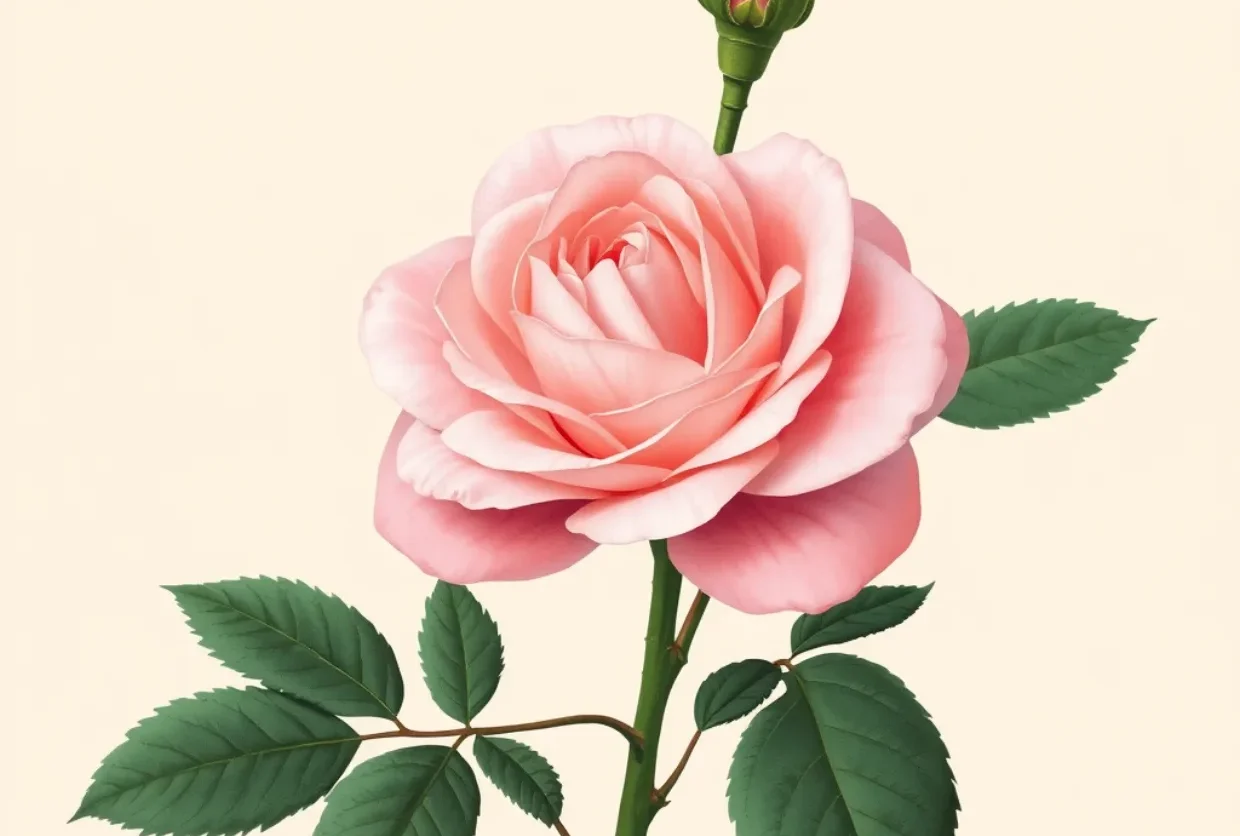
The reputation for difficulty belongs to one group of roses. Shrub roses and rugosas are close to unkillable; hybrid teas are the ones that earned it.
The record
Every plant in the database answers the same questions in the same order, so two entries can be read line for line. 13 of 17 fields sourced.
- Light
- Full sun
- Light detail
- Full sun is stated as a requirement, not a preference
- Water
- Moderate
- Water detail
- A deep soak every 7 to 10 days in dry weather; never over the leaves
- Soil
- Organically rich and well drained
- Soil pH
- Acidic to neutral
- Mature size
- 1 to 8 ft tall, 2 to 6 ft wide by cultivar
- Toxicity
- not recorded
- Lifecycle
- Shrub
- Difficulty
- Moderate
- Hardiness zones
- not recorded
- Bloom time
- Varies by cultivar; many repeat through the season
- Flower color
- Red, pink, white, yellow, orange or blends
- Pollinators
- Native bees nest in dead hollow stems; birds and small mammals eat the hips
- Deer resistant
- not recorded
- Spacing
- not recorded
- Native range
- Temperate and subtropical Northern Hemisphere
How deep the graft union goes. On a grafted rose that depth is what carries the union through winter. Own-root roses have no union to bury and regrow as themselves.
The year
Plant or divide and prune, and when it is actually in flower. Everything else is leaving it alone.
Most rose trouble is a buying decision, not a gardening one
Roses have a reputation for being difficult, and it is only half deserved. The half that is true belongs almost entirely to one group of them.
Hybrid teas, the long-stemmed florist shape, were bred for the flower and not for the plant. They need spraying in most of the country, they defoliate from black spot by August, and they need winter protection where shrub roses do not. Shrub roses, rugosas and the modern landscape types were bred the other way round, and they are close to unkillable.
Iowa State’s list of the genuinely black-spot-resistant names is worth reading before you buy anything: the Knock Out series, the rugosas such as Blanc Double de Coubert and Fru Dagmar Hastrup, the Kordesii climbers William Baffin and Henry Kelsey, and older shrub roses like Carefree Beauty and Bonica. Anything with Rosa rugosa or R. wichuraiana in its ancestry tends to inherit the resistance.
Pick from that group and most of the rest of this page is optional. Pick a hybrid tea and all of it applies.
Types of roses, which is the buying decision in practice
The section above says most rose trouble is decided at purchase. This is the list you are actually choosing between, and the class tells you more about how the plant will behave than the variety name does: how it is pruned, how much disease it will get, and whether it flowers once or all season.
| Class | What it is | Flowering | What to expect |
|---|---|---|---|
| Hybrid tea | One large flower on a long single stem, the florist rose | Repeats through the season | The classic, and the most disease-prone group. Grown for the individual bloom rather than for the plant |
| Floribunda | Clusters of smaller flowers on a bushier plant | Almost continuously from late spring | More color over a season than a hybrid tea, and generally tougher |
| Grandiflora | A cross between the two: hybrid tea flowers carried in small clusters on a tall plant | Repeats | Tall, often five feet or more, so it belongs at the back |
| Shrub and landscape roses | Rounded bushes bred for the plant rather than the flower | Continuous | The easiest group by a wide margin. Disease resistance is the whole point of them |
| Climbers and ramblers | Long canes that must be tied to a support; they do not cling on their own | Climbers repeat, most ramblers flower once | Pruning differs from every other class, and a rambler cut like a climber loses its display |
| Old garden roses | The classes that predate the hybrid tea, usually strongly scented | Many flower once, in early summer | Long-lived and often very hardy. Never prune them in late winter, as most flower on old wood |
| Miniature and groundcover | Small-scale plants, from a foot to three feet | Continuous | Pots, edging and slopes. Hardier than their size suggests |
If the goal is a rose that flowers all summer without a spray program, the honest answer is a shrub or landscape rose, and the honest cost is that you are giving up the long cutting stem a hybrid tea produces. Almost every complaint about roses being difficult comes from wanting the second thing while buying it for a garden that suits the first.
Rose rosette disease, which has no cure
Black spot is the disease that costs a rose its looks. Rose rosette is the one that costs you the plant, and it is worth being able to recognize because there is no treatment and the window to stop it spreading is short.
It is a virus spread by a microscopic mite that travels on the wind. What you see is distorted growth rather than spots: shoots that come out bright red and stay red, stems that thicken and produce an abnormal density of soft thorns, clustered witches-broom growth, and flowers that open deformed or not at all.
- There is no spray and no cure. A plant showing it does not recover.
- Remove the whole plant including the roots, bag it rather than composting it, and do it promptly, because an infected plant is the source for every rose near it.
- Do not replant a rose in that exact spot for a season, and check neighboring roses through the following year.
- Space roses so they are not touching, since the mite moves most easily between plants in contact.
- Multiflora rose, the wild invasive one in hedgerows across much of the country, is a major reservoir. A rose garden downwind of a stand of it is at higher risk than the same garden anywhere else.
Site and soil
NC State is short on this because there is not much to argue about: roses require full sun, in organically rich, well-drained, acidic to neutral soil.
Size depends entirely on what you bought, running from 1 to 8 feet tall and 2 to 6 feet wide across the species, cultivars and hybrids.
Air movement deserves as much thought as sun. Black spot and powdery mildew both need leaves to stay wet, so a rose in a still corner against a wall will have problems that the same rose in an open bed never gets.
Planting
- Find the graft union first
Grafted roses have a knob or crook low on the stem. Missouri Extension’s instruction is to plant it 2 to 4 inches below the soil surface, which is what protects it through winter.
- Own-root roses have no union to bury
They are grown from cuttings. If the canes die back in a hard winter, new ones come from the roots and the plant is still the variety you bought, which is not true of a grafted rose.
- Water deeply, not often
A thorough soak every 7 to 10 days in dry weather is enough in most gardens. Roses show thirst as wilting, leaf drop, smaller leaves and stopped flowering.
- Water the ground, never the leaves
Overhead watering, especially late in the day, leaves foliage wet overnight and is the single most reliable way to get black spot. A soaker hose solves it.
- Mulch, and keep it off the stems
It keeps roots cool and stops soil splashing spores up onto the lower leaves, which is how black spot starts each season.
Pruning
NC State’s rule is that most roses require yearly pruning in late winter. The purpose is not shape; it is airflow.
Take out dead and diseased canes, then anything crossing through the middle, so the center of the plant is open. Iowa State makes the point directly: pruning for health reduces black spot, powdery mildew and rust, because those diseases need still, humid air inside a congested plant.
Climbers are the exception on timing, pruned late in the dormant period just as buds break.
Through summer, deadhead spent flowers to keep repeat bloomers producing, then stop at the end of summer. Late deadheading pushes soft new growth that will not harden before frost, and the plant goes into winter with damage already done.
Black spot, which is the disease that matters
Black spot is the reason people give up on roses. It starts as dark blotches with fringed edges on the lower leaves, yellows the leaf around them, and works upward until the plant is bare by late summer.
It survives winter on fallen leaves and on the canes, so the most useful treatment is not a spray at all. Clear and bin the fallen leaves rather than composting them, prune out infected canes, keep water off the foliage and space plants so air moves.
NC State’s wider list adds powdery mildew, botrytis, blights, leaf spots and anthracnose among the diseases, and Fuller rose beetles, Japanese beetles, rose chafer, rose thrips, southern red mites and two-spotted mites among the insects. Japanese beetles are the one most people meet; they are hand-picked into soapy water in the early morning when they are slow.
What roses give back
NC State records many birds and small mammals feeding on rose hips, and native bees nesting in dead, hollow rose stems.
Both of those are lost by tidiness. Deadheading every flower means no hips, and cutting every stem to the ground in autumn removes the nesting sites. If wildlife is part of why you garden, stop deadheading in late summer, which you should be doing anyway, and leave some stems standing over winter.
Single and semi-double roses are also far better for pollinators than the packed double forms, because a bee can actually reach the center.
Toxicity, in plain terms
NC State’s genus entry carries no toxicity listing for Rosa, and the record on this page reads not recorded rather than a confident no, because an absent listing is not a positive statement of safety.
Rose hips are eaten by people and by wildlife, and this is not a plant treated as a hazard in a garden. The real risk with roses is mechanical: thorns, and the scratches they leave.
Frequently asked questions
- What are the main types of roses?
- Hybrid teas for one long-stemmed flower, floribundas for clusters, grandifloras for both on a taller plant, shrub and landscape roses for a low-maintenance bush, climbers and ramblers for a support, old garden roses for scent and hardiness, and miniatures for pots and edging. The class predicts pruning and disease behavior better than the variety name.
- What is rose rosette disease?
- An incurable virus spread by a wind-blown mite. The signs are distorted rather than spotted: shoots that stay bright red, thickened stems with an abnormal density of soft thorns, witches-broom clustering, and deformed flowers. Remove and bag the whole plant including roots. There is no spray for it.
- What is the difference between a climber and a rambler?
- Climbers have stiffer canes, usually repeat through the season, and are pruned by shortening side shoots. Ramblers are more vigorous, mostly flower once in early summer on old wood, and are pruned after flowering. A rambler pruned like a climber loses next year’s display entirely.
- Which roses are actually easy?
- Shrub roses, rugosas and the landscape types. Iowa State names the Knock Out series, Blanc Double de Coubert, Fru Dagmar Hastrup, William Baffin, Henry Kelsey, Carefree Beauty and Bonica among the resistant ones. Hybrid teas are the difficult group, and they are what gave the genus its reputation.
- Why do the leaves go black and drop?
- Black spot. It overwinters on fallen leaves and canes, so clearing debris, pruning for open airflow and keeping water off the foliage does more than spraying. It starts low on the plant and works upward.
- When do I prune?
- Late winter for most roses, which NC State treats as an annual requirement. Climbers are pruned later in the dormant period as buds break. Take out dead, diseased and crossing canes to open the middle up.
- How deep does the graft go?
- Two to four inches below the soil surface, on a grafted rose. Own-root roses have no union, which is why they regrow as themselves after a hard winter while a grafted rose can come back as its rootstock.
- How often should I water?
- A thorough soak every 7 to 10 days in dry weather suits most gardens, rather than a little every day. Water the soil, not the leaves, and not in the late afternoon, because foliage that stays wet overnight is what black spot needs.
Companion plants
How this entry is compiled
- Care values come from university extension publications and the USDA hardiness map, never from other gardening sites.
- Toxicity follows the ASPCA listing and is quoted rather than summarized.
- A value we cannot source is printed as not recorded, never estimated.
Compiled and checked by the Gardnicks editorial desk · last checked 2026-08-16
Sources for this entry
- NC State Extension Gardener Plant Toolbox, Rosa
- Iowa State Extension, Rose Black Spot
- Missouri Extension, Roses: Selecting and Planting
- Missouri Extension, Roses: Care After Planting
- Clemson HGIC, Growing Roses
Where two sources disagree, the entry follows the one closest to the plant’s own growing region and says so in the text.
What kills it
Three failures cover almost everything readers write in about.
More in Flowers
 Petunia
Full sun · zones not recorded
Daisy
Full sun · zones 5 to 9
Petunia
Full sun · zones not recorded
Daisy
Full sun · zones 5 to 9
 Yarrow
Full sun · zones 3 to 9
Yarrow
Full sun · zones 3 to 9
 Peony
Full sun · zones 3 to 8
Peony
Full sun · zones 3 to 8
Plates are illustrations, not photographs of a specific plant, and are not evidence of a variety, place or season.