Dahlia
Dahlia pinnata
Bedding dahlia / garden dahlia
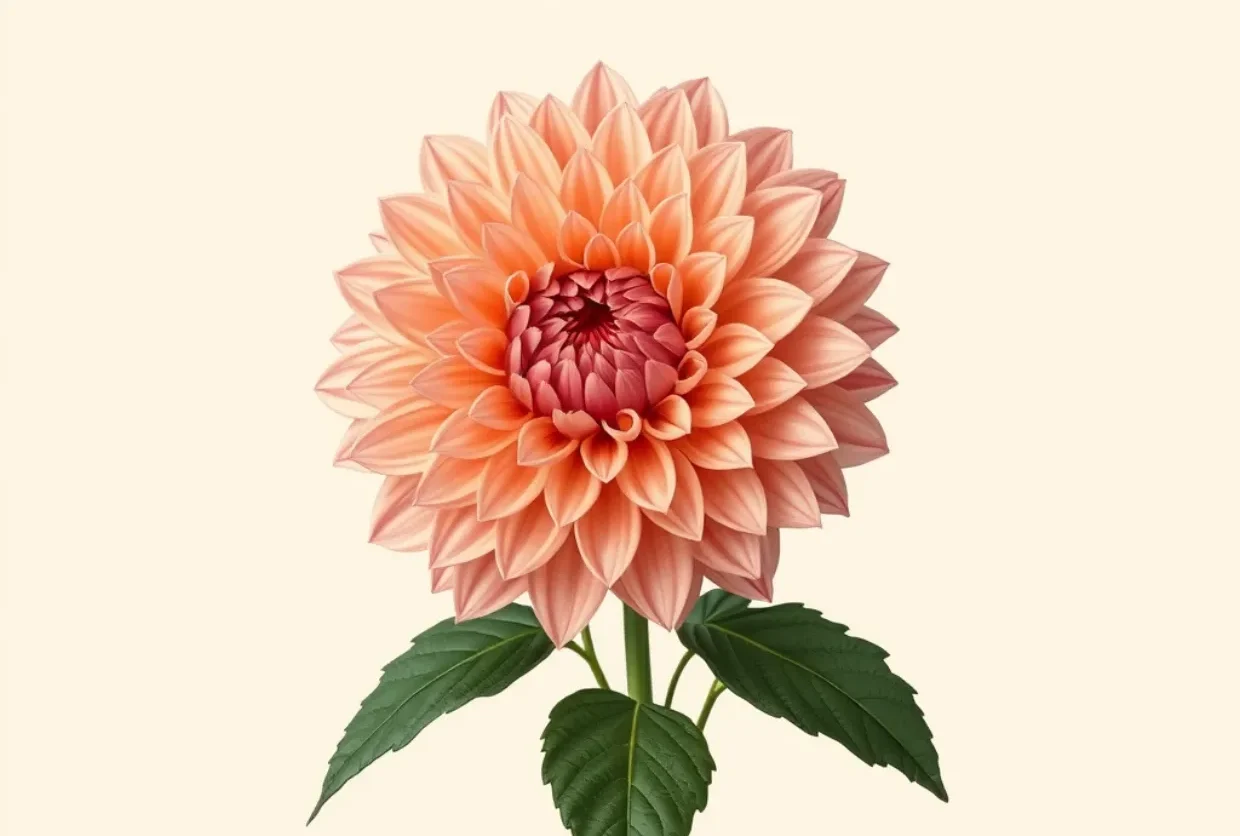
It keeps flowering for as long as you keep cutting. Leave the blooms on to set seed and it stops, which is why a dahlia nobody cuts disappoints.
The record
Every plant in the database answers the same questions in the same order, so two entries can be read line for line. 16 of 17 fields sourced.
- Light
- Full sun
- Light detail
- 6 hours or more; tolerates 2 to 6 with fewer flowers
- Water
- Moderate
- Water detail
- Evenly moist, never standing wet
- Soil
- Rich in organic matter, well drained
- Soil pH
- 6.0 to 7.5
- Mature size
- 1 to 6 ft tall, 1 to 3 ft wide
- Toxicity
- NC State lists dahlia as low severity poison: foliage is toxic if eaten in large quantities, and it can cause contact dermatitis.
- Lifecycle
- Perennial
- Difficulty
- Moderate
- Hardiness zones
- 7 to 10
- Bloom time
- Mid summer to mid autumn
- Flower color
- Cream, yellow, orange, pink, purple, red, white or variegated
- Pollinators
- Bees, butterflies and hummingbirds
- Deer resistant
- not recorded
- Spacing
- 18 to 24 in apart
- Native range
- Mexico, Central America and northern South America
Hardy in zones 7 to 10. Colder than zone 7, grow it in a container and overwinter it under cover.
Planting depth for a tuber. Deeper is not safer with a tuber that needs warm soil to start, and the stake goes in at the same time so it never goes through the tuber later.
The year
Plant or divide and prune, and when it is actually in flower. Everything else is leaving it alone.
Toxic to pets
NC State lists dahlia as low severity poison: foliage is toxic if eaten in large quantities, and it can cause contact dermatitis.
The plant that keeps flowering because you keep cutting
Dahlias run from mid summer to the first frost, and how long that run lasts is almost entirely down to what you do with the scissors. Every flower left on the plant to set seed is a signal to stop; every one cut takes the plant back to producing.
That makes the dahlia unusual. Most flowering plants have a season you either catch or miss. This one has a season you extend by using it, which is why it is the backbone of a cutting garden and why a dahlia in an ornamental border often disappoints: nobody cuts it.
Types of dahlias, which is really a question about flower form
Dahlias are sold by form rather than by anything a care guide would normally use, and the classes are worth knowing because they decide what the flower is good for. A ball dahlia and a dinnerplate are the same plant to grow and completely different things to put in a vase.
What all of them share is the structure underneath: a dahlia flower is not one flower. It is a head of many small florets, and the classes below describe how the outer ray florets are arranged and what happened to the central disc.
| Form | What the flower looks like | Typical size | What it suits |
|---|---|---|---|
| Single | One ring of flat ray petals around an open central disc | 2 to 4 in | Pollinators, because the disc is reachable. The double forms feed them very little |
| Decorative, formal and informal | Fully double with no visible center, broad petals either flat or twisted | 4 to 10 in and up | The classic garden dahlia, and where most dinnerplates sit |
| Ball | Tightly packed petals curving inward into a near-perfect sphere | 3 to 4 in | Cutting. They hold their shape in a vase better than any other form |
| Pompon | A miniature ball, perfectly spherical | Under 2 in | Small arrangements and edging, and the longest vase life of the lot |
| Cactus and semi-cactus | Narrow pointed petals rolled back along their length, spiky in outline | 4 to 8 in | Drama. The shape reads from across a garden |
| Waterlily | Double but shallow, with broad flat petals, like the flower it is named after | 4 to 6 in | Cutting and borders where a heavy double would look overdone |
| Anemone and collarette | An open center ringed by a collar of short petals under the outer ray | 2 to 4 in | Interest at close range, and the collarettes still feed pollinators |
Two things about that table are worth carrying to a catalog. Dinnerplate is not an official class at all; it is gardeners’ shorthand for any bloom over about eight inches, and those are usually decorative or semi-cactus varieties. And size is classified independently of form, so a giant decorative and a miniature decorative are both decoratives, which is why two plants with the same class label can produce flowers four times apart in width.
Are dahlias annual or perennial
Perennial, and the confusion is entirely about winter rather than about the plant. A dahlia grows from a tuber that lives for years, and in zone 8 and warmer it stays in the ground and comes back on its own. Colder than that, the tuber freezes, so the plant is either lifted and stored over winter or treated as an annual and bought again.
That is the whole of the annual and perennial question. Nothing about the plant changes; only whether your winter reaches the tuber, which is why the same variety is a returning perennial in one garden and a one-season purchase two states north.
Where it grows, and the honest catch
NC State lists dahlias as hardy in zones 7a through 10b. Below zone 7 the tubers do not survive winter in the ground.
That is the real commitment with this plant, and it is worth knowing before you buy. In zones 7 to 10 you mulch over winter and leave them. Colder than that and it is an annual job: dig, dry, store, replant. Plenty of gardeners do it happily for decades. Plenty of others buy dahlias every spring and treat them as annuals, which is also a legitimate answer.
Site and soil
Full sun, six hours or more, though NC State records tolerance of partial shade at two to six hours. Fewer hours means fewer flowers and softer stems, which matters more here than on most plants because the stems have to hold up a heavy head.
Soil should be rich in organic matter, evenly moist and well drained. That combination is the one place dahlias are demanding: they want steady moisture and they rot in ground that stays wet, which is the same sentence as most tuberous plants and just as easy to get wrong.
Planting
- Wait for the frost to finish
Tubers go out around one to two weeks before the last frost date, or start earlier indoors in pots for a head start on the season.
- Three inches deep
NC State’s depth. Deeper is not safer with a tuber that wants warm soil to get going.
- Put the stake in now
Tall varieties will need support, and a stake driven in later goes straight through the tuber you are trying to hold up.
- Pinch at about a foot tall
When the plant has three or four pairs of leaves, pinch out the top shoot. It branches instead of running up, which means more stems and more flowers.
- Keep cutting
Deadhead spent flowers or cut them for the house. Either works; what matters is that nothing is left to set seed.
Bigger flowers or more of them
You can have one or the other, and the choice is made with your fingers in July.
Each branch carries a central bud with two side buds. Leave all three and you get three medium flowers. Rub off the two side buds while they are pea-sized and the plant puts everything into the central one, which is how the enormous show blooms are produced.
For a cutting garden, leave them. For one spectacular flower on a long stem, disbud. Neither is more correct; they are different uses of the same plant.
Lifting and storing, below zone 7
Wait for a hard frost to blacken the foliage. That frost is the signal, not a disaster.
Cut the stalk back to the tubers, lift the clump, and let it dry. NC State is specific on one point that catches people out: do not wash them. Washed tubers rot in storage. Store them in vermiculite or sand at 35 to 45 degrees Fahrenheit, somewhere that will not freeze and will not warm up.
Division happens at lifting or in spring. Cut the clump into sections with a sharp knife, and the rule that decides whether a piece is worth keeping is that every division needs a neck and a crown carrying at least one eye. A tuber without an eye is a potato: it will never grow.
What goes wrong
NC State’s list is long: aphids, leafhoppers, caterpillars, bulb mites, phytophthora blight, root rot, powdery mildew, crown gall, viruses and wilts.
Most of it is manageable and much of it is cosmetic. The two that end a plant are root rot, from ground that stays wet, and virus, which is not treatable and means removing the plant so it does not spread through the clump you are storing.
The complaint that is not a disease at all: a tall plant flat on the ground after a storm. That is a staking failure and it is decided in May, not August.
Toxicity, in plain terms
NC State describes dahlia as low severity poison: the foliage is toxic if eaten in quantity, and it can cause contact dermatitis.
The practical reading is that a dog would have to eat a good deal of leaf to be unwell, and that some people react to handling the plant. Gloves settle the second question. If an animal has eaten a quantity and is unwell, ring a vet rather than waiting.
Frequently asked questions
- What are the main types of dahlias?
- They are grouped by flower form: single, decorative, ball, pompon, cactus and semi-cactus, waterlily, and the collarette and anemone forms with an open center. Size is classed separately from form, which is why two plants labeled decorative can produce blooms four times apart in width.
- Are dahlias annuals or perennials?
- Perennials. The tuber lives for years and returns on its own in zone 8 and warmer. Colder than that the tuber freezes in the ground, so it is lifted and stored over winter or the plant is treated as an annual. Nothing about the plant changes, only whether your winter reaches the tuber.
- Can I grow dahlias in pots?
- Yes, and it is the easiest way to handle the lifting problem in a cold zone: the whole pot goes into a frost-free shed. Use a container at least twelve to sixteen inches across for a full-size variety, expect to water daily in summer heat, and stake the tall forms, because a pot gives less anchorage than open ground.
- Do dahlias need full sun?
- Yes, six to eight hours. In part shade they grow leggy, flower thinly and lean toward the light, and the tall forms then need staking they would not otherwise have needed. Morning sun with a little afternoon shade is acceptable in the hottest states.
- Do I have to dig them up every year?
- In zones 7 to 10, no: mulch over winter and leave them. Below zone 7 the tubers will not survive in the ground, so it is dig, dry and store, or treat them as annuals and buy fresh each spring.
- Why did mine stop flowering in August?
- Almost always because flowers were left on to set seed. Dahlias keep producing while they are being cut and shut down when they are not. Deadhead or cut for the house, and they run to frost.
- How do I get those huge dinner-plate flowers?
- Disbudding. Each branch has a central bud and two side buds; rub the side ones off while they are pea-sized and everything goes into the middle flower. You trade the number of flowers for the size of them.
- Should I wash the tubers before storing?
- No, and this is the mistake that loses whole collections. NC State says to dry them without washing, then store in vermiculite or sand at 35 to 45 degrees. Washed tubers rot.
- My division did not come up. Why?
- It probably had no eye. Every division needs a neck and a crown with at least one growing bud attached; a tuber cut away from the crown has no way to sprout, however healthy it looks.
Companion plants
How this entry is compiled
- Care values come from university extension publications and the USDA hardiness map, never from other gardening sites.
- Toxicity follows the ASPCA listing and is quoted rather than summarized.
- A value we cannot source is printed as not recorded, never estimated.
Compiled and checked by the Gardnicks editorial desk · last checked 2026-08-16
Sources for this entry
- NC State Extension Gardener Plant Toolbox, Dahlia
- Penn State Extension, The Dirt on Dahlias
- Penn State Extension, Don't Ditch Those Dahlias: Winter Storage
- University of Minnesota Extension, Growing dahlias
Where two sources disagree, the entry follows the one closest to the plant’s own growing region and says so in the text.
What kills it
Three failures cover almost everything readers write in about.
More in Flowers
 Geranium
Full sun · zones not recorded
Geranium
Full sun · zones not recorded
 Rose
Full sun · zones not recorded
Rose
Full sun · zones not recorded
 Lavender
Full sun · zones 5 to 9
Lavender
Full sun · zones 5 to 9
 Witch hazel
Full sun to partial shade · zones 3 to 9
Witch hazel
Full sun to partial shade · zones 3 to 9
Plates are illustrations, not photographs of a specific plant, and are not evidence of a variety, place or season.