Geranium
Pelargonium x hortorum
Zonal geranium / bedding geranium
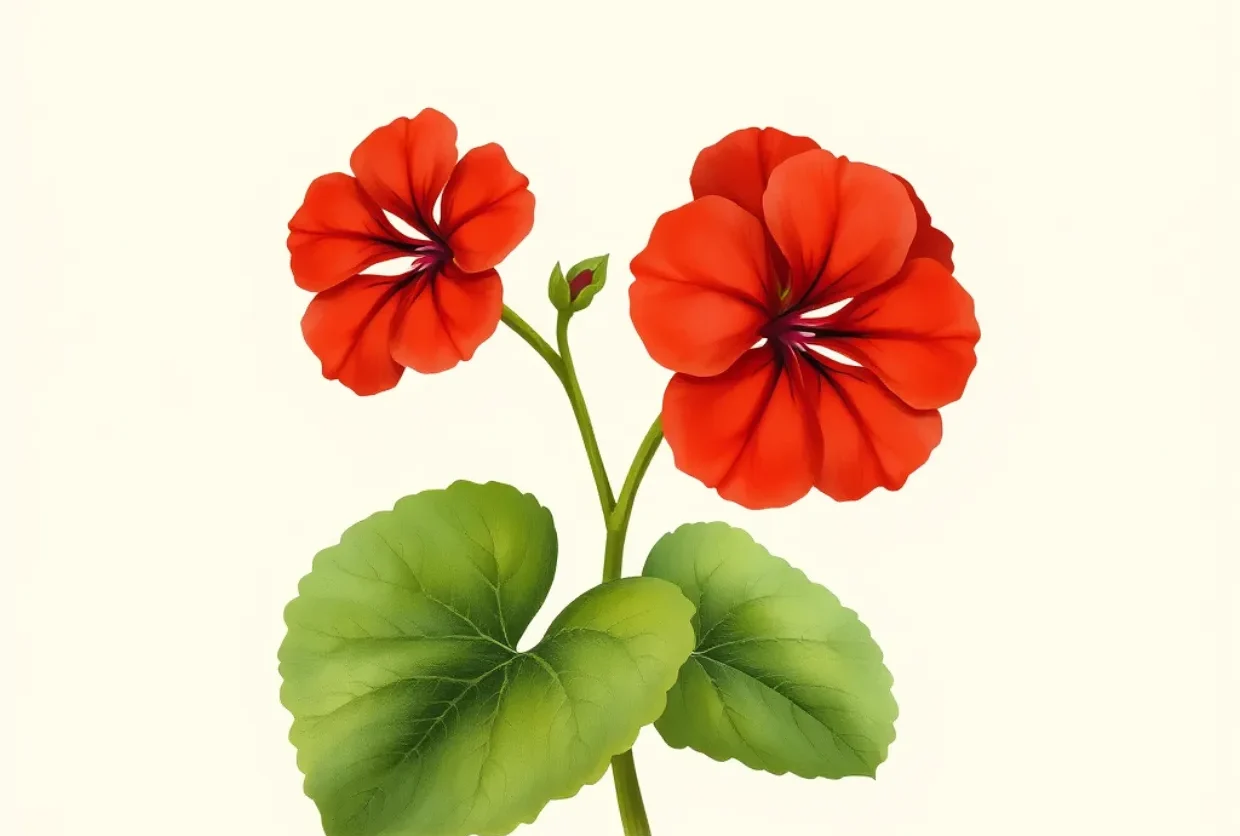
Deadhead the whole stalk, not the petals. It keeps the flowers coming and removes the dead tissue where gray mold starts, which is most of geranium care in one habit.
The record
Every plant in the database answers the same questions in the same order, so two entries can be read line for line. 10 of 17 fields sourced.
- Light
- Full sun
- Light detail
- Sun keeps the growth compact and the gray mold away
- Water
- Moderate
- Water detail
- Let it dry between waterings; frequent watering and wet leaves invite botrytis
- Soil
- Well drained; it dislikes staying wet
- Soil pH
- not recorded
- Mature size
- not recorded
- Toxicity
- not recorded
- Lifecycle
- Annual
- Difficulty
- Easy
- Hardiness zones
- not recorded
- Bloom time
- Late spring to frost
- Flower color
- Red, pink, salmon, white or purple
- Pollinators
- not recorded
- Deer resistant
- not recorded
- Spacing
- not recorded
- Native range
- South Africa
Bare-root winter storage temperature. Lifted, shaken clean and hung upside down somewhere cool and dry, then cut back to firm green tissue in March. It looks brutal and it works.
The year
Plant or divide and prune, and when it is actually in flower. Everything else is leaving it alone.
Two plants share the name, and only one is sold as bedding
The bright red and pink plants in every window box are Pelargonium, tender perennials from South Africa grown as annuals. True geraniums, Geranium, are hardy perennials, usually low and spreading, often called cranesbill.
The confusion is old and permanent, and it matters because the care is opposite. Cranesbill goes in the ground and comes back for years. Pelargonium dies at the first frost and has to be brought in or replaced.
This entry covers the bedding plant, the one people mean when they say geranium.
Types of geraniums, meaning types of pelargonium
Four groups are sold under the name, and the differences are not cosmetic. Two of them fail in summer heat, which is the single most useful thing on this page for anyone gardening south of the middle of the country.
| Type | What it looks like | Where it works |
|---|---|---|
| Zonal, Pelargonium x hortorum | The familiar upright bedding plant, with a dark horseshoe-shaped zone marked on each leaf. Flowers usually pink, red, salmon or white. Fancy-leaf selections carry tricolored, silver or white-marked foliage | Beds, pots and window boxes. The default, and the most heat-tolerant of the four |
| Ivy-leaved, P. peltatum | Trailing stems with glossy, thick, ivy-shaped leaves | Hanging baskets and window boxes. Wants moderate temperatures and moderate moisture, and needs morning sun with afternoon shade once it goes above 85°F |
| Regal, also sold as Martha Washington, P. x domesticum | Large ruffled flowers, often blotched or veined in a second color | A flowering pot plant for winter and spring indoors. Not heat tolerant, and it will not perform outdoors in summer the way a zonal does |
| Scented-leaved | Grown for the foliage rather than the flower, which is small | Pots within reach, where the leaves get brushed. Rose geranium (P. graveolens), lemon (P. crispum) and apple (P. odoratissima) are the common ones |
One more distinction sits underneath the zonal row and explains a price difference on the bench. Zonals are either seed-grown or cutting-grown. Seed geraniums are cheaper, more uniform and often self-cleaning; cutting-grown ones carry the named cultivars, larger flower heads and the fancy foliage. Neither is better; they are sold for different jobs.
Hardy geraniums, the other plant entirely
Everything above is Pelargonium. True Geranium, the cranesbills, are hardy perennials and the section at the top of this page separates them. They are worth a paragraph of their own because they solve a problem the bedding plant cannot.
Bigroot geranium, Geranium macrorrhizum, is the one to know. It is hardy from about zone 3 to 8, spreads by thick rhizomes into a dense weed-suppressing carpet, and it is one of the few genuinely good groundcovers for dry shade, where most things fail. The foliage is aromatic, deer and rabbits leave it alone, and the leaves color red in autumn. Bevan’s Variety is magenta at about a foot tall; Ingwersen’s Variety is pale pink and a little taller.
Hardy geraniums also come true from seed, which pelargoniums largely do not, so hardy geranium seeds are a real and cheap way to raise them. That is the practical reason the two names get searched differently: one is bought as a plant every spring, the other is raised once and left alone for years.
The two jobs that keep it flowering
Deadhead constantly. Removing spent flowers stops seed forming, which is what keeps new flower stems coming. It also has a second purpose: deadheading lessens botrytis, because the dead flower is where gray mold begins.
Snap the whole flower stalk off at its base rather than pulling the faded petals off the top. The bare stalk left behind rots and is exactly what botrytis is looking for.
Give it sun and let it dry. Geraniums want full sun and soil that is not constantly wet. Botrytis is favored by cool moist conditions and frequent watering, and the standard advice is to reduce watering frequency, keep water off the leaves, increase air circulation and make sure the plant gets enough sun.
That is one paragraph covering most geranium problems. A geranium that is soft, moldy and thin has almost always been watered too often, too high, and in too little light.
Overwintering, and three ways to do it
This is the part that makes geraniums worth the effort, because a good plant can be kept for years rather than bought again every May.
- Pot it up and keep it growing
Prune back by a third to a half, water thoroughly, and put it in a bright sunny window or under lights. It wants cool conditions: 65 to 70°F by day and 60 to 65°F at night.
- Take cuttings instead
Three to four inch stem cuttings from the tips, lower leaves removed, base dipped in rooting hormone. They root in six to eight weeks and give you young vigorous plants rather than an old woody one.
- Store the plant bare-root
The traditional method: lift it, shake off the soil and hang it upside down somewhere cool and dry at 45 to 55°F.
- Cut bare-root plants back in March
To about a third of the original height, or back to firm green live tissue, whichever is lower. Then pot up and water.
- Harden off before it goes back out
A plant that has spent winter in a window will scorch in unfiltered spring sun. Two weeks of increasing exposure.
The bare-root method looks brutal and works surprisingly well, though it suits older thick-stemmed plants better than young soft ones.
What goes wrong
Botrytis, gray mold, is the main disease, appearing as fuzzy gray growth on dead flowers and then spreading into leaves and stems. It is a management problem rather than a spraying problem: deadhead, water at the base, space the plants, give them sun.
The other common complaint is a leggy plant with bare lower stems and flowers only at the top, which is the natural habit of an older geranium in insufficient light. Pinching young plants encourages branching, and cutting an old one back hard in spring resets it.
Yellowing lower leaves usually mean overwatering. Reddish leaf margins usually mean cold, and are common on plants put outside too early.
Why geraniums are dying: the short version
Almost every geranium that dies outright dies of one of three things, and the sections below split them out in detail. It is worth having the shortlist first.
- Wet roots. Stem rot from overwatering or a pot with no drainage. Soft dark stems at the base, and by then it is usually too late.
- Bacterial leaf spot and blight. Spotting, leaf drop and blackened stems. There is no cure and the plant is removed.
- Cold. Pelargonium is a tender perennial and frost ends it. A plant that collapsed overnight in autumn was not sick.
Everything else on this page disfigures rather than kills. If the plant is alive and merely ugly, the answer is almost always in the watering, the light or the feeding rather than in a spray bottle.
Yellow leaves, and what each pattern means
Yellowing is the most common complaint about geraniums and it is not one problem. The pattern and the position on the plant tell you which it is.
- Lower leaves yellowing and dropping, plant otherwise fine: usually the plant has been allowed to wilt. Clemson is blunt about it, that letting a geranium wilt turns the leaves yellow and drops them, and the damage is done at the moment of wilting rather than gradually. Those leaves do not green up again.
- Whole plant pale and stunted: not enough nitrogen. Geraniums respond well to feeding and this is one of the few complaints on this page that a fertilizer actually answers.
- Yellowing with soft, dark stems at the base: overwatering and stem rot, and this one is usually fatal. The distinction from the first case is the stem: firm stem means a watering lapse, soft brown stem means the opposite problem.
- Yellow leaves in a pot that dries out constantly: the plant has outgrown the container. A geranium that wilts frequently needs repotting into something large enough to hold both the roots and enough water between waterings.
Edema, which looks like a disease and is a watering fault
Corky, raised brown spots on the undersides of the leaves are edema, and no organism is involved. It happens when the roots take up water faster than the leaves can release it, so cells rupture and scar over. Fluctuating soil moisture is the cause, and Clemson notes it is one of the major problems on ivy geraniums specifically.
It matters because the instinct is to spray for a leaf spot, and spraying does nothing. Steady watering prevents it, damaged leaves never recover, and new growth comes in clean once the watering evens out.
The pests, and the disease that ends the plant
Aphids, caterpillars, mites and whiteflies all infest geraniums, and none of them is usually serious outdoors. Aphids cluster on the flower stalks and new growth and wash off with water. Whiteflies lift in a cloud when the plant is disturbed and are far worse indoors or under cover than in a bed. Caterpillars, including budworms, bore into the buds so the flowers never open, and the tell is small dark frass pellets on the leaves below.
Bacterial leaf spot and blight is the one that ends a plant. It spots the leaves, drops them, and rots the stems black from the base. There is no cure, it spreads on splashed water and on hands and tools, and an infected plant is removed and destroyed rather than treated. On a plant this easy to root from cuttings, that is less painful than it sounds, but do not take cuttings from an affected plant.
What it does and does not do for wildlife
Geraniums are visited by hummingbirds, and the red and pink zonal types in particular are worth siting near a window if that is the point of them. They are not a top-tier hummingbird plant the way salvia or bee balm is, because the flowers are shallower, but they are visited steadily through summer and they flower for far longer than most nectar plants.
Two claims made for them are worth being straight about. Deer and rabbits do largely avoid pelargoniums, and the strong scent in the foliage is why. But the belief that geraniums deter snakes has nothing behind it. Snakes do not respond to the plant, and siting geraniums around a patio to deter them will not change what turns up there.
Toxicity, in plain terms
Geraniums are poisonous to cats and to dogs. Pelargonium is listed by the ASPCA as toxic to both, causing vomiting, loss of appetite, depression and dermatitis. No extension toxicity listing was consulted for this entry, so the record here reads not recorded rather than repeating that as a sourced value, but it is worth knowing in a household with an animal that chews.
Frequently asked questions
- What is the difference between a geranium and a pelargonium?
- The bedding plants sold as geraniums are Pelargonium, tender South African perennials grown as annuals. True geraniums, cranesbills, are hardy perennials that come back in the ground for years. The names have been swapped for so long that both are now standard usage.
- How do I keep mine flowering all summer?
- Deadhead constantly, snapping the whole flower stalk off at its base rather than picking off faded petals. That keeps new stems coming and reduces botrytis, since dead flowers are where gray mold starts.
- Can I keep them over winter?
- Yes, three ways: pot them up and grow them on in a bright cool window, take three to four inch tip cuttings which root in six to eight weeks, or store them bare-root hung upside down at 45 to 55°F and cut them back in March.
- What are the different types of geraniums?
- Four groups of pelargonium. Zonal is the upright bedding plant with a dark horseshoe mark on each leaf and the most heat tolerance. Ivy-leaved trails and wants afternoon shade above 85°F. Regal, or Martha Washington, has large ruffled flowers and is a cool-season pot plant that will not take summer heat. Scented-leaved types are grown for the foliage. True hardy geraniums, the cranesbills, are a separate genus.
- What is a big root geranium?
- Geranium macrorrhizum, a hardy perennial cranesbill rather than a bedding pelargonium. It spreads by thick rhizomes into a dense carpet, is hardy from about zone 3 to 8, and is one of the few reliable groundcovers for dry shade. The foliage is aromatic, deer and rabbits avoid it, and it colors red in autumn.
- Do hummingbirds like geraniums?
- Yes, and the red and pink zonal types are visited steadily through summer. They are not as strong a draw as salvia or bee balm because the flowers are shallower, but they flower for much longer, so they earn a place near a window.
- Why are my geranium leaves turning yellow?
- Four different things, told apart by pattern. Lower leaves yellowing and dropping usually means the plant was allowed to wilt at some point. A pale, stunted whole plant is short of nitrogen. Yellowing with soft dark stems at the base is overwatering and stem rot, which is usually fatal. And yellowing in a pot that dries out constantly means the plant has outgrown its container.
- What are the corky brown spots on the undersides of the leaves?
- Edema, and it is not a disease. The roots take up water faster than the leaves can release it, cells rupture and scar over. Fluctuating soil moisture is the cause, it is worst on ivy geraniums, and spraying does nothing. Even watering prevents it; the marked leaves never recover but new growth comes in clean.
- Why is mine leggy with flowers only at the top?
- Age plus insufficient light. Pinch young plants to encourage branching, and cut an older one back by a third to a half in spring. Full sun is what keeps the growth compact.
- What is the gray fuzz on the flowers?
- Botrytis, gray mold, favored by cool moist conditions and frequent watering. Deadhead promptly, water the soil rather than the plant, space plants for airflow and give them more sun.
Companion plants
How this entry is compiled
- Care values come from university extension publications and the USDA hardiness map, never from other gardening sites.
- Toxicity follows the ASPCA listing and is quoted rather than summarized.
- A value we cannot source is printed as not recorded, never estimated.
Compiled and checked by the Gardnicks editorial desk · last checked 2026-08-16
Sources for this entry
- Clemson HGIC, Annual Geranium (Pelargonium)
- Iowa State Extension, Growing Annual Geraniums
- Wisconsin Horticulture, Overwintering Tender Geraniums
- University of Minnesota Extension, Overwintering geraniums
Where two sources disagree, the entry follows the one closest to the plant’s own growing region and says so in the text.
What kills it
Three failures cover almost everything readers write in about.
More in Flowers
 Peony
Full sun · zones 3 to 8
Peony
Full sun · zones 3 to 8
 Lupine
Full sun · zones 3 to 8
Lupine
Full sun · zones 3 to 8
 Witch hazel
Full sun to partial shade · zones 3 to 9
Witch hazel
Full sun to partial shade · zones 3 to 9
 Lantana
Full sun · zones 7 to 11
Lantana
Full sun · zones 7 to 11
Plates are illustrations, not photographs of a specific plant, and are not evidence of a variety, place or season.