Begonia
Begonia spp.
Wax, tuberous, cane, rhizomatous and rex begonias
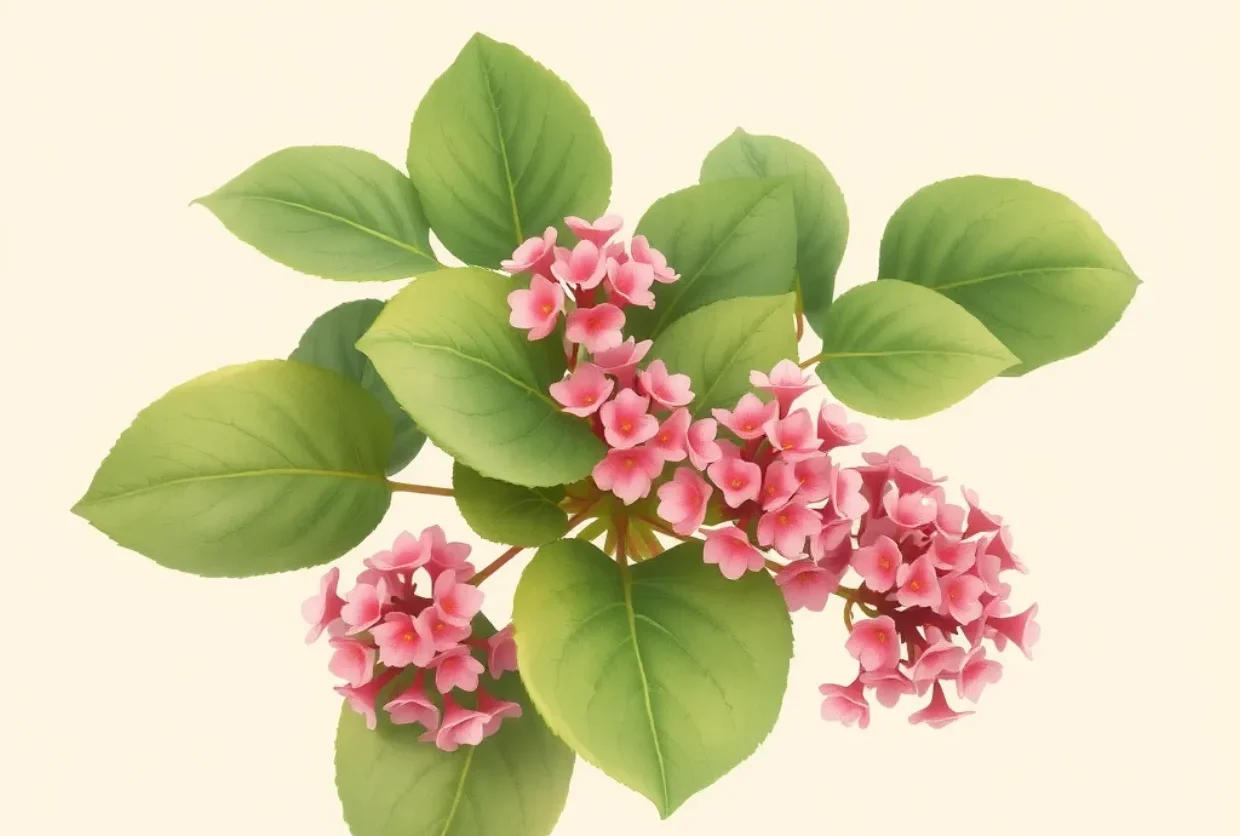
Five different plants share the name, from bedding annuals to terrarium foliage. What they share is a forest floor origin: shade, and no tolerance for wet roots.
The record
Every plant in the database answers the same questions in the same order, so two entries can be read line for line. 14 of 17 fields sourced.
- Light
- Part shade
- Light detail
- Deep shade to partial shade, 2 to 6 hours; among the few plants that flower in real shade
- Water
- Moderate
- Water detail
- At the base only, never over the leaves; highly susceptible to root rot
- Soil
- High organic matter, well drained
- Soil pH
- 5.5 to 6.5
- Mature size
- 8 in to 2 ft tall, 9 in to 3 ft wide; cane types over 6 ft
- Toxicity
- NC State rates begonia low severity. The roots are the most toxic part, causing vomiting and salivation in dogs and cats and kidney failure in grazing animals, and the sap can cause contact dermatitis.
- Lifecycle
- Perennial
- Difficulty
- Moderate
- Hardiness zones
- 10 to 11
- Bloom time
- Summer through autumn
- Flower color
- Pink, red, orange, yellow, white or bicolored
- Pollinators
- not recorded
- Deer resistant
- not recorded
- Spacing
- not recorded
- Native range
- Tropics and subtropics of the Americas, Africa and Asia
Hardy in zones 10 to 11. Colder than zone 10, grow it in a container and overwinter it under cover.
Humidity a rex begonia needs. That is terrarium territory rather than a living room shelf, which is why the foliage types fail indoors so often while the bedding types do not.
The year
Plant or divide, and when it is actually in flower. Everything else is leaving it alone.
Toxic to pets
NC State rates begonia low severity. The roots are the most toxic part, causing vomiting and salivation in dogs and cats and kidney failure in grazing animals, and the sap can cause contact dermatitis.
Five plants, one name
Begonia is one of the largest genera in the plant world, and what is sold under the name covers five groups that want quite different things. Knowing which one you have is the whole of the care.
Wax begonias are the small fibrous-rooted bedding annuals with glossy leaves and constant small flowers. The ones in supermarket trays.
Tuberous begonias have large showy flowers and grow from underground tubers. These are the hanging basket and pot plants people buy for the blooms, and they die back and are stored over winter.
Cane begonias, the angel wings, grow upright stems to six feet with clustered flowers.
Rhizomatous begonias creep along the surface and are grown for the foliage, sending flowers up on erect stalks.
Rex begonias are the spectacular colored-leaf ones, and they carry the warning: they require humidity above 75 percent, which is a terrarium or a very humid room, not a living room shelf.
| Group | Grown for | Where it lives | Winter |
|---|---|---|---|
| Wax, the fibrous-rooted bedding types | Constant small flowers over glossy leaves | Beds and containers, sun to part shade | Treated as an annual, or brought in as a houseplant |
| Tuberous | Large showy flowers, the biggest in the genus | Pots and hanging baskets in partial shade | Dies back. Tubers are lifted and stored, as described below |
| Cane, the angel wings | Upright stems to six feet, hanging clusters of flowers, patterned leaves | Houseplant, or outdoors in partial shade in summer | Kept growing indoors year round |
| Rhizomatous | Foliage, with flowers on erect stalks above it | Houseplant, creeping across the surface of a wide shallow pot | Kept growing indoors year round |
| Rex | Spectacular colored and patterned leaves | Terrarium or a genuinely humid room, above 75 percent humidity | Kept growing, and the hardest group to keep alive |
Begonia maculata, the one everyone is looking for
Begonia maculata is a cane begonia, and it is worth naming because it is the most-searched begonia by a wide margin and it is rarely sold under the group name. It goes by polka dot begonia, spotted begonia, clown begonia and trout begonia, and it is often lumped in with the angel wings, which is broadly fair since it is in the same group.
What people buy it for is the leaf: dark olive green, asymmetrical and wing-shaped, covered in silver spots, with a deep red underside. Care is cane begonia care. Bright indirect light, warmth, high humidity, and a light open mix of potting soil with perlite and coir or peat rather than straight compost. Water only when the top of the mix has dried, because the succulent stems rot from the base exactly like the rest of the group.
It is not a difficult plant, but it is a specific one, and the two things that kill it are a dark corner and a heavy wet mix.
Rex begonia varieties, and why the leaf is the point
Rex begonias are not grown for flowers at all. The leaf is the whole plant, and the range is wider than in almost any other foliage houseplant: greens, reds, pinks, silvers, grays, lavenders and a maroon so deep it reads as black, usually in spirals, bands or metallic overlays rather than flat color.
Escargot is the best known, with the leaf coiled into a spiral at the base like a snail shell. Beyond that the named varieties change constantly, because they are bred and dropped quickly, so the practical advice is to buy the leaf in front of you rather than a name you read somewhere.
What does not change is the requirement. Rex begonias want humidity above about 75 percent, which is a terrarium, a bathroom with a window, or a cabinet with a humidifier. In an ordinary heated room they thin out and go over within a season, and no amount of care substitutes.
Angel wing begonia varieties
Angel wings are cane begonias, named for the asymmetrical wing-shaped leaves, with thick upright stems and pendant clusters of red, pink or white flowers. Begonia coccinea is the classic, and B. maculata described below sits in the same group.
The one worth singling out is Dragon Wing, a hybrid that reblooms continuously because it is sterile and spends nothing on seed. It reaches 2 to 3 feet with arching canes and glossy deep green leaves. BabyWing is the compact version of the same idea at 12 to 15 inches, which suits a container better.
For the small bedding end of the range, the Cocktail series runs 6 to 8 inches with bronze foliage, and the varieties are named for drinks: Brandy is pink, Gin rose-pink, Rum white with a rose-red edge, Vodka red and Whiskey white.
Are begonias perennials?
Botanically most of them are, and practically almost none of them behave that way outdoors. Begonias are tender: they are perennials in frost-free climates and annuals everywhere else in the continental United States. What varies is how you carry them over. Tuberous types go dormant and are stored as tubers. Cane, rhizomatous and rex types are kept growing indoors as houseplants. Wax begonias can be brought in as houseplants but are usually treated as disposable bedding, because fresh plants each spring cost little and flower harder.
What they all share
Every begonia is a forest understory plant from the tropics and subtropics of Central and South America, Africa and Asia, and that origin explains the two consistent requirements.
Shade. NC State gives deep shade to partial shade at two to six hours. Begonias are among the few reliably flowering plants for a genuinely shaded bed, which is most of why they are grown.
Drainage. High organic matter, well drained, at pH 5.5 to 6.5, and NC State is explicit that they are highly susceptible to root rot with overwatering. This is the thing that kills them.
Size runs from 8 inches to 2 feet, with cane types over 6 feet, and 9 inches to 3 feet wide. Hardy only in zones 10a to 11b, so almost everywhere they are annuals or houseplants.
Planting begonias in pots, and keeping them blooming
Most begonias end up in a container, and the mix matters more than the pot does. Straight potting compost holds too much water for a plant with brittle succulent stems that rot from the base. Lighten it: potting soil cut with perlite and either coconut coir or peat, which aerates the mix while still holding moisture without going heavy.
- Drainage holes are not optional. This is the plant group whose commonest cause of death is stem rot, and a decorative pot with no hole guarantees it. Double pot instead.
- Set them at the depth they were growing, no deeper. A begonia planted with its crown buried rots at the crown.
- Space bedding types 6 to 8 inches apart and plant out only after all danger of frost has passed.
- Repot once a year. Begonias are not plants that like being pot-bound indefinitely, and fresh mix resets the drainage that has broken down.
How to keep begonias blooming
Four things, in order of how much difference they make.
- Buy a sterile variety if continuous bloom is the goal. Dragon Wing and the other sterile hybrids rebloom without pause because they spend nothing on seed. That single choice does more than all the deadheading in the world.
- Deadhead the fertile types. On wax and tuberous begonias, removing spent flowers stops seed forming and keeps the plant producing. It also removes the dead tissue that botrytis starts on, so it is doing two jobs.
- Feed lightly and regularly rather than heavily and occasionally. A begonia flowering all season in a container runs out of nutrients before it runs out of time.
- Cut a leggy plant back hard. On cane and wax types, a plant with bare lower stems and flowers only at the tips will not fill in again on its own. Cut it back and it breaks from lower down within a few weeks.
Watering, which is where they are lost
- Water at the base, never over the leaves
NC State’s instruction, and it is about fungal disease. Begonia leaves are soft and hold water, and botrytis and powdery mildew both start on wet foliage.
- Let the surface dry before watering again
Consistently moist is not the same as consistently wet, and the difference is the whole margin between a healthy plant and stem rot.
- Never leave a pot standing in water
The saucer is where root rot happens, on a plant that is highly susceptible to it.
- Increase humidity around the plant, not the water in the pot
Especially for rex types. Grouping plants or using a pebble tray addresses what they actually need.
- Ease off sharply in winter
Indoor begonias barely grow in low light, and a summer routine in January is the standard way to lose one.
Tuberous begonias over winter
The tuberous types are the only group with a real seasonal job attached.
They flower summer through autumn, then the foliage yellows and dies back, which is the plant doing what it should rather than failing. Once the top has died down, the tubers are lifted, dried and stored somewhere cool and frost-free, then started again in spring.
Wax begonias, by contrast, are simply discarded or overwintered as houseplants, and cane and rhizomatous types carry on indoors year-round.
Lifting and storing the tubers, step by step
Tuberous begonias do not survive winter cold in the ground anywhere they are grown as a summer plant, so lifting is not optional if you want them again. The sequence is short and the timing matters more than the technique.
- Dig before the first frost, not after. A tuber that has been frosted is a tuber that rots in storage.
- Cut the tops back to within a couple of inches of the tuber.
- Dry them off for a week or so somewhere airy, until the remaining stem stub comes away cleanly and the surface is dry to the touch.
- Pack them in layers in a cardboard box, separated by vermiculite, peat moss or wood shavings so no two tubers touch.
- Store at 45 to 55°F. Warmer and they start into growth early and exhaust themselves; colder and they are damaged.
Start them again indoors in late winter, and once the shoots are an inch or two high move each into a 4 to 6 inch pot. They go outdoors only after all frost danger has passed, into partial shade.
What goes wrong
NC State lists mealybugs, whiteflies, thrips, scales, snails, slugs and spider mites, along with powdery mildew, botrytis blight and stem rot.
The fungal three are the ones that matter, and all three trace back to the same practices: wet foliage, still air and crowded plants. Water at the base, space them properly, and most of the list never appears.
Slugs and snails deserve a mention because begonias are exactly the soft, shade-grown, damp-loving plant they favor, and a bedding display can be stripped overnight.
The three fungal problems are worth telling apart, because they look different and two of them are recoverable.
- Powdery mildew: a white dusting on the upper leaf surface, worst in still humid air with cool nights. Disfiguring rather than fatal. More space and better airflow is the fix.
- Botrytis blight: gray fuzzy mold on flowers, buds and soft stems, arriving in cool damp weather. It starts on dead or dying tissue, so removing spent flowers and damaged leaves promptly is most of the control.
- Stem rot: the base of the plant goes soft, brown and collapses. This one is not recoverable and it follows overwatering or a plant set too deep. Begonias have brittle succulent stems and no tolerance for sitting wet at the crown.
Among the insects, mealybugs and whiteflies are the two most likely indoors, and both live on the undersides of the leaves where they are easy to miss until the population is large. On the soft-stemmed begonias, wiping and washing works better than spraying, because the leaves mark easily.
The complaint that is not on the list at all is a plant that stops flowering and grows leggy. On the cane and wax types that is age plus too little light, and the answer is to cut back hard rather than to feed. Begonias take a hard cut well and break from lower down.
Powdery mildew behaves differently from the other two. Unlike botrytis and stem rot it does not need free water on the leaf, so a plant in a warm still room can pick it up while being watered perfectly correctly. Air movement is the thing that helps.
Toxicity, in plain terms
NC State rates begonia low severity, and locates it precisely: the roots are the most toxic part, causing vomiting and salivation in dogs and cats, with kidney failure recorded in grazing animals, and the sap causing contact dermatitis.
The practical reading is that a dog digging up and chewing tubers is the scenario worth avoiding, and that a nibbled leaf is unpleasant rather than dangerous. Gloves handle the dermatitis question when dividing or repotting.
Frequently asked questions
- Which begonia is best for shade?
- All of them, effectively. NC State gives deep shade to partial shade for the genus, and that is the main reason begonias are grown: they are among the few plants that flower reliably in a genuinely shaded bed.
- Why did my begonia collapse at the stem?
- Stem rot, from overwatering or from water sitting on the plant. Begonias are described as highly susceptible to root rot. Water at the base, let the surface dry between waterings, and never leave the pot in a full saucer.
- My tuberous begonia died back in autumn. Is it dead?
- No, that is what it does. Once the foliage has yellowed and died down, lift the tubers, dry them and store somewhere cool and frost-free, then start them again in spring.
- Why do my rex begonias always fail indoors?
- Humidity. Rex types require above 75 percent, which is terrarium territory rather than a living room. The other groups are far more tolerant of ordinary indoor air.
- Are begonias poisonous to dogs?
- Mildly. NC State rates them low severity, with the roots the most toxic part, causing vomiting and salivation in dogs and cats, and kidney failure in grazing animals. The sap can also cause contact dermatitis on skin.
Companion plants
How this entry is compiled
- Care values come from university extension publications and the USDA hardiness map, never from other gardening sites.
- Toxicity follows the ASPCA listing and is quoted rather than summarized.
- A value we cannot source is printed as not recorded, never estimated.
Compiled and checked by the Gardnicks editorial desk · last checked 2026-08-16
Sources for this entry
Where two sources disagree, the entry follows the one closest to the plant’s own growing region and says so in the text.
What kills it
Three failures cover almost everything readers write in about.
More in Flowers
 Salvia
Full sun · zones 3 to 8
Salvia
Full sun · zones 3 to 8
 Lavender
Full sun · zones 5 to 9
Lavender
Full sun · zones 5 to 9
 Witch hazel
Full sun to partial shade · zones 3 to 9
Witch hazel
Full sun to partial shade · zones 3 to 9
 Vinca
Part shade · zones 4 to 9
Vinca
Part shade · zones 4 to 9
Plates are illustrations, not photographs of a specific plant, and are not evidence of a variety, place or season.