Lantana
Lantana camara
Shrub verbena
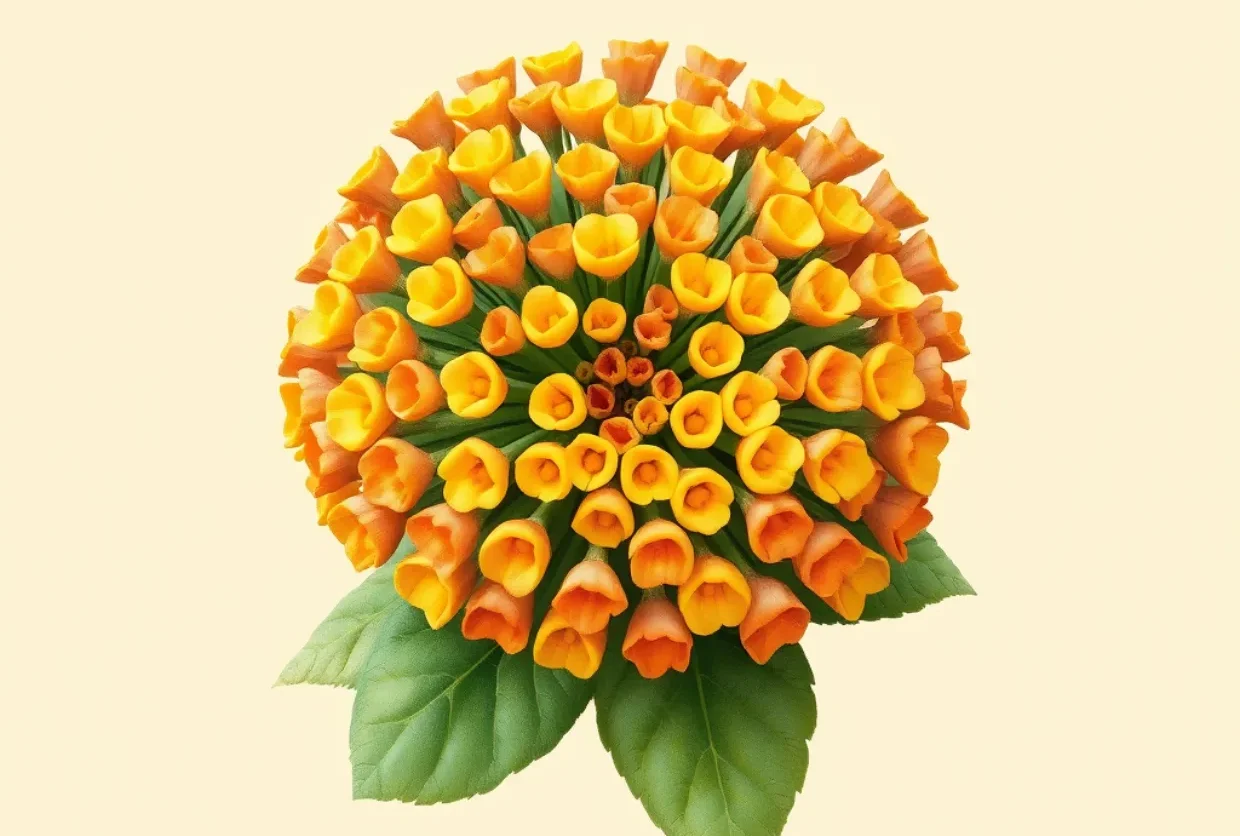
Flowers in heat and poor soil from summer to frost, covered in butterflies. It is also rated medium severity poison, with the berries the main risk to children.
The record
Every plant in the database answers the same questions in the same order, so two entries can be read line for line. 16 of 17 fields sourced.
- Light
- Full sun
- Light detail
- 6 hours or more; performs in heat that stalls other summer flowers
- Water
- Low
- Water detail
- Established plants take dry spells; generous watering costs flowers
- Soil
- Clay, loam, sand or shallow rocky; tolerates poor ground
- Soil pH
- 6.0 to 8.0
- Mature size
- 1 to 6 ft tall, 3 to 5 ft wide
- Toxicity
- NC State rates lantana medium severity. Eating the plant can lead to vomiting, diarrhea, dilated pupils, labored respiration, weakness and liver failure; leaves, flowers, fruits and sap are all toxic, and it is listed as hazardous to dogs, cats, horses, cattle and children. The leaves may cause dermatitis in sensitive individuals.
- Lifecycle
- Perennial
- Difficulty
- Easy
- Hardiness zones
- 7 to 11
- Bloom time
- Summer to first frost
- Flower color
- White, yellow, gold, orange, pink or purple, changing as each flower matures
- Pollinators
- Very attractive to butterflies and hummingbirds; birds eat the berries
- Deer resistant
- not recorded
- Spacing
- 12 in to 6 ft, by cultivar
- Native range
- West Indies and Mexico to tropical America
Hardy in zones 7 to 11. Colder than zone 7, grow it in a container and overwinter it under cover.
The part that poisons children. Small, dark and attractive to pick, and the part with the strongest record of poisoning. A container on a terrace answers this without giving up the plant.
The year
Plant or divide and prune, and when it is actually in flower. Everything else is leaving it alone.
Toxic to pets
NC State rates lantana medium severity. Eating the plant can lead to vomiting, diarrhea, dilated pupils, labored respiration, weakness and liver failure; leaves, flowers, fruits and sap are all toxic, and it is listed as hazardous to dogs, cats, horses, cattle and children. The leaves may cause dermatitis in sensitive individuals.
The best plant for a hot dry spot, with a warning attached
Lantana flowers from summer to the first frost in heat that flattens everything around it, in poor soil, without much water, and it is covered in butterflies the whole time. There is almost nothing else that does all of that at once.
The warning is real and it belongs before the praise rather than after. NC State rates lantana medium severity: eating the plant can lead to vomiting, diarrhea, dilated pupils, labored respiration, weakness and liver failure. The toxic parts are the leaves, flowers, fruits and sap, and it is listed as hazardous to dogs, cats, horses, cattle and children. The leaves may also cause dermatitis in sensitive people.
Liver failure is not a phrase that appears on many garden plants. The berries are the specific risk, because they are small, dark and attractive to a child, and they are the part with the strongest record of poisoning.
None of that makes it unplantable. It makes it a plant for a container on a sunny terrace rather than a border a toddler plays in, and worth thinking about twice in a garden with a dog that chews.
What it wants
Full sun, six hours or more, and nothing else in particular. NC State lists clay, loam, sand and shallow rocky soil as all acceptable at pH 6.0 to 8.0, with good drainage, tolerating moist or occasionally dry conditions and poor soil generally.
Hardy in zones 7a to 11b, growing 1 to 6 feet tall and 3 to 5 feet wide, spaced anywhere from 12 inches to 6 feet apart depending on the cultivar. That range is wide because the cultivars are: some are trailing container plants, some are large shrubs.
In zone 6 and colder it is grown as an annual, which is how most of the country treats it.
The soil tolerance is broad but it has one edge. Loam or sand with free drainage is ideal; heavy clay and ground that stays soggy are the exception, and root rot is what happens there. Shade is the other exception, and it produces mildew on the foliage rather than a plant that simply flowers less. Between those two limits the soil genuinely does not matter, which is unusual enough to be worth trusting.
Water needs one correction to the usual advice, including the step below. Established lantana is genuinely drought tolerant, but drought tolerance means it survives, not that it performs. Bloom, growth rate and overall appearance all drop off if it is dry for a long stretch. Through the flowering period, a thorough soak once a week in any week that does not bring an inch of rain is what keeps it producing, and that is a different instruction from watering it in and walking away. What it will not forgive is frequent shallow watering, or wet feet in winter.
The flowers that change color
The flower heads are hemispherical clusters of small tubular flowers in white, yellow, gold, orange, pink and purple, and the distinctive thing about them is that they change color as they mature.
That is why a single head often carries two or three shades at once, with yellow in the center and orange or pink at the edges. It is not a mixed planting and it is not fading; it is one flower head at several stages.
Flowering runs from summer through to the first frost with no gap, which is unusual and is most of the reason people plant it.
Types and sizes, from a foot to six feet
Lantana size is the thing most often got wrong, because the plants on sale in May are all the same size in the same pot and the mature spread runs from a foot square to six feet across in a single season. The cultivar name is the only thing that tells you which you have bought. These are the ones Clemson records, with the measurements from one growing season.
| Cultivar | Size in one season | Flowers | Notes |
|---|---|---|---|
| Miss Huff | Upright mound, 5 to 6 ft tall | A mix of orange, coral and gold | One of the most reliably perennial lantanas, and sterile, so no berries |
| Mozelle | As Miss Huff | Much softer: pale yellow through peach to soft pink | Same size and hardiness as Miss Huff. Sterile |
| New Gold, also sold as Gold Mound | 2 ft tall by 4 ft wide, vigorous and spreading | Deep gold, very heavy blooming | Sterile and produces no berries. Reliably hardy on the coast |
| Chapel Hill Yellow | 16 in tall by 2 to 3 ft wide, low spreading | Medium yellow, prolific | Bred from Miss Huff and New Gold. Cold hardy to zone 7b |
| Chapel Hill Gold | 12 in tall by 2 to 3 ft wide | Solid golden yellow | A branch sport of Chapel Hill Yellow, and hardy to zone 7b as well |
| New Red, also sold as Texas Flame and Dallas Red | Mounding | Orange, yellow and crimson together | The reddest lantana available |
| Patriot Cowboy | 12 in tall by 12 in wide | Orange buds opening bright yellow, then turning bright orange | One of the smallest lantanas made, and the one for a small pot |
| Patriot Honeylove | 2 ft tall by 3 ft wide | Pale pink, butter yellow and ivory | Slightly mounded with a gentle weeping habit, so it is the one for a wall or a hanging basket |
| Trailing lantana, L. montevidensis | Sprawling | Usually lavender-purple or white | A separate species, used as a dense ground cover rather than as a bedding plant |
One column in that table does more work than the rest. Sterile cultivars set no berries, and berries are simultaneously the toxicity problem described below and the mechanism by which birds spread lantana into places it should not be. Miss Huff, Mozelle and New Gold are all sterile. Where either of those concerns applies, and in a garden with young children or in a frost-free region both do, the cultivar choice settles it far more effectively than siting does.
Annual or perennial, and how to overwinter it
Both, depending on where you are and which one you bought. Lantana is a tender woody shrub grown as a summer annual across most of the country, and a genuine perennial where winters are mild enough. Clemson describes it as commonly grown as an annual with a few cultivars reliably perennial through much of South Carolina and more of them perennial near the coast.
The practical line is roughly zone 7b for the hardiest cultivars, Miss Huff, Mozelle, Chapel Hill Yellow and Chapel Hill Gold among them. North of that, treat any lantana as a one-season plant, or lift it into a pot and bring it in.
Where it does come back, the pruning has one rule that is easy to get backwards.
- Cut perennial lantana back hard in spring, in about March, to 6 to 12 inches from the ground. This removes the old growth and stops the plant becoming woody and bare at the base.
- Do not prune hard in fall. A hard autumn cut reduces the plant’s cold hardiness, which is precisely the wrong outcome going into the season it has to survive. Leave the top growth standing over winter, however untidy it looks, and take it off in spring.
- Shear lightly through summer to keep repeat flowering going, and cut an oversized plant back by up to a third of its height and spread. Water and lightly feed after a hard cut and it returns to bloom quickly.
Growing it
- Give it heat and sun
This is a plant from the West Indies, Mexico and tropical America. It performs where other summer flowers stall.
- Do not improve the soil for it
It tolerates poor ground and flowers less in rich, well-fed soil. Feeding produces leaves at the expense of flowers.
- Dig the hole twice the width of the root ball
Twice as wide and about as deep, so the roots have loosened ground to spread into. On a plant expected to fill three to five feet in one season, the first few weeks of root growth decide how much of that actually happens.
- Water it in, then leave it alone
Established plants take dry spells easily. Steady moisture is not the goal here.
- Cut it back if it sprawls
It grows quickly and aggressively. A hard trim in midsummer restores the shape and brings a fresh wave of flowers.
- Site it away from where children play
Because of the berries. A container on a terrace answers this without giving up the plant.
Feeding, and why less is more
The step above says not to improve the soil. This is the same instruction expressed as a schedule, because “do not feed it” is usually heard as “feed it a bit”. A light feed in spring is the whole program. A second one in midsummer is worth it only for a plant growing strongly and not under water stress.
Beyond that, excessive fertilizer actively reduces flowering, which makes overfeeding the most common self-inflicted reason a healthy-looking lantana stops blooming. If a plant is dark, soft and leafy in July with almost no flower heads on it, the fertilizer is the first thing to suspect and the sun is the second.
Growing lantana in containers
Containers suit this plant particularly well, for three separate reasons. The compact cultivars are the right scale for a pot; the weeping and trailing ones spill over a rim or a wall as well as anything sold for baskets; and a pot on a terrace answers the berry question by putting the fruit above the reach of a small child. It is also the only practical way to keep a lantana alive over winter north of its hardy range.
Give a container plant the same treatment as one in the ground: full sun, free drainage, and restraint with both water and feed once it is established. A lantana that is soft, leafy and not flowering in a pot has almost always been watered and fed like a petunia.
What it brings, and where it is a problem
NC State records the flowers as very attractive to butterflies, with the berries eaten by birds, and hummingbirds and other pollinators drawn in. For a single plant in a hot spot the return on butterflies is as good as anything in the garden.
Birds eating the berries is also how it spreads. NC State notes that in certain parts of the world with more tropical climates, lantana is a weedy pest, and in the frost-free parts of the United States and in Hawaii it behaves accordingly. Where winter kills it, it cannot naturalize; where winter does not, check the local situation before planting.
What goes wrong
Very little in the ground. NC State’s problem list is short: whiteflies and spider mites, mainly on plants that have been overwintered indoors, and it notes that some cultivars show resistance to phytophthora.
The common complaints are not diseases. A lantana that has stopped flowering is usually being fed or watered too generously; one that has gone leggy and bare in the middle wants cutting back; one that sulks through a cool wet summer is simply in the wrong climate that year.
Where problems do appear, they sort into two groups with different answers.
Sucking insects, mainly whiteflies, spider mites, aphids, mealybugs and thrips, are overwhelmingly a problem of plants under cover or overwintered indoors, where there is no weather and no predators. Whiteflies lift off in a cloud when the plant is disturbed; spider mites show as fine stippling on the upper leaf with webbing underneath, and both thrive in warm dry still air. On a plant going back outdoors in spring, the outdoor conditions usually solve it without intervention. On one staying inside, a strong jet of water and better air movement do more than a spray.
Fungal problems, including powdery mildew, botrytis, leaf spots and rust, follow from the two site errors named above rather than arriving on their own. Too little sun, too little air movement, or overhead watering that leaves foliage wet overnight will produce them on a plant that would otherwise be untroubled. Root rot is the same story from below, and it is the one that kills rather than disfigures.
Grazing animals are worth a line as well. Deer and rabbits both browse lantana in some areas despite the strong leaf odor, and grasshoppers and caterpillars take occasional bites. None of this is usually serious on an established plant that is growing fast.
Toxicity, in plain terms
NC State rates lantana medium severity and lists the flowers, fruits, leaves and sap all as poisonous parts, with pentacyclic triterpenoids, lantadene A and B, as the toxic principles. Ingestion can cause vomiting, diarrhea, dilated pupils, labored breathing, weakness and liver failure.
The risk is concentrated in one place, and it is worth being specific rather than alarming. The green unripe berries are the part that causes serious poisoning, they sit at eye level for a small child, and they look edible. That is the whole of the practical hazard, and it is why the section above recommends a sterile cultivar or a container where children use the garden. Sterile cultivars such as Miss Huff, Mozelle and New Gold set no berries at all, which removes the hazard rather than managing it.
The foliage is a lesser matter but not nothing. Crushed lantana leaves have a strong odor, somewhere between bitter citrus and gasoline, which is enough to deter most browsing, and handling the plant causes skin irritation in some people. Gloves are sensible when cutting one back hard.
Frequently asked questions
- Is lantana poisonous?
- Yes, at medium severity. NC State lists vomiting, diarrhea, dilated pupils, labored respiration, weakness and liver failure from eating it, with leaves, flowers, fruits and sap all toxic, and it names dogs, cats, horses, cattle and children as at risk. The berries are the main hazard for children.
- Why has mine stopped flowering?
- Usually too much water or feed. Lantana flowers hardest in poor soil and full sun; rich conditions give you foliage instead. A hard trim in midsummer also brings a fresh flush.
- Will it come back next year?
- In zones 7 to 11, yes. Colder than that it is grown as an annual, which is how most of the country uses it. It can also be overwintered indoors, where whiteflies and spider mites tend to find it.
- How big does lantana get?
- Anywhere from 12 inches to 6 feet in one season, depending entirely on the cultivar. Patriot Cowboy stays at a foot square; Miss Huff and Mozelle make an upright mound 5 to 6 feet tall; New Gold runs 2 feet tall by 4 feet wide. The pots in the garden center all look the same, so the name is the only guide.
- What are the different types of lantana?
- Mostly cultivars of Lantana camara, split by habit into upright mounding types such as Miss Huff, low spreading ones such as Chapel Hill Yellow, and weeping types for baskets such as Patriot Honeylove. Trailing lantana is a different species, L. montevidensis, used as a ground cover.
- How often should I fertilize lantana?
- Once, lightly, in spring, and a second light feed in midsummer only if the plant is growing strongly and not water stressed. Excessive fertilizer reduces flowering, so an overfed lantana is leafy and bloomless.
- When should I cut lantana back?
- Hard in spring, around March, to 6 to 12 inches from the ground. Never hard in fall, because that reduces cold hardiness going into winter. Light shearing through summer keeps the repeat flowering going.
- Why are the flowers two colors in the same head?
- Because the individual flowers change color as they mature, so one cluster carries several stages at once. It is a feature of the plant rather than a mixed planting or a fading flower.
- Is it invasive?
- In frost-free climates, yes. NC State notes it is a weedy pest in more tropical parts of the world, and birds spread the berries. Where winter kills the plant it cannot naturalize, so this is a regional question worth checking locally.
Companion plants
How this entry is compiled
- Care values come from university extension publications and the USDA hardiness map, never from other gardening sites.
- Toxicity follows the ASPCA listing and is quoted rather than summarized.
- A value we cannot source is printed as not recorded, never estimated.
Compiled and checked by the Gardnicks editorial desk · last checked 2026-08-16
Sources for this entry
Where two sources disagree, the entry follows the one closest to the plant’s own growing region and says so in the text.
What kills it
Three failures cover almost everything readers write in about.
More in Flowers
 Sunflower
Full sun · zones not recorded
Sunflower
Full sun · zones not recorded
 Petunia
Full sun · zones not recorded
Petunia
Full sun · zones not recorded
 Lupine
Full sun · zones 3 to 8
Lupine
Full sun · zones 3 to 8
 Geranium
Full sun · zones not recorded
Geranium
Full sun · zones not recorded
Plates are illustrations, not photographs of a specific plant, and are not evidence of a variety, place or season.