Succulent
nr
Succulents / fat plants
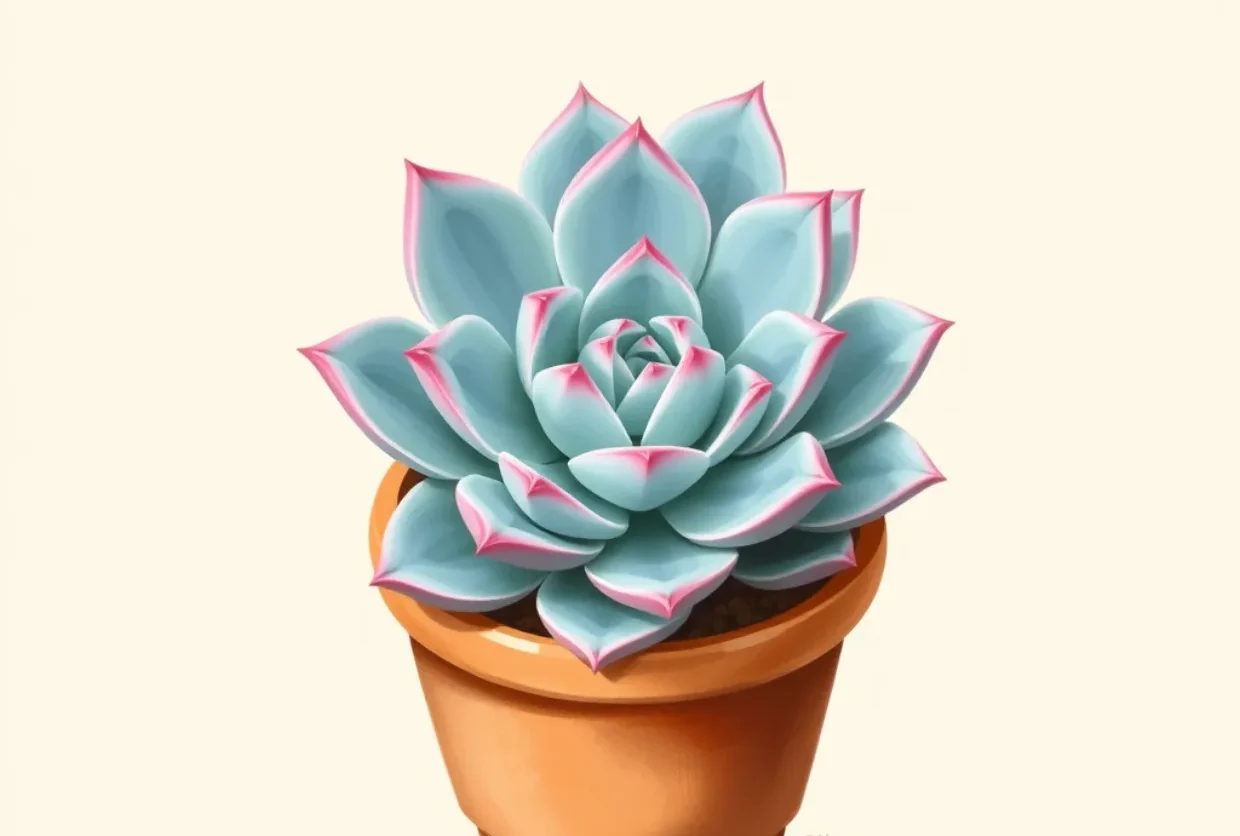
The usual advice, a little water often, is exactly backwards. Soak them completely, then let the mix dry all the way through before the next watering.
The record
Every plant in the database answers the same questions in the same order, so two entries can be read line for line. 10 of 15 fields sourced.
- Light
- Full sun
- Light detail
- 6 to 8 hours of bright light; a south or west window
- Water
- Low
- Water detail
- Soak thoroughly, then nothing until the mix is dry through, usually 2 to 3 weeks
- Soil
- One part organic to two parts mineral
- Soil pH
- not recorded
- Mature size
- not recorded
- Toxicity
- Succulent describes a growth habit rather than a family, and toxicity differs by plant: aloe, jade, kalanchoe and the euphorbias are toxic to pets in different ways, while haworthia, echeveria and sedum are generally not listed. Check the entry for the specific plant.
- Lifecycle
- Houseplant
- Difficulty
- Easy
- Humidity
- Low
- Potting mix
- 2 parts perlite, coarse sand or pumice to 1 part potting soil, bark or coir
- Repotting
- not recorded
- Temperature range
- not recorded
- Safe for pets
- not recorded
Between waterings, indoors. And the mix has to be dry all the way through first. The interval is what usually happens, not a schedule to keep.
Toxic to pets
Succulent describes a growth habit rather than a family, and toxicity differs by plant: aloe, jade, kalanchoe and the euphorbias are toxic to pets in different ways, while haworthia, echeveria and sedum are generally not listed. Check the entry for the specific plant.
Water them a lot, and almost never
The advice most people are given about succulents is a little water often, and it is exactly backwards. It is also why so many die.
Iowa State’s method is the opposite: water only when the soil is completely dry, then water deeply until it runs out of the drainage holes. Generally that works out to every two or three weeks indoors. Illinois Extension gives the reason plainly, that a wet-dry cycle where the soil is thoroughly wetted and then allowed to dry out completely is the best way to avoid root rot.
A splash every few days keeps the surface permanently damp and never wets the whole root ball. That is the one condition a plant adapted to desert rainfall cannot handle: constantly moist, never soaked.
The rule that follows is simple. Never leave water standing in a saucer or a decorative outer sleeve. That is where the plant is drowning even though nothing about it looks wet.
The pot decides more than the schedule
A pot with no drainage hole makes correct watering impossible, and no amount of care compensates.
Glazed pottery, ceramic, terracotta, clay, plastic and glass all work, provided there are holes. Clay and terracotta are the best choice because they are porous and let the mix dry faster, which is the direction of error you want on this plant.
The mix matters as much. Iowa State’s ratio is one third organic to two thirds mineral: one part potting soil, pine bark, compost or coir to two parts perlite, coarse sand, pumice or fine gravel. Ordinary potting compost on its own holds far too much water, and this is the most common reason a succulent that is being watered correctly still rots.
Two things that look like solutions are not. A layer of gravel in the bottom of a pot does not substitute for a drainage hole; water does not move from fine mix into coarse gravel until the mix above is already saturated, so the layer raises the wet zone into the roots rather than draining it. And a decorative container with no hole can be used, but only by double potting: grow the plant in a slightly smaller pot that does have holes and set that inside the display container, lifting it out to water.
Pot size matters in the same direction. A small, shallow container holds less mix and dries out faster, which is why succulents are usually happier slightly underpotted than in the generous pot most plants want.
Light, and the shape that tells you it is wrong
Six to eight hours of bright light is the target indoors. That is a bright south or west window, not a shelf across the room.
The plant tells you when it is not getting enough, and the signal is unmistakable once you know it. Tall, spindly, lanky new growth that is pale in color is etiolation: the plant stretching toward a light source that is not strong enough.
Etiolated growth does not shrink back when you move the plant. The stretched section stays stretched. What you can do is move it into better light so that everything from that point on grows tight again, or cut the top off and reroot it, which is how most people restart a stretched rosette.
Care through the year
- Check with a finger, not a calendar
The mix has to be completely dry all the way down before the next watering. Two to three weeks is a description of what usually happens, not a schedule to follow.
- Soak until it runs out of the bottom
Then tip away anything left in the saucer. Half-watering leaves dry pockets and salt build-up.
- Water much less in winter
Light levels drop and growth almost stops. The same routine that suited July will rot the plant in January.
- Turn the pot every couple of weeks
They lean hard toward the light, and a quarter turn keeps the rosette symmetrical.
- Move outdoor plants into sun gradually
A succulent that has spent winter indoors will scorch in a day of full outdoor sun. Two weeks of increasing exposure prevents it.
Feeding barely registers on this plant, and that is worth saying explicitly because the absence of instructions usually gets read as an oversight. Succulents need very little fertilizer, and the main risk of giving them more is the same weak, stretched growth that too little light produces.
If you feed at all, use a water-soluble fertilizer at half the label rate, roughly every three to four waterings through spring and summer, or a slow-release product applied once early in the season. Stop entirely in fall and winter. A plant that is not growing cannot use what you give it, and the salts simply accumulate in the mix.
The succulents people actually buy, and how to tell them apart
Succulent is not a botanical group. It is a body plan, and unrelated families arrived at it separately because storing water in the leaves solves the same problem in a Mexican hillside and a South African one. That is why advice written for succulents in general is so often wrong for the succulent in front of you, and it is why the genus name on the label is worth reading even though almost nobody does.
| Genus | What it looks like | Light | Worth knowing |
|---|---|---|---|
| Echeveria | Tight symmetrical rosettes, often with a powdery bloom on the leaves | Direct sun | The plant most people picture when they say succulent. Propagates from a single detached leaf more readily than almost anything else |
| Haworthia | Small dark rosettes, some with raised white stripes, others with translucent windowed leaf tips | Tolerates partial shade | The genus for a room without a bright window. The windowed species let light reach tissue inside the leaf, which is how they cope in shade |
| Sempervivum, hens and chicks | Flat ground-hugging rosettes that throw offsets around the base | Full sun | Genuinely cold hardy, down to about -20°F and usable in zone 3. The one to plant outdoors and forget |
| Sedum, stonecrop | Trailing or mat-forming with small fleshy leaves. Burro’s tail is S. morganianum | Sun | Splits into tender trailers for hanging pots and fully hardy groundcovers for the garden. The genus name alone does not tell you which |
| Crassula | Upright and increasingly woody with age. Jade plant is C. ovata | Bright light | The succulent most often grown as a small indoor tree, and one that lives for decades |
| Aloe | Thick strappy leaves with toothed edges, in a rosette | Direct sun | Grown as much for the plant as the flower, and the genus behind aloe vera |
| Kalanchoe | Broader, flatter leaves than most, sometimes felted | Bright light | Often bought in flower and treated as disposable. It is not; it reflowers with a short-day period |
| Graptopetalum, ghost plant | Loose rosettes on lengthening stems, lavender-gray to peachy-pink under a powdery coating | Full sun, and it burns less readily than most | Takes shade better than Echeveria while still wanting sun, which makes it forgiving of an imperfect window |
| Senecio | Trailing strings of beads or spears | Bright light | String of pearls and its relatives. The most attractive and the least forgiving of overwatering |
Two of those rows explain most of the confusion on a nursery shelf. Graptopetalum crosses freely with its neighbors, and the results are sold under blended names: Graptopetalum with Echeveria gives Graptoveria, and with Sedum gives Graptosedum. A label reading Graptoveria is not a misprint.
The light column is the practical payoff. The section above gives six to eight hours of bright light as the target, and that is right for most of this table. But Echeveria and Aloe want direct sun and stretch quickly without it, while Haworthia genuinely tolerates partial shade. Buying a Haworthia rather than an Echeveria for a north-facing room is a better solution than buying a lamp.
Purple succulents, and why color is a stress response
The violet, burgundy, plum and near-black tones that make certain succulents worth buying are not stable colors in the way a flower color is. They come from anthocyanins, water-soluble pigments the plant produces as its own sunscreen, and it makes them in response to conditions rather than as a matter of course.
Three things trigger the pigment: strong light, cool temperatures, and mild drought. That is why the same plant is deep purple on a nursery bench under high light and plain green three months after it comes home, and why the disappointment is so common. The plant has not deteriorated; it has stopped needing the sunscreen.
Bringing the color back means giving it the conditions it responds to, and doing it gradually. Move it to the brightest position available over a couple of weeks rather than in one step, since an abrupt move scorches. Water less. Do not feed. A cool bright spell in autumn is when these colors are strongest, and forcing them in midsummer heat risks damage instead.
Two cautions. Purple or red appearing suddenly on a plant that was green, alongside shriveling or soft patches, is stress of the wrong kind rather than color: check the water and the roots. And this technique belongs on established plants only, because cuttings and seedlings have almost no water reserve and cannot take the drought half of it.
Growing succulents from seeds
Seed is the slow route and it is worth being honest about why it is rarely the right one. Succulent seed is dust-fine, germination takes weeks, and a seedling can spend two years reaching the size a single detached leaf produces in four months. For almost every succulent in the table above, propagation from leaves, cuttings or offsets is faster and more reliable.
Where seed does make sense is for species that do not offset and do not root from leaves, and for growing quantities cheaply. If you are doing it:
- Sow onto the surface of a gritty, sterile mix and do not cover the seed, because most succulent seed needs light to germinate.
- Water from below and keep the surface constantly damp, which is the exact opposite of how a mature succulent is treated. Seedlings have no reserves.
- Keep them covered and warm until germination, then vent gradually.
- Move them onto the neglect regime described on this page only once they are recognizably succulent, with several true leaves.
Seed also does not come true for hybrids. A seedling from a named Echeveria is a new plant, not a copy, which is another reason division and cuttings dominate.
Propagating them, which is the easiest thing about the plant
Succulents propagate more willingly than almost any other houseplant, and there are three routes. Spring and early summer are the times to do it, while the plant is actively growing.
- Leaf cuttings. Remove a healthy leaf cleanly from the stem, let the broken end dry for a few days, then lay it on the surface of a dry succulent mix. Roots and a tiny rosette form at the base. This works best on Echeveria and Graptopetalum, and barely at all on Aloe or Haworthia.
- Stem cuttings. Cut a stem, then let the cut end callus over for several days before it goes into soil. Putting a fresh wet cut straight into damp mix is the standard way to rot a cutting.
- Offsets. The small plants that appear around the base of Sempervivum, Haworthia and Aloe can be separated with a little root attached and potted straight up. This is the fastest of the three and the one with the highest success rate.
The stretched, leggy plant described in the light section below is not a loss, incidentally. Cut the rosette off with a couple of inches of stem, callus it, and root it; the bare stump usually produces several new heads where it was cut. An etiolated succulent is really a propagation opportunity that arrived without being asked for.
Succulent garden ideas, and growing them outdoors
Most of the plants in the table above are tender and come indoors before frost, which is why succulents are thought of as houseplants. Two groups do not, and knowing which is which turns a summer container display into a permanent planting.
- Sempervivum is the hardy one, tolerating temperatures to about -20°F and growing in zone 3. It lives outdoors year round in most of the country, in a rock garden, a wall crevice, a trough or a gravel bed.
- Hardy sedums are the other group. The mat-forming groundcover stonecrops and the upright border types are fully perennial in cold gardens, while the trailing ones sold for hanging baskets are not. The distinction runs by species, not by the word sedum.
- Everything else in the table is a summer visitor. Echeveria, aloe, jade, kalanchoe, graptopetalum and senecio all do well outdoors in warm months and none of them survive a hard freeze.
The garden uses follow from the two hardy groups. A gravel bed, a rock garden, a dry stone wall with plants tucked into the crevices, a trough, a green roof or a sunny slope are all classic succulent plantings, and all of them are built around sharp drainage rather than around soil. A shallow bowl of mixed rosettes is the container version and is best treated as a summer arrangement, since the tender ones in it have to come in.
Do succulents need sunlight outdoors? Yes, and more of it than indoors: most want full sun, and the ones that scorch are usually ones moved out abruptly rather than acclimatized over a week or two. The exception is the hottest afternoon sun in southern gardens, where even sun-lovers appreciate some shade at the peak.
Outdoors the watering advice on this page inverts slightly. A pot in open weather dries far faster than one on a windowsill, so a summer succulent container may need water weekly rather than every two or three weeks. What does not change is the rule: soak thoroughly, then let it dry out completely. Rain is the risk rather than the drought, and a succulent bed that cannot shed a week of rain will rot whatever the temperature.
Reading the symptoms
Succulents show trouble clearly, and the two directions look different enough to tell apart.
Too much water: yellowing leaves, soft mushy leaves and stems, and leaves dropping off over time. Mushy and translucent is the giveaway. A plant this far gone is usually saved by cutting a healthy top and rerooting it rather than by drying out the pot.
Too little water: leaves that wrinkle, thin and go papery, starting with the lowest ones. This is the easy direction to fix, and a plant that looks slightly under-watered is in far less danger than one that looks slightly over-watered.
Too little light: pale, stretched, widely spaced growth reaching toward a window.
The pests that turn up are mealybugs in the leaf joints, looking like small blobs of cotton wool, and scale as flat brown discs on the stems. Both are dealt with plant by plant, and both spread fastest in a crowded collection.
Toxicity, in plain terms
Succulent is a description of a growth habit, not a family, and it covers plants with very different toxicity. Aloe, jade, kalanchoe and the euphorbias are all toxic to pets in different ways, while haworthia, echeveria and sedum are generally not listed as hazards.
This page therefore records toxicity as not recorded, because a single answer covering the whole group would be worthless. The entry for a specific plant is where that question gets answered, and a euphorbia in particular, whose milky sap burns skin and eyes, deserves checking before it is repotted.
Frequently asked questions
- How often should I water succulents?
- When the mix is completely dry, which indoors is usually every two to three weeks, and then thoroughly until water runs from the drainage holes. Small frequent watering is what kills them, because it keeps the surface damp without ever soaking the roots.
- Why is my succulent stretching and going pale?
- Etiolation, from too little light. They want six to eight hours of bright light. The stretched growth will not shorten again; move it to a brighter spot so new growth is compact, or cut the top and reroot it.
- The leaves went soft and yellow. Can I save it?
- Soft, mushy, yellowing leaves mean too much water and usually root rot. Drying the pot out rarely rescues it at that stage. Cut a firm healthy top, let the cut callus for a few days, then root it in a gritty mix.
- What are the main types of succulents?
- The genera worth knowing by name are Echeveria for classic rosettes, Haworthia for small shade-tolerant ones, Sempervivum for cold-hardy hens and chicks, Sedum for trailers and groundcovers, Crassula for jade, Aloe, Kalanchoe, Graptopetalum for ghost plant, and Senecio for string of pearls. Succulent is a body plan rather than a family, so these are not close relatives.
- Which succulents survive being left outdoors in winter?
- Sempervivum, which takes about -20°F and grows in zone 3, and the hardy mat-forming and border sedums. Echeveria, aloe, jade, kalanchoe and string of pearls are all tender and have to come in before frost.
- How do I propagate a succulent?
- Three ways. Lay a detached leaf on dry mix after letting the break dry for a few days, which works best on Echeveria. Take a stem cutting and let the cut callus over for several days before planting it. Or separate an offset from around the base of the parent, which is fastest and most reliable. Spring and early summer are the times to do it.
- What soil should I use?
- One part organic to two parts mineral: potting soil, bark or coir mixed with perlite, coarse sand, pumice or fine gravel. Straight potting compost holds too much water even when the watering is right.
- Does the pot really need a drainage hole?
- Yes. Without one there is no way to water correctly, because a proper soak has nowhere to drain to. Clay and terracotta are the best materials since they are porous and dry faster.
Companion plants
How this entry is compiled
- Care values come from university extension publications and the USDA hardiness map, never from other gardening sites.
- Toxicity follows the ASPCA listing and is quoted rather than summarized.
- A value we cannot source is printed as not recorded, never estimated.
Compiled and checked by the Gardnicks editorial desk · last checked 2026-08-16
Sources for this entry
- Iowa State Extension, Growing Succulents Indoors
- Iowa State Extension, Common Problems and Issues of Succulents
- University of Minnesota Extension, Cacti and succulents
- Illinois Extension, Growing Succulents: Beyond the Basics
Where two sources disagree, the entry follows the one closest to the plant’s own growing region and says so in the text.
What kills it
Three failures cover almost everything readers write in about.
More in Houseplants
Plates are illustrations, not photographs of a specific plant, and are not evidence of a variety, place or season.