Philodendron
Philodendron spp.
Heartleaf philodendron and relatives
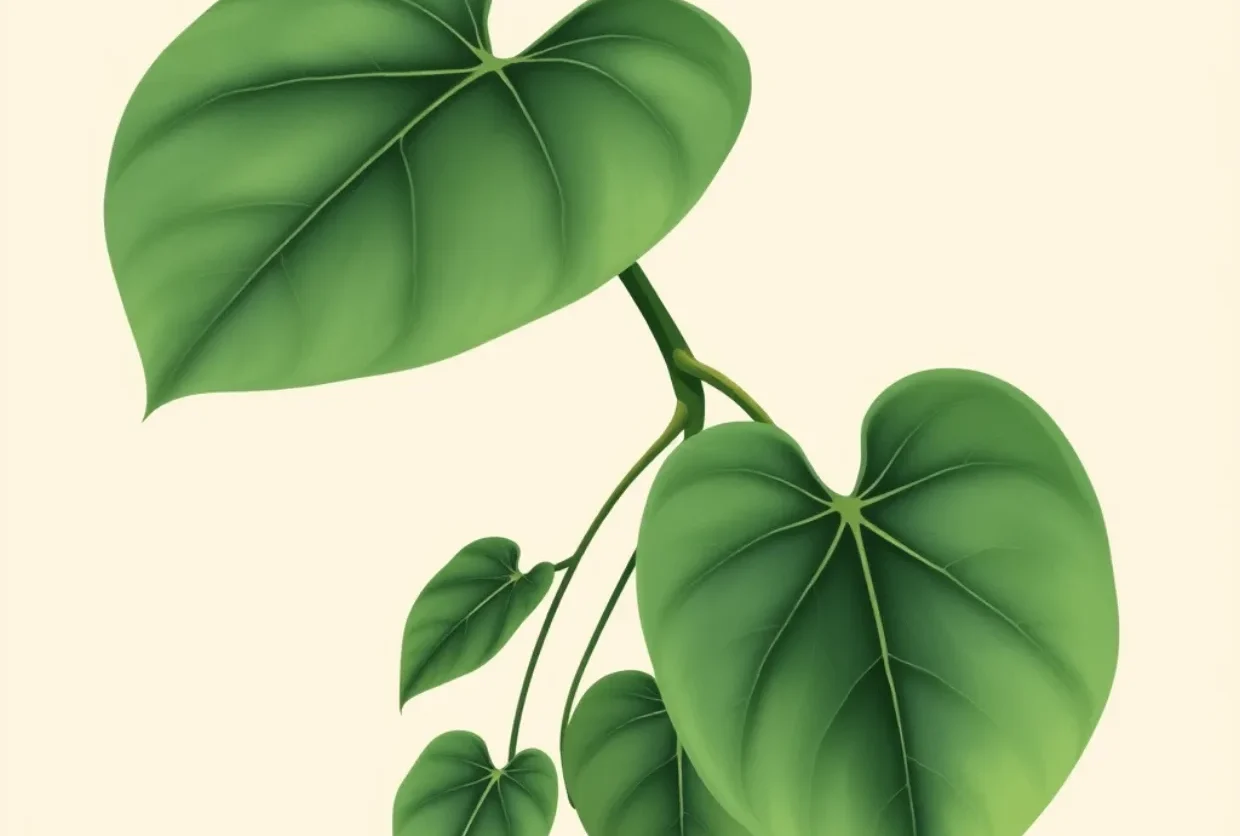
Climbing or self-heading decides everything, and it is not visible in a small plant. Give a climbing type something to climb and the leaves get bigger as it goes.
The record
Every plant in the database answers the same questions in the same order, so two entries can be read line for line. 15 of 15 fields sourced.
- Light
- Part shade
- Light detail
- Bright indirect; direct sun scorches the leaves
- Water
- Moderate
- Water detail
- Water when the top inch is dry, then thoroughly; overwatering causes root rot
- Soil
- Well draining, high in organic matter, loamy or sandy
- Soil pH
- Below 6.0
- Mature size
- 3 to 30 ft tall, 1 to 15 ft wide by species
- Toxicity
- NC State rates philodendron low severity poison. The calcium oxalate crystals cause pain and swelling of the mouth, lips, tongue and throat if eaten, and the sap causes skin irritation and contact dermatitis.
- Lifecycle
- Houseplant
- Difficulty
- Easy
- Humidity
- Average
- Potting mix
- Well draining mix rich in organic matter
- Repotting
- In spring, once root-bound; they are comfortable slightly tight
- Temperature range
- 65 to 85 F; very sensitive to cold and to drafts
- Safe for pets
- No
The part a cutting must include. Cut just below the swollen point where a leaf and an aerial root emerge. A length of stem with leaves but no node will never root, however long it sits in water.
Toxic to pets
NC State rates philodendron low severity poison. The calcium oxalate crystals cause pain and swelling of the mouth, lips, tongue and throat if eaten, and the sap causes skin irritation and contact dermatitis.
Climbing or self-heading decides everything about the pot
Philodendrons split into two groups that need completely different treatment, and the split is not visible in a small nursery plant.
Climbing types such as P. hederaceum and P. erubescens produce aerial roots and grow along or up something. Left trailing from a shelf they will do that indefinitely, and the leaves stay small. Given a moss pole or a support to attach to, the same plant produces progressively larger leaves as it climbs, which is what people mean when they say a philodendron has matured.
Self-heading types such as P. bipinnatifidum and Birkin grow upright from a single crown without climbing, and they end up wide rather than tall.
Across the genus the size range is 3 to 30 feet tall and 1 to 15 feet wide, which is a wide enough range that a plant bought as a small pot can become a room-filling specimen or stay compact for years depending entirely on which one it is.
Philodendron types chart: the ones actually sold
The genus runs to hundreds of species and the names on shop labels are a mix of species, cultivars and trade names. What follows sorts the common ones by the only distinction that changes how you grow them, which is whether the plant climbs or stands on its own.
| Name | Habit | The leaf | Worth knowing |
|---|---|---|---|
| Heartleaf, P. hederaceum | Climbing or trailing | Plain deep green hearts, small on a trailing plant and much larger on a climbing one | The default philodendron and the most forgiving houseplant in the genus. Tolerates low light better than any of the others |
| Brasil | Climbing or trailing | Heartleaf with a lime-yellow stripe down the center | A cultivar of heartleaf with unstable variegation, so leaves range from almost all green to almost all yellow on the same plant |
| Micans | Trailing | Velvety, bronze to deep green with a shifting sheen | Also a heartleaf form. The texture is the point rather than the pattern |
| Birkin | Self-heading | Dark green with fine white pinstripes radiating across each leaf | The pinstripes fade back to green in low light and the plant stretches. This is a light-hungry variegate |
| Pink Princess | Climbing | Near-black leaves with irregular bubblegum-pink variegation | The expensive one. Variegation is unstable in both directions, so it can revert to plain or produce all-pink leaves that cannot feed themselves |
| White Wizard and White Knight | Climbing | Deep green with blocks of pure white | Same instability as Pink Princess. White Wizard has green stems, White Knight dark purple ones, which is how they are told apart |
| Gigas | Climbing | Very large velvety leaves, coppery when new, maturing to deep green with pale veins | Needs a support and high humidity to size up. Small in a pot, enormous on a pole |
| Mamei, the silver cloud | Creeping and climbing | Broad leaves with silver splashes over green, slightly quilted | Spreads sideways as much as up, so it suits a wide low pot |
| Brandtianum, the silver leaf | Climbing or trailing | Olive green with bold silver bands between the veins | One of the more tolerant patterned types |
| Rio | Trailing | Heartleaf form with a silver central band alongside the cream stripe | Stable variegation, unlike Brasil, which is why it costs more |
| Split leaf, P. bipinnatifidum (syn. P. selloum) | Self-heading, and large | Deeply lobed finger-like leaves on a plant that becomes a small tree | Needs floor space rather than shelf space. See below on the Monstera confusion |
Split leaf philodendron vs Monstera deliciosa
These two are confused constantly, sold interchangeably, and are not the same plant. Both have large deeply cut leaves and both are aroids, but the difference is visible once you know where to look.
The test is holes. Monstera deliciosa develops fenestrations, actual enclosed holes within the leaf blade, as it matures. Split leaf philodendron never does. Its leaves are deeply lobed around the edges into finger-like divisions, but the blade itself stays solid.
The second difference is habit. Monstera is a climber and wants a pole; split leaf philodendron is self-heading, building a thick trunk-like stem and spreading outward rather than upward. A Monstera left without support sprawls; a split leaf given a pole ignores it.
Variegated types, and why they revert
Pink Princess, White Wizard, Birkin and Brasil are all bought for variegation, and all of them can lose it. The cause is almost always light: a variegated philodendron in a dim corner reverts to solid green, because the green tissue is the part that feeds the plant and the plant will not maintain what it cannot afford.
The fix is more light, not direct sun, introduced gradually. Bright indirect light keeps the pattern; a south-facing window through glass scorches the pale tissue, which has no protection.
Reversion runs the other way too on the high-variegation types. A Pink Princess stem that starts producing entirely pink leaves is producing leaves that cannot photosynthesize, and that stem will eventually stall and die. The remedy is to cut back to a node that carries a good balance of green and color, which forces the plant to grow on from there.
Conditions
Light: bright indirect. Direct sun scorches the leaves, and this is the most common way a healthy plant is damaged after being moved to a sunnier spot in good faith.
Water: moist, well-drained mix high in organic matter. Overwatering causes root rot, which is the usual cause of death.
Humidity: high suits them, but they adjust to average home levels, which is why philodendrons are so much easier indoors than calatheas. Where the air is very dry, a humidifier or pebble tray helps.
Temperature: 65 to 85°F, and NC State flags that they are very sensitive to cold and that drafts should be avoided. A plant next to a door in winter suffers more than the room temperature suggests.
Mix: well-draining, rich in organic matter, loamy or sandy, at an acidic pH below 6.0.
Care
- Water when the top inch has dried
Then thoroughly, until it runs out of the bottom. Small frequent watering keeps the surface wet and the root ball dry, which is the worst of both.
- Give climbing types something to climb
A moss pole, a plank or a trellis. The aerial roots attach to it, and the leaves get larger as the plant goes up.
- Prune to control shape
Cut back long bare stems and the plant branches. Nothing is wasted, because the cuttings root easily.
- Repot in spring when root-bound
Not before. Philodendrons are comfortable slightly tight, and a pot too large holds water the roots cannot use.
- Keep it away from cold drafts
Sensitivity to cold is specifically noted. A window that opens in winter is the position to avoid.
How to propagate philodendron
Layering or stem cuttings, and the stem cutting method takes minutes.
Cut just below a node, the slightly swollen point where a leaf and an aerial root emerge. Put it in water or straight into damp mix. Roots appear within a couple of weeks and the cutting can be potted, or several can go back into the parent pot to thicken it up.
Three details decide whether it works first time.
- The node is what matters, not the leaf. A cutting with a leaf and no node will sit in water indefinitely and never root. A bare stem section with two nodes and no leaf will root. Count nodes, not leaves.
- Take two or three nodes per cutting. One node roots, but two gives a margin and produces a fuller plant faster.
- Water rooting is easier to watch, soil rooting produces a better plant. Roots grown in water are structurally different and take a week or two to adapt after potting, which is when a water-rooted cutting sometimes stalls. If you root in water, pot it while the roots are still short, about an inch, rather than waiting for a big tangle.
Self-heading types such as split leaf and Birkin cannot be propagated this way, because they do not produce trailing stems with spaced nodes. Those are divided at the base or grown from offsets instead, and they are much slower to increase.
Air layering is the third method and it is the one for a climbing plant that has gone bare at the bottom. Wrap a node in damp moss, hold it with film until roots form, then cut below it. That gives an already-rooted plant rather than a cutting taking its chances.
The node is the part that matters. A length of stem with leaves but no node will not root, however long it sits in the glass.
What goes wrong
NC State lists mealybugs, aphids, scale, banded greenhouse thrips and spider mites, plus root rot from overwatering and leaf spots, which it notes are prevented by air circulation.
Most complaints are readable off the plant. Yellowing lower leaves usually mean overwatering; a single old leaf yellowing occasionally is normal. Brown crispy tips point at dry air or inconsistent watering. Long stems with widely spaced small leaves mean too little light. Pale, washed-out or scorched patches mean too much direct sun.
A climbing philodendron whose leaves stay small and never develop the mature shape has usually never been given anything to climb.
The pests, and where they hide
All five of the insects on that list are sap-suckers and all of them sit where they are hard to see, which is why they are usually found late.
- Mealybugs: white cottony masses in the leaf axils and along the stem, and on the roots in bad cases. A cotton swab of rubbing alcohol takes them off individually.
- Scale: brown limpet-like bumps on stems and leaf undersides that do not move when touched. Often first noticed as stickiness on the leaf below.
- Spider mites: fine stippling on the upper leaf surface and webbing where leaf meets stalk. They follow dry air, which is the same condition that browns the tips.
- Thrips: silvery streaking and distorted, puckered new leaves. The insects themselves are barely visible; the damage is the diagnosis.
On a philodendron, wiping the leaves by hand does most of the work, and it is worth doing routinely rather than only when something is wrong. It removes early infestations before they establish and it clears the dust that reduces the light reaching a plant already living on less than it would like.
Root rot, and the pot that causes it
Root rot from overwatering is the one entry on that list that kills. The signal is yellowing that starts low and spreads, with stems going soft at soil level, on a plant in mix that stays wet.
The cause is more often the pot and the mix than the watering can. A philodendron in a dense peat-based compost, in a container with no drainage hole, will rot on a perfectly sensible watering schedule. These are climbing aroids whose roots grip bark in the wild and expect air around them. A chunky mix with bark and perlite through it, in a pot that drains, makes overwatering much harder to achieve.
Leaf spots are the other disease NC State names, and it flags the remedy alongside them: air circulation. A crowded plant in still air with wet leaves gets them; the same plant with space around it does not.
Toxicity, in plain terms
NC State rates philodendron low severity poison, and the mechanism is calcium oxalate crystals: ingestion causes pain and swelling of the mouth, lips, tongue and throat, and the sap causes skin irritation and contact dermatitis.
Calcium oxalate is a physical irritant rather than a systemic poison. The crystals are needle-shaped and cause immediate burning, which is why animals and children usually stop after one bite. That immediate pain is also why serious poisoning is rare while unpleasant incidents are common.
Practically: keep it out of reach of a pet that chews, wear gloves when taking cuttings if you react to sap, and treat a chewed leaf as a vet phone call rather than an emergency.
Frequently asked questions
- Why are my philodendron’s leaves staying small?
- If it is a climbing type, because it has nothing to climb. Aerial roots attaching to a moss pole or plank is what triggers progressively larger leaves. Trailing from a shelf, the same plant keeps making small ones.
- Yellow leaves. Too much or too little water?
- Almost always too much, especially when several lower leaves yellow at once and the stems feel soft. One old leaf yellowing occasionally is normal aging. Water when the top inch is dry, then thoroughly.
- How do I take a cutting?
- Cut just below a node, the swollen point where a leaf and an aerial root emerge, and put it in water or damp mix. Roots come within a couple of weeks. A stem section with no node will never root.
- Are philodendrons toxic to cats and dogs?
- Yes, at low severity. The calcium oxalate crystals cause immediate pain and swelling of the mouth, lips, tongue and throat, and the sap irritates skin. The immediate burning usually stops an animal after one bite, which is why serious cases are rare.
- Why are the leaf tips brown?
- Dry air or inconsistent watering. Philodendrons tolerate average household humidity better than most tropical foliage plants, so brown tips usually point at the watering routine before the air.
Companion plants
How this entry is compiled
- Care values come from university extension publications and the USDA hardiness map, never from other gardening sites.
- Toxicity follows the ASPCA listing and is quoted rather than summarized.
- A value we cannot source is printed as not recorded, never estimated.
Compiled and checked by the Gardnicks editorial desk · last checked 2026-08-16
Sources for this entry
Where two sources disagree, the entry follows the one closest to the plant’s own growing region and says so in the text.
What kills it
Three failures cover almost everything readers write in about.
More in Houseplants
Plates are illustrations, not photographs of a specific plant, and are not evidence of a variety, place or season.