Butterfly bush
Buddleja davidii
Summer lilac
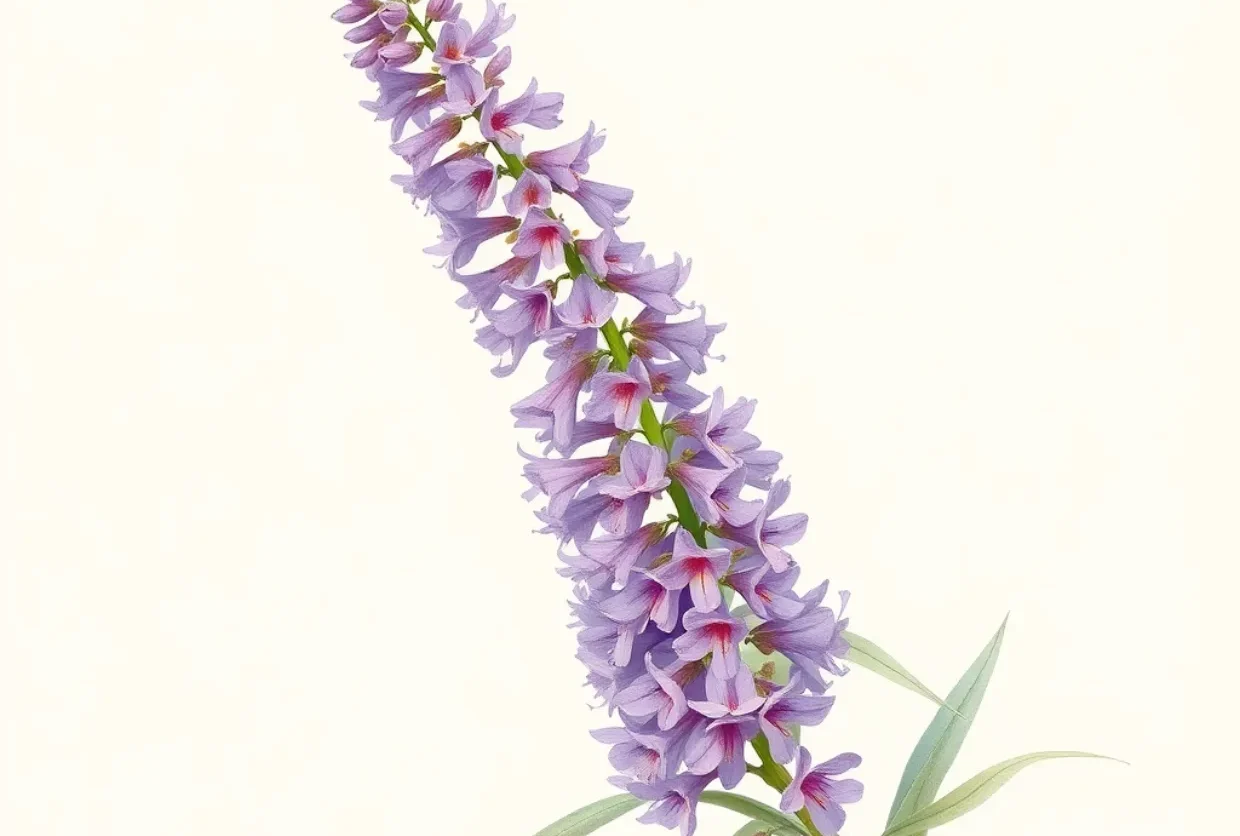
It feeds adult butterflies generously and starves their caterpillars, and it is a regulated noxious weed in parts of the country. A nectar bar, not habitat.
The record
Every plant in the database answers the same questions in the same order, so two entries can be read line for line. 15 of 17 fields sourced.
- Light
- Full sun
- Light detail
- 6 hours or more
- Water
- Low
- Water detail
- Tolerates occasional dryness and occasional wet alike
- Soil
- Clay, loam, sand or shallow rocky, well drained
- Soil pH
- 6.0 to 8.0
- Mature size
- 6 to 12 ft tall, 4 to 15 ft wide
- Toxicity
- not recorded
- Lifecycle
- Shrub
- Difficulty
- Easy
- Hardiness zones
- 5 to 9
- Bloom time
- June to September
- Flower color
- Lilac with an orange throat; cultivars in white, pink and deep purple
- Pollinators
- Rich nectar for adult butterflies and hummingbirds; no native caterpillar can feed on the foliage
- Deer resistant
- not recorded
- Spacing
- 6 to 12 ft apart
- Native range
- Tibet to central and southern China
Hardy in zones 5 to 9. Colder than zone 5, grow it in a container and overwinter it under cover.
Native caterpillars that can eat it. Maryland Extension records that not one native caterpillar feeds on the foliage, which is why it supports adult butterflies without supporting butterflies.
The year
Plant or divide and prune, and when it is actually in flower. Everything else is leaving it alone.
It feeds butterflies and starves their caterpillars
This is the plant that most deserves an honest entry rather than a friendly one, because what it does well and what it does badly are the same thing.
NC State records it as a rich nectar source that attracts butterflies, hummingbirds and pollinators, and adds the sentence that matters: native butterfly caterpillars cannot feed on its foliage.
Penn State puts the consequence plainly. Butterflies need host plants for their larvae, not just nectar for the adults. Butterfly bush leaves provide no nutrition to native caterpillars, and Maryland Extension notes that not one native caterpillar can feed on it. So a garden full of butterfly bush is a garden full of adult butterflies with nowhere to breed, and when the shrub displaces the asters and milkweeds that the larvae actually need, the population it appears to support goes down rather than up.
That does not make it a useless plant. It makes it a nectar bar rather than a habitat, and the distinction is worth knowing before you plant one instead of something that does both.
Where it is a legal problem, not just an ecological one
NC State states that Buddleja davidii is listed as invasive by the NC Invasive Plant Council in the Mountain and Piedmont regions of North Carolina, and that it is a designated noxious weed in Oregon and Washington.
Oregon State describes it as very invasive throughout western Oregon, spreading by abundant wind- and water-borne seed, reaching maturity in a single year, forming dense thickets and outcompeting native vegetation in meadows, forest edges, dunes and river banks.
River banks are the giveaway. Water carries the seed a long way from the garden it was planted in, which is why the plant is a regional restriction rather than a general caution. Check your own state before buying; in several, the straight species cannot legally be sold.
The seedless cultivars, and their limit
Where sales are restricted, low-seed and sterile cultivars are usually the approved exception: Asian Moon, Blue Chip, Miss Molly, Miss Ruby and several of the Flutterby Grande series.
These are a genuine improvement and not a complete answer. Extension guidance notes that such plants often still flower, and their pollen can fertilize escaped plants growing in the wild, which then set seed. Less seed from your garden is a real reduction; zero contribution to the problem it is not.
The named ones are worth setting out, because the series a plant belongs to tells you far more than the cultivar name does. Most of the seedless breeding traces back to one program, Dr. Dennis Werner’s at North Carolina State University, which is why the approved lists in different states keep naming the same few groups.
| Series or cultivar | Habit and size | What distinguishes it | Seed |
|---|---|---|---|
| Lo & Behold | Small and mounded, in the 2 to 3 foot range | Purple Haze is the largest of the series, Pink Micro Chip the smallest, Blue Chip Jr. the earliest to flower | Bred seedless |
| Miss series: Miss Molly, Miss Ruby, Miss Violet, Miss Pearl | Medium, 4 to 5 feet | The most saturated colors in the genus. Miss Molly is as close to red as a butterfly bush gets, Miss Pearl is pure white | Bred seedless |
| Pugster | Short and stocky | Full-sized flower panicles on a dwarf plant, on unusually thick stems. Pugster Blue is a genuine blue rather than a lilac | Low seed |
| Flutterby Grande | Full size | A full-height option where the dwarfs are too small for the position | Low seed |
| Asian Moon | Full size | One of the named exceptions on restricted-sales lists | Seedless |
| Blue Chip | Dwarf | The original dwarf of the group and still one of the most widely approved | Bred seedless |
| Buddleja davidii, the straight species | 6 to 12 feet tall and 4 to 15 feet wide | Lilac panicles with an orange throat, June to September | Seeds freely. The regulated one |
One naming quirk is worth knowing before you shop. In states where the species is banned, the approved sterile varieties are often sold as summer lilac rather than as butterfly bush, specifically so the label makes clear the plant has been cleared by the state department of agriculture. A shelf of summer lilac in Oregon is a shelf of approved Buddleia, not a different plant.
The other one is a plant that is not related at all. Butterfly weed is Asclepias tuberosa, a herbaceous milkweed, and it is one of the plants recommended further down as an alternative. Butterfly bush is a woody shrub. The two get confused constantly and they do opposite jobs in a garden: the milkweed feeds caterpillars, the shrub feeds adults.
Growing it, if you are going to
Hardy in zones 5 to 9, reaching 6 to 12 feet tall and 4 to 15 feet wide, spaced 6 to 12 feet apart.
Full sun, six hours or more. Soil is almost irrelevant: NC State lists clay, loam, sand, high organic matter and shallow rocky ground as all acceptable at pH 6.0 to 8.0, wanting good drainage and tolerating both occasional dryness and occasional wet. That indifference is precisely what makes it invasive.
Flowering runs June to September in scented lilac panicles with an orange throat, 4 to 10 inches long.
- Check your state first
The straight species is restricted or banned in parts of the country. This is the one step that cannot be skipped.
- Prune hard in early spring
Flowers appear on new growth, so cutting back in early spring both controls the size and increases the flowering. It can be taken very low.
- Deadhead as the panicles fade
It keeps the display going and, more importantly, removes the seed before it can be carried off by wind or water.
- Watch for spider mites in drought
NC State reports no serious insect or disease problems, with spider mites the exception during dry spells.
- Plant host plants alongside it
Milkweed, asters, native violets and grasses. That is what turns a nectar stop into somewhere butterflies can complete a life cycle.
Bloom time, color, and whether to deadhead
The flowering season is the honest reason this shrub keeps being planted. It starts in early summer and runs to the first frost, which is longer than almost any other hardy shrub manages, and each panicle is scented. Buddleia is doing its heaviest work in August, the month when most garden shrubs have finished, and that is why it looks so much better than its alternatives in a photograph taken at the end of summer.
The color range on the straight species runs mostly through lilac, purple and pink, always with a small orange eye at the throat of each floret. Breeding has widened it: the Miss series pushes into deep magenta and near-red, Miss Pearl is pure white, and Pugster Blue is one of the few genuinely blue flowers among these bushes rather than a lilac being described generously.
Deadheading is where the advice splits, and the split follows the plant you own.
- On the straight species, cutting the spent panicles off as they brown does two jobs at once: it keeps new flowers coming into autumn, and it removes the seed before wind or water can carry it. The second reason is the important one.
- On the modern seedless series, the plants flower all summer without it, and there is no seed to remove, so deadheading becomes a tidiness decision rather than a responsibility.
- Either way, it is not pruning. Taking off spent flower heads through the season is a light job with shears or fingers. The hard cut that controls size belongs in early spring, on a dormant plant.
Soil, drainage and growing one in a pot
The soil requirement for a butterfly bush is easy to state and easy to get wrong: it does not care what the soil is made of and it cares a great deal about whether water leaves it. Any texture from clay to shallow rock is acceptable across a pH range of 6.0 to 8.0, and the plant is drought-tolerant once established. What it will not survive is roots that sit wet. Bushes lost in gardens with good soil are almost always lost to a low spot, a downspout, or an irrigation zone set for the perennials around them.
That indifference to soil is also the mechanism behind the spread. A shrub that grows in gravel, rubble and river shingle can establish from seed in places nothing else is competing for, which is exactly where escaped plants turn up: railway ballast, waste ground, and the stony margins of rivers where the seed is carried by water.
Containers work well, and for anyone in a state with restrictions they are a sensible way to grow one while keeping it under control. The requirements are specific: several large drainage holes rather than one, a light fast-draining potting mix rather than garden soil, and a pot in a material that can be left outdoors through winter, since the plant stays in it year-round. The dwarf series are the ones to use, being built for the scale.
The leaves, and why they take so long to appear
More people conclude a butterfly bush has died than actually lose one, and the reason is almost always the same. Buddleia is one of the last woody plants in the garden to break bud. Everything around it can be fully green while the bush is still a stand of bare gray stems, and this is normal rather than a symptom. Growers commonly advise waiting until as late as the third week of June before deciding a plant has failed, and a shrub that looks dead in May often puts on several feet by August.
Two things follow from that. Do not dig one up in spring, and do not replace the soil around it in the belief that something in the ground killed it. Scratch a stem with a thumbnail instead: green underneath means the plant is alive and simply late.
When they do come, the leaves are long and lance-shaped, in opposite pairs, gray-green above and paler and felted underneath. That gray cast is normal coloring on this shrub and is regularly mistaken for mildew or for drought stress.
- Yellowing leaves with weak stems and few flowers usually mean too much water rather than too little, and this is worst in clay. An irrigation system that soaks the shrub along with everything else in the bed is a common cause of dieback in an otherwise drought-tolerant plant.
- Stippled, dusty-looking leaves in a dry spell are spider mites, which NC State names as the one pest exception on a shrub it otherwise records as having no serious insect or disease problems.
- Leaves only at the top of the plant is a pruning failure rather than a leaf problem. Left uncut, a large Buddleia carries its growth and its flowers well above eye level, which is why the hard spring cut described above is not optional.
- Winter dieback of whole stems is normal in zones 5 and 6, and is the reason planting is best done in spring through midsummer rather than in fall. A bush planted in autumn in a cold zone has not rooted enough to carry it through a wet winter.
What to plant instead
If the goal is butterflies rather than this specific shrub, the plants that feed both stages are the better buy. The distinction that matters in every row below is host versus nectar: a host plant is one whose leaves caterpillars can actually eat, and butterfly bush is not a host plant for a single native species.
| Plant | What it is | Why it beats a butterfly bush |
|---|---|---|
| Milkweed, Asclepias | Herbaceous perennial, including butterfly weed | The only host plant monarch caterpillars can use. Nectar for adults on top of that |
| Asters | Herbaceous perennial | Late nectar in the same weeks a Buddleia is flowering, and a host plant as well |
| Goldenrod | Herbaceous perennial | One of the heaviest late-season nectar sources in North America, and a host plant for a long list of insects |
| Joe Pye weed | Tall herbaceous perennial | The closest thing to a butterfly bush in habit and flower size among native plants, at a similar scale |
| New York ironweed | Tall herbaceous perennial | Deep purple late flowers on a plant that fills the same back-of-border role |
| Coneflowers | Herbaceous perennial | Long flowering, and the seedheads feed birds through winter instead of seeding into a river bank |
| Buttonbush | Native shrub | A shrub rather than a perennial, so it is the direct swap. Heavy nectar and it tolerates the wet ground a Buddleia will not |
| Summersweet, Clethra | Native shrub | The scented summer-flowering shrub most comparable to butterfly bush, and it takes shade |
| Native viburnums | Native shrubs | Host plants with fruit for birds, and structure the perennials cannot give |
Two of these are the real substitutes if what you want is the shrub rather than the effect: buttonbush and summersweet occupy the same space in a bed and flower in the same part of summer. The rest are better thought of as the planting that goes around whichever shrub you choose, and the entry above on host plants is the reason to include several of them rather than one.
The honest comparison is that butterfly bush flowers longer and more heavily than most of these. It is a better display and a worse habitat, and which of those you are buying is worth deciding deliberately.
Toxicity, in plain terms
NC State’s entry carries no toxicity listing for Buddleja davidii, and this page records that as not recorded rather than a confident no, because an absent listing is not a positive statement of safety.
Frequently asked questions
- Is butterfly bush actually bad for butterflies?
- It feeds the adults well and does nothing for the caterpillars. NC State states native butterfly caterpillars cannot feed on its foliage, and Maryland Extension records that not one native caterpillar can. Where it displaces milkweed and asters, it removes breeding habitat while looking like it is helping.
- Is it invasive where I live?
- It depends on the state. NC State lists it as invasive in the Mountain and Piedmont regions of North Carolina and a noxious weed in Oregon and Washington, where sale of the species is restricted. Check your own state before buying, because this is regulated rather than advisory in several places.
- Are the sterile varieties safe to plant?
- They are much better and not perfect. Asian Moon, Blue Chip, Miss Molly, Miss Ruby and several Flutterby Grande cultivars are the ones usually approved where sales are limited. They still flower, and their pollen can fertilize escaped plants growing wild.
- What are the best butterfly bush varieties?
- Among the seedless and low-seed groups: Lo & Behold and Blue Chip for a 2 to 3 foot plant, the Miss series at 4 to 5 feet for the strongest colors, Pugster where winter dieback is a recurring problem, and Flutterby Grande or Asian Moon at full size. Most of these came out of the NC State breeding program, which is why the same names appear on state approval lists.
- Why has my butterfly bush not leafed out?
- Because it is one of the last shrubs in the garden to break bud. Bare stems in May are normal, and growers advise waiting until as late as the third week of June before declaring one dead. Scratch a stem: green under the bark means it is alive and just late.
- Is butterfly bush the same as butterfly weed?
- No. Butterfly weed is Asclepias tuberosa, a herbaceous milkweed, and butterfly bush is a woody shrub in the genus Buddleja. They do opposite jobs: the milkweed feeds monarch caterpillars, the shrub feeds adult butterflies and no caterpillars at all.
- Why is my butterfly bush yellowing and flowering poorly?
- Usually too much water, especially in clay. Weak stems, yellowing leaves, fewer flowers and stem dieback are the signature of a drought-tolerant shrub sitting in an irrigated bed. Check that a sprinkler system is not soaking it along with everything else.
- When and how hard do I prune it?
- Early spring, and hard. Flowers form on new growth, so cutting back controls a shrub that reaches 6 to 12 feet and increases flowering at the same time.
- What should I plant instead?
- Anything that feeds both stages: milkweed, asters, goldenrod, native viburnums, buttonbush or summersweet for a scented summer shrub. They flower less heavily than butterfly bush and support far more insects.
Companion plants
How this entry is compiled
- Care values come from university extension publications and the USDA hardiness map, never from other gardening sites.
- Toxicity follows the ASPCA listing and is quoted rather than summarized.
- A value we cannot source is printed as not recorded, never estimated.
Compiled and checked by the Gardnicks editorial desk · last checked 2026-08-16
Sources for this entry
- NC State Extension Gardener Plant Toolbox, Buddleja davidii
- Penn State Extension, Avoiding Invasives: Butterfly Bush
- University of Maryland Extension, Butterfly Bush
- Oregon State Extension, Invasive Weeds in Forestland: Butterfly Bush
Where two sources disagree, the entry follows the one closest to the plant’s own growing region and says so in the text.
What kills it
Three failures cover almost everything readers write in about.
More in Flowers
 Hyacinth
Full sun · zones 4 to 8
Hyacinth
Full sun · zones 4 to 8
 Vinca
Part shade · zones 4 to 9
Vinca
Part shade · zones 4 to 9
 Dahlia
Full sun · zones 7 to 10
Dahlia
Full sun · zones 7 to 10
 Begonia
Part shade · zones 10 to 11
Begonia
Part shade · zones 10 to 11
Plates are illustrations, not photographs of a specific plant, and are not evidence of a variety, place or season.