Haworthia
Haworthia spp.
Zebra plant / window plant
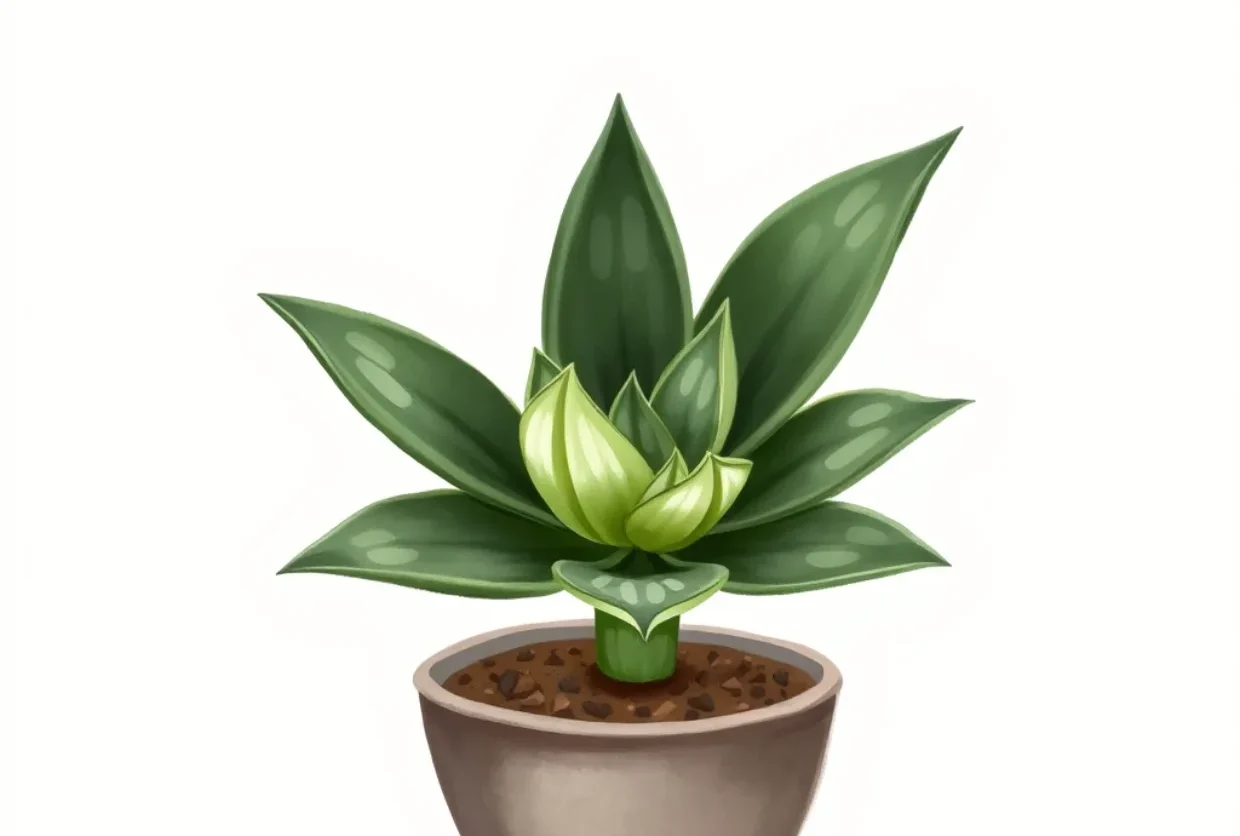
The translucent windows at the leaf tips are the whole story: it evolved half buried in gritty soil, which is why bright indirect light suits it and desert sun does not.
The record
Every plant in the database answers the same questions in the same order, so two entries can be read line for line. 12 of 14 fields sourced.
- Light
- Part sun
- Light detail
- Full sun or bright indirect; brighter light gives the best leaf color
- Water
- Low
- Water detail
- Only when the mix has dried through; water into the mix, never into the rosette
- Soil
- Well drained, sandy or shallow rocky
- Soil pH
- 6.0 to 8.0
- Mature size
- 2 to 12 in tall and wide
- Toxicity
- not recorded
- Lifecycle
- Houseplant
- Difficulty
- Easy
- Dormancy
- not recorded
- Grit ratio
- Sandy or shallow rocky mix, sharply drained
- Winter rest
- Water much less in winter, when growth all but stops
- Hardiness zones
- 9 to 11
Hardy in zones 9 to 11. Colder than zone 9, grow it in a container and overwinter it under cover.
Translucent panels at the leaf tips. NC State names them as what separates Haworthia from Aloe. In the wild the plant sits half buried and light enters through them.
The windows in the leaves are the whole story
Haworthias have translucent panels at the tips of their leaves, and NC State names them as the feature distinguishing the genus from Aloe and from the related Haworthiopsis. Hold one up to a window and the leaf tips glow.
Those windows are not decoration. In South Africa, where the plant is from, haworthias grow largely buried in gritty soil with only the leaf tips exposed, and light enters through the windows to reach photosynthetic tissue below ground level. The plant is designed to sit in shade cast by rock and scrub with a small amount of bright light coming in from above.
That explains the care, and it explains why a haworthia and an aloe on the same windowsill behave differently. Bright light suits it and full unfiltered desert sun does not.
What it wants
NC State gives full sun or bright indirect light, and notes that brighter conditions produce the best colors in the leaves. It is somewhat shade tolerant, but shade costs the color and the compactness.
Small: 2 to 12 inches tall and wide, forming rosettes of thick fleshy leaves and clumping over time. That size is why it ends up in terrariums and dish gardens, and NC State notes it is especially popular with beginner gardeners.
Ordinary home temperatures suit it. It is sensitive to frost and hardy only in zones 9 to 11, so almost everywhere it is a houseplant.
The mix should be well drained, sandy or shallow and rocky, at pH 6.0 to 8.0. Allow the medium to dry between waterings; these are drought-tolerant plants sensitive to excess moisture, and root rot from overwatering is the one thing that reliably kills them.
The species you are likely to have
The genus is large and the plants sold under the name are not all in it, which the section above hints at without resolving. The distinction is easy to make with the plant in front of you.
Haworthia has translucent windows at the leaf tips. Haworthiopsis has opaque, linear leaves with raised white calluses in spots or bands. Hold the leaf to the light: if the tip glows, it is a Haworthia; if it is solid and marked with white bumps, it is a Haworthiopsis. They want the same care, so this is about knowing what you have rather than about changing anything.
| Plant | Leaf | Notes |
|---|---|---|
| Zebra plant, Haworthiopsis attenuata | Stiff, linear, pointed, dark green with horizontal white bumpy stripes on both surfaces | By far the most sold. 4 to 12 in tall, 6 in to 2 ft wide, in compact star-shaped rosettes that spread like a carpet |
| Haworthiopsis fasciata | The same white banding, but the upper leaf surface is smooth | Constantly mislabeled as attenuata. The bumps-on-both-sides test settles it |
| Cooper’s haworthia, H. cooperi | Plump, juicy, blue-green leaves with deep green lengthwise veins and a strikingly translucent look | The one people buy for the windows |
| Cathedral window haworthia, H. cymbiformis | Boat-shaped pale green leaves with dark lengthwise stripes | A 4-inch rosette |
| Star cactus, H. retusa | Thick triangular lime green leaves with transparent tips | Small, compact, star-shaped. Not a cactus despite the name |
| Horse’s teeth, H. truncata | Rectangular, truncated leaves like a row of squared-off teeth | The oddest in the genus, and the clearest illustration of the buried-plant habit |
| Moon Shadow, H. bayeri | Flat rosettes, deep green with red tips and white veining | More cold tolerant than the rest of the genus |
Two practical notes from that table. Zebra plant is the one most people mean by haworthia and it is the least window-dependent of the group, so it takes a slightly brighter position than a cooperi will. And the temperature limits are tighter than the zone rating suggests: attenuata is happiest at 60 to 80°F and will not take anything below 50°F, let alone frost.
Flowers, and whether to keep them
Haworthias flower, which surprises people who bought one as a foliage plant. The flowers are small, tubular and white to pink, carried in loose clusters on a long slender stalk well clear of the rosette, in late spring or summer.
They are unremarkable individually and the stalk is disproportionately long, which is why some growers cut it off to stop the plant spending energy on it. On a healthy plant that is optional rather than necessary; on a small or recently divided one, removing the stalk is the sensible choice.
Pots for a haworthia
Pot choice does more here than it does for most houseplants, because the whole risk on this plant is water sitting around the roots.
- Shallow and wide rather than deep. The roots are not deep and a tall pot holds a reservoir of wet mix below them that nothing dries out. Wide also suits a plant that clumps sideways.
- Terracotta over glazed. Unglazed clay loses moisture through the sides and shortens the wet period after each watering, which is exactly the correction most people need.
- A drainage hole, always. Closed terrariums and cachepots without liners are the two contexts in which these plants most reliably die, and both are popular precisely because the plant is small and looks decorative in them.
- Only slightly larger than the plant. A rosette in a large pot sits in mix that stays damp for weeks. Pot up a size at a time, when the clump has crowded the pot.
Grit on the surface is worth adding for a reason beyond appearance: it keeps the base of the leaves off wet mix, which is where rot starts.
Watering, in practice
Dry between waterings means dry through, not dry on the surface. In a bright room that is every two to three weeks in summer, and much less in winter when the plant is barely growing.
Haworthias tell you what is wrong in a way that is easy to read once you know it. Leaves that go soft, translucent and mushy at the base are overwatered and the roots have usually gone. Leaves that thin, wrinkle and pull inward are simply thirsty and recover within days of a proper soak.
Water into the mix rather than into the rosette. Water sitting in the center of a tight rosette rots the crown, and that is a common way to lose an otherwise healthy plant.
Making more of them
NC State lists division, leaf cuttings and seed as viable, and division of offsets is by far the easiest since this is a clumping species.
- Wait until the pot is crowded
A mature plant surrounds itself with small rosettes. Crowding is the signal to divide, and it is also the reason to repot.
- Tip the whole clump out
Work in dry mix. Wet compost tears roots that would otherwise separate cleanly.
- Pull the offsets away by hand
Most separate with roots attached and need no knife at all.
- Let any cut surfaces dry for a day or two
A callused surface is what stops rot entering the wound.
- Pot dry, wait a week to water
The opposite of instinct, and the reason succulent divisions succeed.
Leaf spot and the wet-soil diseases
Beyond root rot, NC State records leaf spot and fungal disease on zebra plant specifically where the soil is kept too wet, along with scale and mealybugs among insects.
That is worth stating because it changes what a spotted leaf means. On a plant this dry-adapted, a fungal mark on the foliage is nearly always a symptom of the growing conditions rather than an infection arriving from outside, and treating it as the latter leads people to spray a plant that needs repotting. The sequence is: check whether the mix is drying out fully between waterings, check the pot has a working drainage hole, and check that water is not sitting in the rosette. Fix those and the spotting stops appearing on new growth.
One reassurance to set against all of that: NC State lists zebra plant as non-toxic to pets and humans, which is unusual in a genus of small decorative houseplants and makes it one of the safer choices for a household with a cat that investigates.
What goes wrong
Very little. NC State’s summary is that haworthias are generally free of most insect pests except mealybugs, with root rot occurring from excessive watering.
Mealybugs hide down between the leaves where they meet the stem, and in the roots, which is why an unexplained decline is worth investigating by tipping the plant out. They are removed on a cotton bud.
The complaints that are not problems are worth naming. Leaves turning red or brown-purple usually means strong light, and the plant is fine. Lower leaves drying and shriveling one at a time is normal aging. A rosette that stretches tall and pale, on the other hand, is genuinely short of light.
Toxicity, in plain terms
NC State’s entry carries no toxicity listing for Haworthia, and this page records that as not recorded rather than a confident no, because an absent listing is not a positive statement of safety.
It is worth stating the contrast, since the two plants look alike and often sit side by side: aloe is listed as low severity poison to humans, cats, dogs and horses. Being confident about one tells you nothing about the other, which is exactly why they are recorded separately.
Frequently asked questions
- How is a haworthia different from a small aloe?
- The translucent windows at the leaf tips, which NC State gives as the distinguishing feature from Aloe and Haworthiopsis. Haworthias also stay much smaller, clump readily, and want bright indirect light rather than full desert sun.
- How often do I water it?
- Only when the mix has dried through, roughly every two to three weeks in a bright room in summer and much less in winter. Water into the mix, not into the rosette, because water standing in the center rots the crown.
- The leaves have gone red. Is it dying?
- Usually not. Coloring is a response to strong light and NC State notes that brighter conditions produce the best leaf color. Soft, translucent, mushy leaves are the sign to worry about, and that is overwatering.
- Why is mine stretching?
- Too little light. The stretched growth stays stretched; move it somewhere brighter so new growth comes in compact, or start again from an offset.
- Can I grow it in a terrarium?
- In an open one, yes, and it is a classic choice for dish gardens. A closed terrarium holds humidity that this plant does not want and is a reliable way to rot it.
Companion plants
How this entry is compiled
- Care values come from university extension publications and the USDA hardiness map, never from other gardening sites.
- Toxicity follows the ASPCA listing and is quoted rather than summarized.
- A value we cannot source is printed as not recorded, never estimated.
Compiled and checked by the Gardnicks editorial desk · last checked 2026-08-16
Sources for this entry
- NC State Extension Gardener Plant Toolbox, Haworthia
- Iowa State Extension, Growing Succulents Indoors
- University of Minnesota Extension, Cacti and succulents
Where two sources disagree, the entry follows the one closest to the plant’s own growing region and says so in the text.
What kills it
Three failures cover almost everything readers write in about.
More in Succulents & Cacti
Plates are illustrations, not photographs of a specific plant, and are not evidence of a variety, place or season.