Prickly pear cactus
Opuntia humifusa
Eastern prickly pear
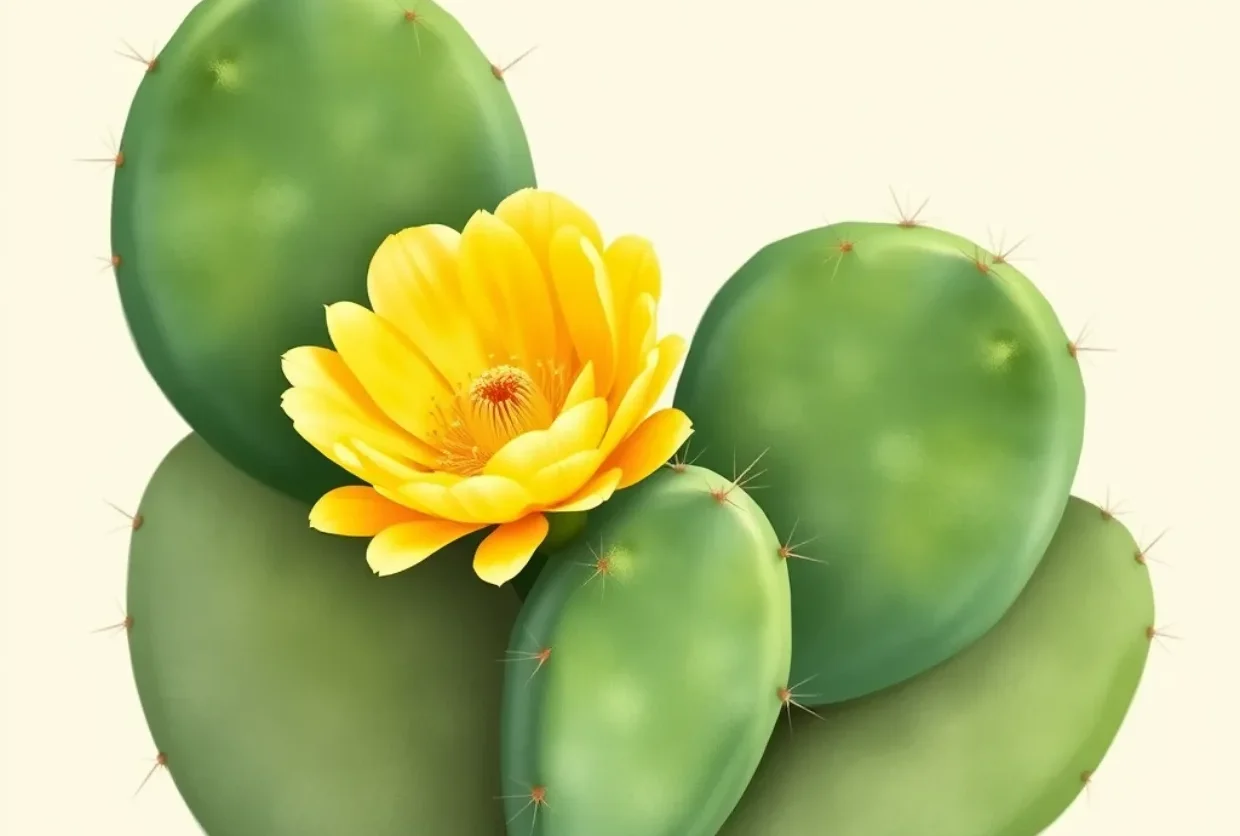
The spines are not the part that gets you. Glochids are barbed bristles fine enough to be invisible, they detach on contact, and they embed in fabric gloves.
The record
Every plant in the database answers the same questions in the same order, so two entries can be read line for line. 13 of 14 fields sourced.
- Light
- Full sun
- Light detail
- 6 hours or more; too little sun and it does not flower
- Water
- Low
- Water detail
- Water in the first season only; very drought tolerant afterwards
- Soil
- Sandy or rocky, sharply drained
- Soil pH
- not recorded
- Mature size
- 6 to 12 in tall, 1 to 1.5 ft wide
- Toxicity
- NC State lists eastern prickly pear as non-toxic to cats, dogs and horses. The hazard is mechanical: spines and glochids injure animals as readily as people.
- Lifecycle
- Perennial
- Difficulty
- Easy
- Dormancy
- Pads shrivel and lie flat in winter as the plant sheds water so ice cannot form; they plump up again in spring
- Grit ratio
- Sandy or rocky ground; a raised mound on heavy soil
- Winter rest
- No watering needed over winter, and watering a shriveled plant is the wrong response
- Hardiness zones
- 4 to 9
Hardy in zones 4 to 9. Colder than zone 4, grow it in a container and overwinter it under cover.
The part that actually injures people. Barbed bristles in tufts at the base of each spine cluster, nearly invisible, detaching on contact and working inward. Leather gloves and tongs, never fabric.
The year
Plant or divide. Everything else is leaving it alone.
Toxic to pets
NC State lists eastern prickly pear as non-toxic to cats, dogs and horses. The hazard is mechanical: spines and glochids injure animals as readily as people.
The spines are not the part that gets you
Eastern prickly pear has obvious spines, and everyone watches for those. The injuries come from the other thing.
NC State’s warning is about glochids: barbed bristles that can get into the skin and cause irritation, with protective gloves recommended when handling the plant. They grow in dense tufts at the base of each spine cluster, they are fine enough to be nearly invisible, and they detach at the slightest contact.
Because they are barbed they work inward rather than out, and they come off on gloves, sleeves and anything else that touches the plant. Leather gloves and tongs are the standard approach, and thin fabric gloves are worse than useless because the glochids go straight through and then live in the glove.
This is the one genuinely important practical fact about growing prickly pear, and it is why the plant is best sited away from paths and where children play.
A cactus that survives a northern winter
Eastern prickly pear is hardy in zones 4a to 9b, which surprises people who assume all cacti are desert plants for warm climates. It is native across the eastern United States from Massachusetts and New Hampshire south, and into Mexico.
It grows 6 to 12 inches tall and 1 to 1.5 feet wide, spaced 3 to 6 feet apart, and it is evergreen.
The winter appearance alarms first-time growers. In cold weather the pads shrivel, flatten and lie down, looking dead or rotten. That is a survival mechanism: the plant sheds water so ice cannot form in its tissue. It plumps back up in spring without intervention, and watering it at that stage is the wrong response.
This page is about prickly pear, not about cacti in general
Worth stating plainly, because cactus is a family of well over a thousand species and almost nothing on this page transfers to the ones sold as houseplants. Opuntia, the prickly pear, is a hardy outdoor plant that survives northern winters, wants full sun and no water once established, and grows from flat jointed pads. Most cacti sold in a nursery indoors are none of those things.
The commonly bought houseplant cacti are separate genera with their own requirements: bunny ears is a tender Opuntia that will not take frost, peanut cactus and old lady cactus are small globular desert species, Peruvian apple cactus is a tall columnar one, and pencil cactus is not a cactus at all but a Euphorbia with caustic sap. Easter and Christmas cactus are different again, forest epiphytes that want shade, humidity and regular watering, which is close to the opposite of everything below.
If the plant in question is in a pot indoors, the general succulent and cacti guidance on this site applies better than this page does. What follows is written for a hardy prickly pear in the ground.
The other cacti people come here for
Since this entry is about one plant and the name covers a family, here are the cacti most often searched for by name, and the one distinction that decides how any of them is watered.
Desert cactus or rainforest cactus
Clemson splits indoor cacti into two groups and the split matters more than any individual species. Nearly every dead houseplant cactus is a rainforest cactus watered like a desert one, or the reverse.
| Desert cacti | Rainforest cacti | |
|---|---|---|
| Light | South or west window, several hours of direct sun | Bright but filtered. Direct sun scorches them |
| Water in growth | Let the mix dry slightly between waterings, March to September | Substantially more. Never let it dry out completely through spring and summer |
| Winter | 45 to 55°F and barely any water, just enough to stop shriveling. This rest is what makes them flower | Cool dry rest too, but 40 to 50°F nights and long nights are the flowering trigger |
| Mix | Equal parts peat-based potting soil and coarse sand or grit | Two parts peat, one part soil, one part sand. Holds more moisture |
| Humidity | Not a consideration | 50 percent or more |
| Feed | Low nitrogen, 5-10-5, monthly June to September | Balanced, monthly through growth |
Prickly pear, the plant this entry records, is firmly in the first column.
Which is which
- Bunny ears cactus, Opuntia microdasys. Desert. A relative of the plant on this page: flat segmented pads, no spines but golden or white glochids, which are the part that gets you, exactly as described above. Slow, reaching 2 to 3 feet tall and spreading 4 to 5, with bright yellow flowers.
- Old lady cactus, Mammillaria hahniana. Desert. A solitary sphere covered in short dense white hair, with a ring of purplish-red flowers. Wants 70 to 80°F and a gritty mix with added sand.
- Column or Peruvian cactus, Cereus. Desert. Upright, 3 to 6 feet indoors, blue-green with brown spines, and night-blooming white flowers on a mature plant.
- Boobie cactus, a crested and knobbed form of Myrtillocactus. Desert, and a columnar one, so it wants the first column of that table without qualification: the brightest position you have, a gritty mix, and long dry intervals. The unusual shape is a growth deformity selected and propagated, not a different plant with different needs.
- Peanut cactus, Echinopsis chamaecereus. Desert. Small clustering finger-like stems.
- Fishbone cactus, Epiphyllum and relatives. Rainforest, and this is the one most often killed by good intentions. It is an epiphyte from a forest canopy, so filtered light, a mix that holds moisture, and no long dry spells. Treated as a desert cactus it shrivels and drops sections.
- Easter cactus, Rhipsalidopsis. Rainforest. Flowers from early April into late May, and the flowers depend on a cool dry rest from December until late March. A plant kept warm and watered all winter simply does not bloom.
- Orchid cactus, Epiphyllum. Rainforest. Six-inch flowers, often scented and night-blooming, on plants two to three years old, and it needs to be root-bound to flower, so repotting a shy one is the wrong move.
For the species this database has no sourced record of, the group is still the useful answer. Placing a plant in the right column of that table settles the watering, the light and the winter, which is nearly all of cactus care.
Two plants that are not cacti at all
Pencil cactus, also sold as firestick or Sticks on Fire, is Euphorbia tirucalli, in the spurge family, from Madagascar. Not a cactus. It runs 2 to 6 feet indoors, wants bright indirect light or direct sun, a well-drained mix with little organic matter, and water every one to two weeks with the soil drying between. The Sticks on Fire cultivar reaches 4 to 8 feet with reddish-gold stems that fade to yellow.
The reason to separate it is not taxonomy. Its milky white sap causes contact dermatitis, blisters the mouth if swallowed, and in the eye can cause temporary or permanent damage to the cornea. No true cactus on this page carries that hazard. Gloves and eye protection for any cutting or repotting, and it is a poor choice at child or animal height.
Aloe is not a cactus either. It is a succulent in a different family entirely, and the practical consequence is that it wants a little more water and rather less sun than the desert column above. Cacti are a family within the succulents; every cactus is a succulent and most succulents are not cacti.
Growing it
Full sun, six hours or more, in well-draining sandy or rocky soil. It is very drought-tolerant and salt-tolerant, which makes it useful in coastal gardens and along paths that get winter salt.
- Give it sharp drainage above everything
Root rot in poorly drained soil is the main way it fails. On heavy ground, plant on a raised mound or a slope.
- Do not water an established plant
It is very drought-tolerant. Watering is for the first season only, and afterwards rainfall is enough almost everywhere in its range.
- Propagate from a pad
Break off a pad, let the cut callus for a week, then lay it on or barely into the soil. It roots on its own. Seeds and stem cuttings also work.
- Handle with leather gloves and tongs
Never bare hands and never fabric gloves. Glochids embed in fabric and transfer to the next person who picks the glove up.
- Site it away from traffic
Not beside a path, a gate or a lawn edge that gets strimmed. This is a plant for the back of a dry bed.
Flowers and fruit
Flowering runs from early spring into early summer, in large waxy yellow blooms two to three inches across with reddish centers. They are among the most spectacular flowers on any hardy plant and they last a very short time.
The fruit follows as green spheres ripening to red or purple, and it is edible. NC State records birds and box turtles eating the fruits, with bees attracted to the flowers, and the fruit persisting into winter for seasonal interest.
Anyone harvesting the fruit needs the glochid warning again, in bold: the fruit surface carries them too, and they are the reason commercially sold prickly pear fruit has been scrubbed or singed before it reaches a shop.
What goes wrong
Very little. NC State reports scale insects and mealybugs occasionally, root rot in poorly drained soils, and otherwise few serious problems.
The failures are almost always drainage or misplaced care. A collapsed, blackening plant is root rot from wet ground. A shriveled plant in January is normal. A plant that never flowers is usually in too much shade.
The two pests, and how to deal with them
Scale and mealybugs are the only insects that show up with any regularity, and on a plant with no leaves they are easy to spot: mealybugs as white cottony masses in the joints between pads, scale as small fixed brown or gray bumps on the pad surface. A cotton swab dipped in rubbing alcohol removes both, one at a time, which is practical because on a cactus you can reach every square inch of the plant.
Cochineal insects deserve a mention because they look alarming and are unmistakable: fluffy white patches on the pads that crush to a deep crimson stain. That red is the historical dye. On a garden plant they weaken it slowly rather than killing it, and a hose jet knocks them off.
Root rot, and why it is nearly the only way to kill this plant
NC State records no serious insect or disease problems, with root rot in poorly drained soil the exception. That is not a formality; on a hardy opuntia, wet feet is close to the only fatal error available.
The signal is a pad that goes soft, yellow-brown and translucent at the base while the pads above it still look normal, and by then the roots are gone. A plant caught early can be saved the same way a cutting is started: cut off healthy pads well above the damage, let the cut faces dry and callus for a week or more somewhere shaded, and start them again in dry gritty mix. The parent is usually not worth saving, and the soil it was in is the thing that needs changing.
Propagating from pads, which is trivially easy
An opuntia is one of the easiest plants in a garden to increase, and the method is the same as the rot rescue above.
- Take a whole pad from the top of a segment, avoiding any that is flowering. Use tongs and thick gloves, and remember from the section above that the glochids are the part that gets you, not the spines.
- Let the cut end callus over for a week or two in a shaded, dry place. This step is not optional; a fresh cut set into soil rots.
- Stand it upright with the bottom inch or two in dry, gritty mix, propped if it will not stay up on its own.
- Then break the usual rule. A rooted, established opuntia wants no water at all. A cutting in its first year wants consistent moisture, because it has no root system to draw on. Mist the soil whenever it dries, keep the top of the pad dry, and only move to the neglect regime described above once it is clearly growing.
Toxicity, in plain terms
NC State lists eastern prickly pear as non-toxic to cats, dogs and horses. That is a positive statement of safety rather than an absence of a listing, which is rarer in this database than you might expect.
The hazard is entirely mechanical. Spines and glochids injure animals as readily as people, and a dog that investigates one usually needs the glochids removing from its muzzle by a vet.
Frequently asked questions
- Can cactus survive a cold winter?
- Eastern prickly pear does, in zones 4a to 9b. It is native across the eastern United States as far north as New Hampshire, and it is evergreen. Sharp drainage matters far more than cold for winter survival.
- Why has it gone flat and shriveled?
- Winter water loss, and it is deliberate. The plant sheds water so ice cannot form in its tissue, so the pads flatten and lie down. It plumps back up in spring on its own; watering it then is the wrong response.
- What are the tiny hairs that itch?
- Glochids, barbed bristles in tufts at the base of the spine clusters. They are nearly invisible, detach on contact and work inward. Leather gloves and tongs; fabric gloves are worse than nothing because the glochids embed in them.
- How do I propagate it?
- Break off a pad, let the cut surface callus for about a week, then lay it on or barely into gritty soil. It roots without help. Seed and stem cuttings also work but the pad is much faster.
- Is it dangerous to pets?
- Not chemically. NC State lists it as non-toxic to cats, dogs and horses. The risk is mechanical: a dog that noses one usually needs the glochids removed by a vet.
Companion plants
How this entry is compiled
- Care values come from university extension publications and the USDA hardiness map, never from other gardening sites.
- Toxicity follows the ASPCA listing and is quoted rather than summarized.
- A value we cannot source is printed as not recorded, never estimated.
Compiled and checked by the Gardnicks editorial desk · last checked 2026-08-16
Sources for this entry
Where two sources disagree, the entry follows the one closest to the plant’s own growing region and says so in the text.
What kills it
Three failures cover almost everything readers write in about.
More in Succulents & Cacti
Plates are illustrations, not photographs of a specific plant, and are not evidence of a variety, place or season.