Dogwood tree
Cornus florida
Flowering dogwood
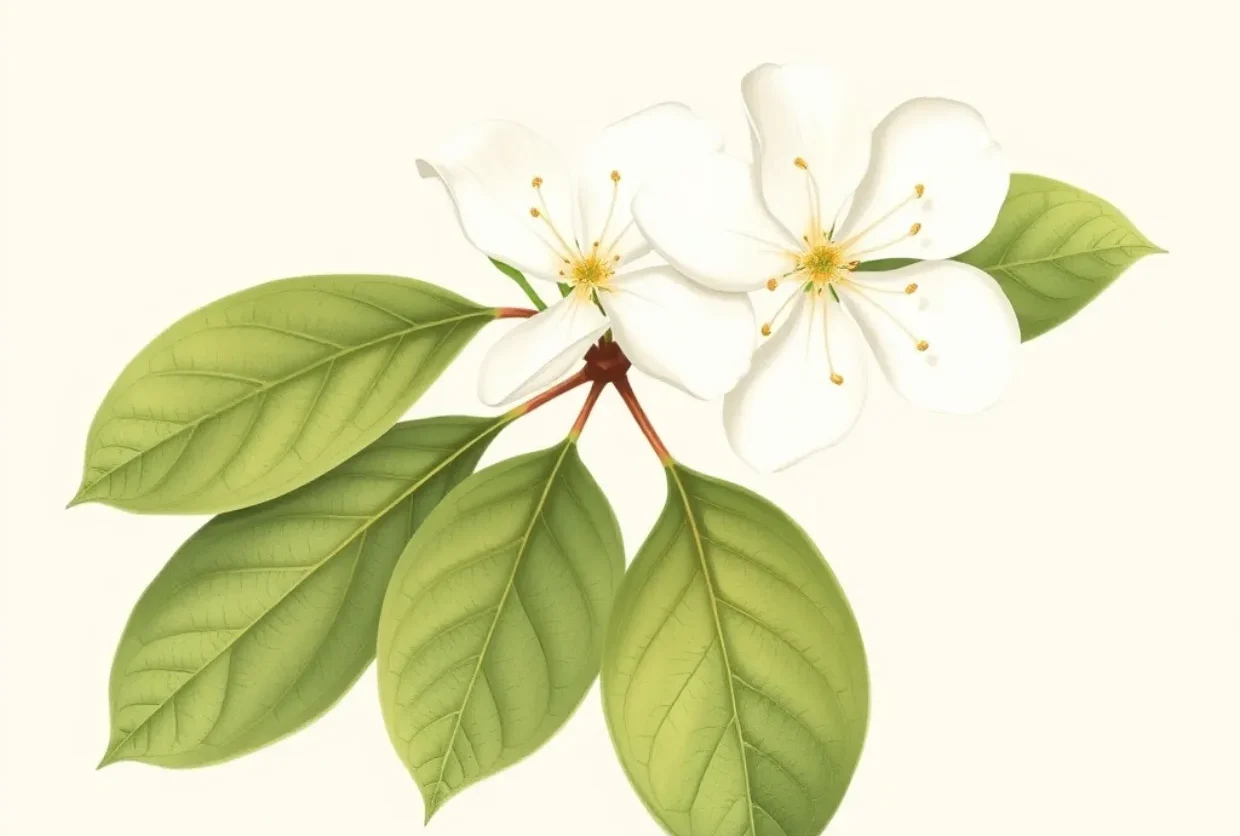
NC State calls it a tricky plant to grow, and means it. It is a woodland-edge understory tree, and the usual position, alone in an open lawn, is the opposite.
The record
Every plant in the database answers the same questions in the same order, so two entries can be read line for line. 14 of 16 fields sourced.
- Light
- Part shade
- Light detail
- Full sun to partial shade; afternoon shade in warmer regions
- Water
- Moderate
- Water detail
- Cool moist roots; water through dry spells for the first few years
- Soil
- Clay, loam or sand with high organic matter, well drained
- Soil pH
- Acidic to neutral
- Mature size
- 15 to 25 ft tall, 15 to 30 ft wide
- Toxicity
- not recorded
- Lifecycle
- Tree
- Difficulty
- Challenging
- Hardiness zones
- 5 to 9
- Growth rate
- Moderate
- Root spread
- not recorded
- Pruning window
- Dead wood only; every cut is an entry point for borer and canker
- Bloom time
- March to May, before the leaves
- Deer resistant
- No
Hardy in zones 5 to 9. Colder than zone 5, grow it in a container and overwinter it under cover.
Bracts, not petals. What everyone calls the flower is four petal-like bracts around a small cluster of true flowers, which is why the display lasts weeks instead of days.
The year
Plant or divide and prune, and when it is actually in flower. Everything else is leaving it alone.
NC State calls it a tricky plant to grow, and means it
Flowering dogwood is the most loved small tree in the eastern United States and one of the more demanding ones, and those two things together account for a great many dead dogwoods in front gardens.
The reason is where it comes from. In the wild it is a woodland-edge understory tree, growing under taller canopy in leaf-littered acid soil with cool, moist roots. The standard garden position, alone in an open lawn with mown grass to the trunk and full afternoon sun, is close to the opposite of that.
NC State’s site guidance follows directly: full sun or partial shade, with afternoon shade beneficial in piedmont and coastal regions, and a 2 to 4 inch mulch to keep the roots cool. That mulch is not tidiness. It is the substitute for the leaf litter the tree evolved under.
Get the position right and it is long-lived and largely trouble-free. Get it wrong and it spends a decade slowly declining while every pest on the list finds it.
Size and site
Hardy in zones 5a to 9b, growing 15 to 25 feet tall and 15 to 30 feet wide at a medium rate. The width is the number people miss: this is a tree that is usually wider than it is tall.
Soil can be clay, loam or sand with high organic matter, acidic to neutral, well drained, tolerating moist or occasionally dry conditions. Acidic ground suits it best.
NC State also notes it is susceptible to pollution, which is a genuine constraint on a street-side planting, and that deer browse the foliage.
The soil requirement has one part that is not negotiable and one that is. Acid ground below pH 6.0 is what this tree wants, and it holds its color and vigor best there; it will grow at neutral but not thrive, and on genuinely alkaline soil it is the wrong tree rather than a tree with a problem. Drainage is the non-negotiable half. Flowering dogwood tolerates moist ground and occasional dry spells, but not standing water, and a low spot that holds a week of rain will kill it slowly enough that the cause is never obvious.
The root system explains most of the rest of this page. Dogwood roots are shallow and spread wide, well past the branch tips, sitting in the top few inches where a woodland floor would keep them cool and damp under leaf litter. Three consequences follow directly. The tree cannot compete with turf, which occupies exactly the same layer. It has almost no drought reserve, so it needs watering through dry spells for the first several years and in any prolonged drought after that. And anything that disturbs that layer, cultivating, trenching, compaction from vehicles or foot traffic, does damage that shows up as branch dieback a season or two later rather than immediately.
Planting
- Put it at a woodland edge, not in the middle of a lawn
Morning sun with afternoon shade, or high dappled canopy. This single decision does more than everything else combined.
- Mulch 2 to 4 inches, out to the branch tips
Keeping the roots cool is a stated requirement. Keep the mulch a few inches clear of the trunk itself.
- Never let a mower touch the trunk
Dogwood borer enters through wounds, and mower and strimmer damage at the base is the most common way it gets in. The mulch ring is the defense.
- Plant in spring rather than fall, and plant it shallow
A shallow-rooted tree set too deep never establishes properly. The point where the trunk flares into the roots belongs at or slightly above the surrounding soil level, not buried. Spring planting gives the roots a full season to spread before their first winter.
- Water through dry spells for the first three years
This is the period when the tree has no reserve at all. A deep soak every week or two in dry weather is worth more than frequent light watering, because it wets the whole shallow root plate rather than just the surface.
- Do not feed it heavily
Soft fast growth is more attractive to borers and more susceptible to the diseases below. A dogwood in decent soil under mulch needs very little, and a struggling one is nearly always struggling for position or water rather than for nutrients.
- Water through dry spells for the first few years
A stressed dogwood is what borers and cankers find. Established trees are far more resilient.
- Leave the pruning alone
The layered horizontal branching is the plant’s whole character, and every cut is an entry point. Remove dead wood and nothing else.
The flowers that are not flowers
What everyone calls the flower is four petal-like bracts, and the true flowers are the small cluster in the middle. The bracts open in early spring, March to May, before the leaves, in white, pink or red.
That structure explains something people find odd: the display lasts weeks rather than days, because bracts are modified leaves and do not wilt the way petals do.
Autumn is the second season. Foliage turns red to reddish-purple, and glossy bright red drupes hang in clusters from August through October. They are bitter and inedible to people, and NC State records them being taken by songbirds, grouse, turkey and mammals.
The wildlife record is genuinely strong for a small ornamental tree: it is a host plant for the spring azure butterfly and supports specialized bee species alongside the birds.
Types of dogwood, and which of them are trees at all
This page is written about flowering dogwood, Cornus florida, which is what the word usually means in an American garden. But the genus contains several plants sold under the same common name, and two of the best known are not trees. Buying by the word dogwood alone is how people end up with a six-foot shrub where they wanted a specimen tree, or the reverse.
| Species | Form and size | Zones | What it is grown for |
|---|---|---|---|
| Flowering dogwood, C. florida | Small tree, 15 to 25 ft tall and 15 to 30 ft wide, usually wider than tall | 5a to 9b | The spring bracts, red fall foliage and red drupes. Native to eastern North America, and the subject of this entry |
| Kousa dogwood, C. kousa | Small tree, 15 to 30 ft tall and wide | 5 to 8 | Late spring bracts, several weeks after C. florida, and raspberry-like fruit. East Asian, and resistant to many of the problems described below |
| Cornelian cherry, C. mas | Large shrub or small tree, 15 to 25 ft tall and 12 to 18 ft wide | 4 to 8 | Yellow flowers in March, well before anything else, and edible red or yellow olive-shaped fruit. From Europe and west Asia |
| Pagoda dogwood, C. alternifolia | Small tree, 15 to 25 ft tall and 20 to 32 ft wide, in tiered horizontal layers | 3 to 7 | Architecture rather than flower. Native to eastern North America, and the one dogwood with alternate rather than opposite leaves |
| Red twig dogwood, C. sericea, also sold as red osier | A shrub, not a tree | 2 to 7 | Bright red winter stems against snow. Native, and the hardiest dogwood by a wide margin |
The zone column is the practical divide. C. florida stops at zone 5, so in a genuinely cold garden the dogwood options are pagoda at zone 3 and red twig at zone 2, and both are grown for something other than the spring display people are usually after.
Red twig deserves its own note because the growing method is the opposite of everything on this page. It is cut back hard, because only young stems carry the bright color; an unpruned red twig dogwood fades to dull brown wood within a few years and is usually declared a failure when it is simply overdue for cutting.
Named cultivars of flowering dogwood
Within C. florida, the cultivar decides the bract color and, more usefully, the size. These are the ones the Morton Arboretum records.
- Cloud 9: broadly rounded, 15 ft high by 20 ft wide, white. The standard white form for a garden that cannot take the full species width.
- Cherokee Chief: upright and rounded, 20 ft high and wide, rose-red to ruby-red. The darkest of the common reds.
- Stellar Pink: rounded, 20 ft high and wide, pink.
- Sweetwater Red: upright and rounded, 20 ft high by 15 ft wide, with reddish foliage turning burgundy in fall. Bought for the leaf as much as the bract.
- Red Pygmy: a genuine dwarf at 5 to 6 ft high and wide, with pinkish-red bracts, and small enough for a large container. This is the answer where a short dogwood is wanted, and there is no way to get one by pruning a full-size cultivar into that shape.
Bract color is worth choosing deliberately rather than by photograph, because the white forms read from much further away than the reds. A red-bracted dogwood against a dark background disappears; the same tree against a pale wall or an open sky is the better placement, and white does the reverse.
What goes wrong
NC State lists dogwood borer, sawfly, clubgall midge, scales and leafhoppers among insects, and anthracnose, spot anthracnose, powdery mildew, leaf spot, canker and bacterial leaf scorch among diseases.
Dogwood anthracnose is the serious one and it has a geography. NC State notes it is primarily a problem above 1,800 feet, which is where the cool, damp, shaded conditions it needs occur. It kills from the lower branches upward and has removed a great many wild dogwoods at altitude. Lower down, the more common problem is spot anthracnose, which spots the bracts and is cosmetic.
Dogwood borer is the one that kills garden trees, and it is almost always secondary. It enters through wounds, so the tree that gets it is usually one that has been hit by a mower, sunscalded on an exposed trunk, or left stressed by drought.
Powdery mildew is common, unsightly and rarely fatal, and it is worse on trees in still air. Resistant cultivars exist and are worth buying.
Worth knowing before you buy: kousa dogwood, Cornus kousa, is markedly more resistant to both anthracnose and borer, flowers about a month later on the leafy tree, and is the safer choice in a difficult site. It is not native, which is the trade.
Choosing a cultivar for disease resistance
Resistance is not a general property, and this is where buying by name pays. NC State records it cultivar by cultivar, and the three diseases behave differently.
- Dogwood anthracnose, the one that kills: Appalachian Spring is resistant, and it is the cultivar to specify for any garden above 1,800 feet or in a cool damp shaded site. Appalachian Blush is also recorded as disease resistant.
- Spot anthracnose, the cosmetic bract-spotting one: Plena is immune to it, Cherokee Princess is highly resistant, and Cherokee Chief is resistant. This matters most where the tree is close to a path and the bracts are looked at from a few feet away.
- Powdery mildew: worth knowing that resistance does not travel together. Appalachian Spring is resistant to anthracnose but susceptible to mildew, and Cherokee Daybreak is susceptible as well. A cultivar chosen for one problem can be the wrong choice for another.
If the position is right and the elevation is low, spot anthracnose resistance is the one worth paying for, because that is the disease most garden trees actually get. If the site is cool, damp and shaded, or high, anthracnose resistance comes first and mildew is the price.
What it looks like through the year
Flowering dogwood earns its place on four separate seasons rather than one, and the spring display that sells it is only the first of them.
- Spring: the white, pink or red bracts open March to May, before the leaves, and hold for weeks because bracts are modified leaves rather than petals.
- Summer: a low, wide, horizontally layered canopy that casts genuine shade at a scale a small garden can use. This is the season nobody buys the tree for and the one it spends most of its life in.
- Fall: foliage turning red to reddish-purple, with glossy bright red drupes hanging in clusters from August into October. The fruit is bitter to people and taken by songbirds, grouse, turkey and mammals.
- Winter: the bark, which matures into dark gray to almost black plates broken into small scaly blocks. On an older trunk the texture is the most distinctive thing about the tree, and it is visible only once the leaves are down.
Pros and cons, set out honestly
This page opens by quoting NC State calling flowering dogwood tricky to grow, and it is worth putting both sides of that in one place rather than leaving the warnings scattered through the sections above.
In its favor. Four seasons of interest from one small tree. A native eastern North American species with real wildlife value, hosting the spring azure butterfly, supporting specialized bees, and feeding birds through autumn. A mature size that suits a normal garden. A flowering display measured in weeks rather than days. And a form, wide and horizontally tiered, that very few other small trees offer.
Against it. It is an understory tree being asked to live in open lawns, which is the root of most complaints on this page. It is shallow-rooted and intolerant of drought, mower damage and compacted soil. It is susceptible to pollution, which rules out most street-side positions. Deer browse it. It carries a longer disease and pest list than most small ornamentals, and dogwood borer, the one that actually kills garden trees, arrives through wounds on a tree that is already stressed.
The honest summary is that flowering dogwood is not a difficult tree in the right position and a persistently disappointing one in the wrong position, and the position is decided before planting rather than fixed afterwards. Where the site is open, sunny and exposed, kousa dogwood is the more forgiving choice and the trade is that it is not native.
Toxicity, in plain terms
NC State’s entry carries no toxicity listing for Cornus florida, and this page records that as not recorded rather than a confident no, because an absent listing is not a positive statement of safety.
The fruit is described as bitter and inedible to humans, which is a palatability statement rather than a toxicity one. Birds eat it freely.
Frequently asked questions
- Why is my dogwood struggling in the lawn?
- Because it is an understory tree in an open position. NC State recommends afternoon shade in warmer regions and a 2 to 4 inch mulch to keep the roots cool. Mown grass to the trunk also invites borer through mower wounds.
- What is killing the lower branches?
- Possibly dogwood anthracnose, which works upward from the bottom of the tree and is primarily a problem above 1,800 feet. At lower elevations the more likely answers are borer, canker or drought stress.
- How big does it get?
- 15 to 25 feet tall and 15 to 30 feet wide, so usually broader than it is tall. Plan for the spread rather than the height, which is the dimension people underestimate.
- What are the different types of dogwood?
- Five are commonly sold. Flowering dogwood (C. florida) and kousa (C. kousa) are the small ornamental trees; cornelian cherry (C. mas) is a large shrub or small tree flowering yellow in March; pagoda dogwood (C. alternifolia) is grown for its tiered horizontal branching; and red twig dogwood (C. sericea) is a shrub grown for its red winter stems, not a tree at all.
- Is there a short or dwarf dogwood tree?
- Red Pygmy, a dwarf C. florida cultivar reaching 5 to 6 feet high and wide with pinkish-red bracts, small enough for a large container. Cloud 9 at 15 by 20 feet is the next step up. A full-size cultivar cannot be pruned into a small tree; the size comes from the cultivar.
- Which dogwood is hardiest in a cold garden?
- Red twig dogwood at zone 2, then pagoda dogwood at zone 3. Flowering dogwood stops at zone 5 and kousa at zone 5, so in a very cold garden the spring bract display is not really available and the choice is between winter stem color and branch architecture.
- Should I plant kousa dogwood instead?
- In a difficult or exposed site, it is the safer choice: markedly more resistant to anthracnose and borer, and flowering about a month later on the leafy tree. The trade is that it is not native, and Cornus florida is the better wildlife plant.
- When do I prune it?
- As little as possible. The layered horizontal branching is the character of the tree and every cut is an entry point for borer and canker. Take out dead wood and leave the shape alone.
Companion plants
How this entry is compiled
- Care values come from university extension publications and the USDA hardiness map, never from other gardening sites.
- Toxicity follows the ASPCA listing and is quoted rather than summarized.
- A value we cannot source is printed as not recorded, never estimated.
Compiled and checked by the Gardnicks editorial desk · last checked 2026-08-16
Sources for this entry
- NC State Extension Gardener Plant Toolbox, Cornus florida
- University of Maryland Extension, Growing Flowering Dogwood Trees
- University of Maryland Extension, Dogwood Anthracnose
- Clemson HGIC, Dogwood Diseases and Insect Pests
- The Morton Arboretum, Kousa dogwood
Where two sources disagree, the entry follows the one closest to the plant’s own growing region and says so in the text.
What kills it
Three failures cover almost everything readers write in about.
More in Trees & Shrubs
 Azalea
Part shade · zones 4 to 8
Honeysuckle
Full sun · zones 4 to 9
Azalea
Part shade · zones 4 to 8
Honeysuckle
Full sun · zones 4 to 9
 Sago palm
Part shade · zones 9 to 12
Sago palm
Part shade · zones 9 to 12
Plates are illustrations, not photographs of a specific plant, and are not evidence of a variety, place or season.