Mint
Mentha spp.
Peppermint / spearmint
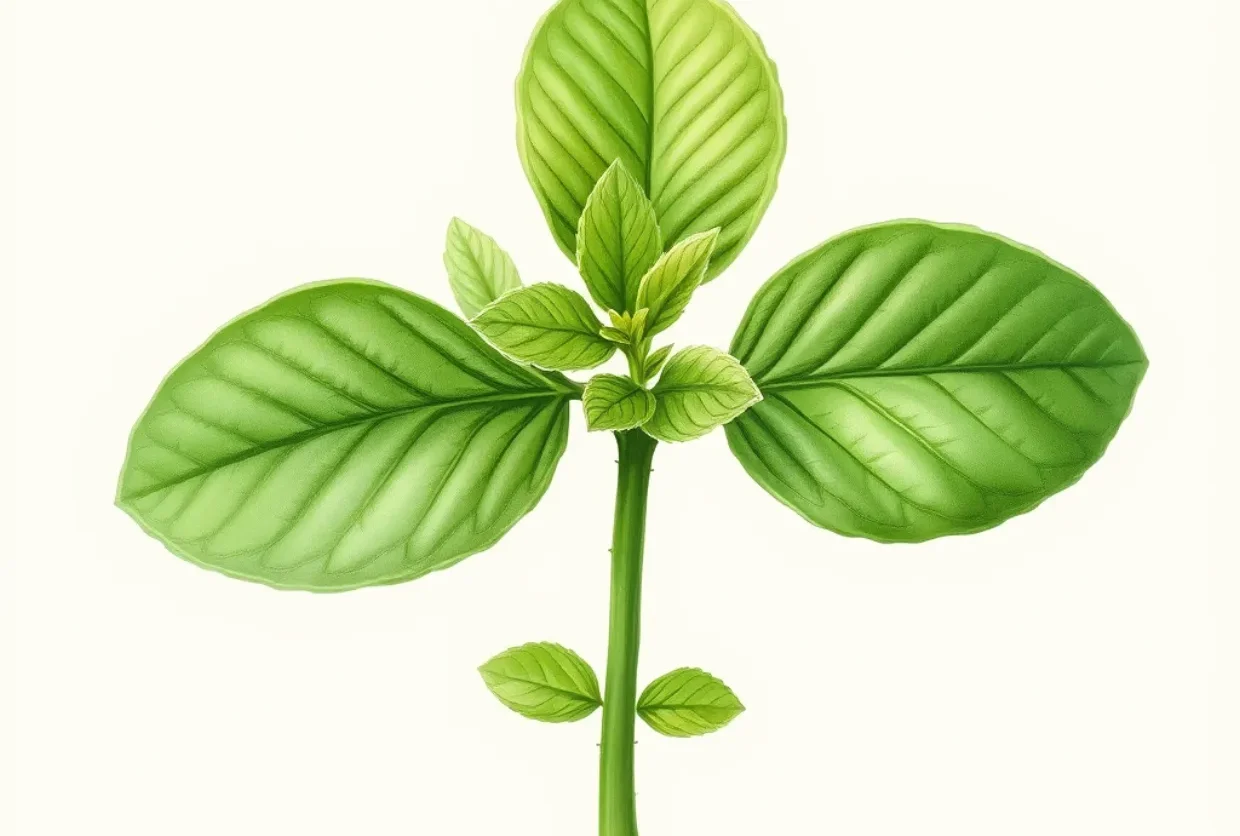
The easiest herb there is, and the only one with a standing warning attached. It spreads by underground rhizomes, so it belongs in a pot standing above ground.
The record
Every plant in the database answers the same questions in the same order, so two entries can be read line for line. 11 of 14 fields sourced.
- Light
- Full sun
- Light detail
- Prefers full sun, tolerates light shade, which is rare among herbs
- Water
- Moderate
- Water detail
- Wants more moisture than Mediterranean herbs; sulks after drying out
- Soil
- Undemanding, but not dry
- Soil pH
- not recorded
- Mature size
- 1 to 3 ft tall
- Toxicity
- not recorded
- Lifecycle
- Perennial
- Difficulty
- Easy
- Hardiness zones
- not recorded
- Harvest method
- Cut stems often; the more you cut, the more new growth, and new growth carries the flavor
- Grows in containers
- Yes
- Overwintering
- Overwinter the pot indoors, or discard it and start again from a cutting in spring
Between divisions. A pot of mint congests and the leaves get small and weak. Split it, keep the vigorous outer growth, throw the woody middle away.
The year
Plant or divide and prune. Everything else is leaving it alone.
Grow it in a pot. Every source says the same thing
Mint is the easiest herb there is, and the only one with a standing warning attached to it.
Illinois Extension’s guidance is unambiguous: because mints have a prolific growth habit and will become invasive in the garden, it is highly suggested that they be grown in containers above ground.
The mechanism is underground. Mint spreads by rhizomes, running stems below the soil surface that push up new plants some distance from the original. Pull the visible plant and the rhizome stays; it comes back from every fragment left behind. A mint planted in a border is not a plant you have added, it is a project you have started.
Above ground in a container is the phrase worth reading twice. A pot sunk into a bed still lets rhizomes escape over the rim and root on the far side. Standing the pot on a hard surface is what actually contains it.
Growing it
Full sun is preferred, and light shade is tolerated, which makes it one of very few herbs that will produce properly in a part-shaded spot. It grows 1 to 3 feet tall.
Soil is not a demand. Mint wants more moisture than most herbs, which is the one way it differs from the Mediterranean group, and a container that dries out completely is the main way people actually kill it.
It is propagated by stem or root cuttings, which is why a single supermarket pot can become a permanent supply. A stem in a glass of water roots within a fortnight.
Keeping it good rather than just alive
- Remove flower spikes as they appear
Illinois Extension’s instruction, and it is about flavor rather than tidiness. A mint allowed to flower puts its energy there and the leaves lose their intensity.
- Cut it often
The more frequently the stems are cut, the more new growth is produced, and the new growth carries the most flavor. Regular harvesting is care, not damage.
- Divide every 3 to 4 years
A pot of mint congests and weakens. Splitting it, keeping the vigorous outer sections and discarding the woody middle, restores it.
- Water more than you would other herbs
Rosemary and thyme want to dry out. Mint does not, and it wilts hard and sulks after drying out completely.
- Cut for drying just as flowers begin
That is when the leaf oils are at their strongest. For fresh use, cut at any point.
Which mint you have
Peppermint, Mentha x piperita, and spearmint, Mentha spicata, are the two common ones and they are not interchangeable in cooking.
Peppermint is a natural hybrid, higher in menthol, sharp and cooling, and is what most mint tea and confectionery tastes of. Spearmint is milder and sweeter, and it is the one that belongs with lamb, in tabbouleh and in a mojito.
Mint is often used with veal, lamb and pork, in beverages and in jellies. The named types beyond those two, chocolate, apple, ginger and the rest, are mostly selections and hybrids, and they cross readily, which is why a mint grown from seed rarely tastes like its parent. Buy plants rather than seed if the flavor matters.
How to grow mint indoors
Mint is one of the few herbs that is genuinely happy on a windowsill, and it is the one most worth growing there, because the containment problem that governs it outdoors disappears entirely in a pot indoors. It also tolerates less light than the Mediterranean herbs, which is why it survives kitchens where basil and rosemary give up.
Indoors the plant changes in one way worth expecting: growth is slower and softer, so it wants less water than the same plant would outdoors in July, and it wants harvesting little and often rather than in the hard cuts an outdoor plant takes.
| What it needs indoors | The figure | Why it matters |
|---|---|---|
| Light | Four to six hours of bright light, or twelve to fifteen hours under a grow light | Mint survives low light but goes thin and stretched. Dense leafy growth is a light question, not a feeding one |
| Pot | At least 8 inches deep and 10 to 12 inches wide, with drainage holes | Mint roots shallow and runs sideways, so width serves it better than depth |
| Soil | A soilless potting mix, not garden soil | Garden soil compacts in a container and stays wet, which is how an indoor mint rots |
| Water | When the top inch is dry, usually two or three times a week in active growth | Mint is the one herb here that genuinely wants steady moisture, but not a saucer of standing water |
| Temperature | Around 60 to 70 °F | Ordinary room temperature. Keep the foliage off cold glass in winter |
| Turning | A quarter turn every week or two | Indoor light comes from one side, and an unturned plant leans and thins on the dark side |
One caution specific to indoor mint: it is the herb most often brought inside with spider mites already on it, because dry indoor air suits them. Check the leaf undersides before a pot comes in from the garden, and again a fortnight later.
Rooting a cutting in water, which takes about two weeks
Mint is the easiest herb to multiply and it costs nothing. A single supermarket bunch with a bit of stem left on it will usually produce plants.
- Cut a stem four to six inches long, just below a leaf pair.
- Strip the leaves from the lower half so nothing sits under the waterline and rots.
- Stand it in a glass of water on a bright sill, out of direct midday sun, and change the water every couple of days.
- Roots appear in roughly one to two weeks. Pot it once they are an inch long, because roots grown in water are fragile and struggle if left too long.
- Pot into moist potting mix and keep it out of strong sun for the first week while it changes over to soil roots.
Division works just as well on an established plant and gives a bigger result faster: lift it in spring, pull the root mass into pieces with growth on each, and pot them separately.
Storing what you cut
Cut mint keeps three to seven days standing in a glass of water, or about a week in the refrigerator wrapped dry in plastic.
For longer keeping, drying works but loses much of the top note, and freezing chopped leaves in ice cubes of water keeps the flavor far better for anything that will end up in a drink or a sauce.
What goes wrong
Very little. Aphids turn up on soft crowded growth and are dislodged with water; spider mites appear in dry conditions and are discouraged the same way. Rust shows as orange pustules on leaf undersides and is dealt with by cutting the plant to the ground and improving airflow.
The two real problems are not pests. One is a plant that has escaped into a border, where the only reliable answer is digging out every fragment of rhizome and checking the spot for a season afterwards. The other is a pot that has been left to congest for years and now produces small, thin, weak-flavored leaves, which is what division fixes.
Toxicity, in plain terms
Mint is a culinary herb eaten by people in ordinary quantity. This page records toxicity as not recorded rather than making a claim, because the ASPCA does list some mints as causing vomiting and diarrhea in cats and dogs at quantity, and that is a specific claim about specific species that should be checked against a source for the animal in question rather than generalized here.
Frequently asked questions
- How do I harvest mint?
- Cut whole stems rather than picking single leaves, taking them just above a pair of leaves so the plant branches from that point. Take up to a third of the plant at a time, and cut often: regular harvesting is what keeps the growth young, and old unharvested mint goes woody at the base and small in the leaf.
- How much sunlight does mint need?
- Four to six hours outdoors, and it is one of the few herbs that produces usable growth in part shade rather than demanding full sun. Indoors, four to six hours of bright light, or twelve to fifteen hours under a grow light. Less than that and it survives but grows thin and stretched.
- Can I root mint in water?
- Yes, and it is the easiest propagation on this site. Cut a stem four to six inches long, strip the lower leaves, stand it in water on a bright sill and change the water every couple of days. Roots come in one to two weeks, and it should be potted once they reach about an inch.
- Does mint come back after winter?
- Outdoors, yes: it dies back to the ground and returns from the roots in spring, which is part of why containment matters. A pot left outside over winter is more exposed than open ground, so sink it, group it against a wall, or bring it into an unheated shed rather than leaving it standing alone.
- Why should mint be grown in a pot?
- Because it spreads by underground rhizomes and becomes invasive in a garden bed. Illinois Extension recommends containers above ground. A pot sunk into soil is not enough, since the runners escape over the rim.
- Should I let it flower?
- No, if you are growing it to eat. Remove flower spikes as they appear to keep the flavor in the leaves. If you are growing it for pollinators, the flowers are genuinely good, and that is a different purpose.
- How do I get bushier growth?
- Cut it more often. The more frequently stems are cut, the more new growth is produced, and the new growth is where the flavor is. Harvesting hard is good for the plant.
- My mint has gone weak and small. What now?
- Divide it. Every three to four years the plant congests; split it, keep the vigorous outer growth, throw away the woody center and repot.
- Can I grow it indoors?
- Yes, in the brightest window you have, and it will be leggier than an outdoor plant. A pot can also be overwintered indoors and put back out in spring, or discarded and started again from a cutting.
How this entry is compiled
- Care values come from university extension publications and the USDA hardiness map, never from other gardening sites.
- Toxicity follows the ASPCA listing and is quoted rather than summarized.
- A value we cannot source is printed as not recorded, never estimated.
Compiled and checked by the Gardnicks editorial desk · last checked 2026-08-16
Sources for this entry
- Illinois Extension, Mint
- Illinois Extension, Mints... Friend or Foe?
- Clemson HGIC, Herbs
- Illinois Extension, Growing Herbs in Containers
Where two sources disagree, the entry follows the one closest to the plant’s own growing region and says so in the text.
What kills it
Three failures cover almost everything readers write in about.